
- Solve real problems with our hands-on interface
- Progress from basic puts and calls to advanced strategies
Interactive Options Course
Lesson 6 of 9
Already an Interactive Brokers Client?
New to Interactive Brokers?
Covered calls remain one of the most widely used options strategies among stock investors. The strategy combines stock ownership with the sale of call options, allowing investors to generate premium income while potentially enhancing portfolio returns.
But not all covered call approaches are the same.
Expiration selection, strike placement and market conditions can all influence historical results.
Covered calls appeal to many investors because they are relatively straightforward to understand.
The strategy offers several potential benefits:
For investors already holding stock, covered calls can provide an additional source of potential return beyond price appreciation alone.
One of the first decisions when researching covered calls involves selecting an expiration cycle.
Weekly Covered Calls
Potential characteristics include:
Monthly Covered Calls
Potential characteristics include:
Historical analysis can help traders compare whether shorter or longer expiration cycles produced stronger risk-adjusted outcomes over time.

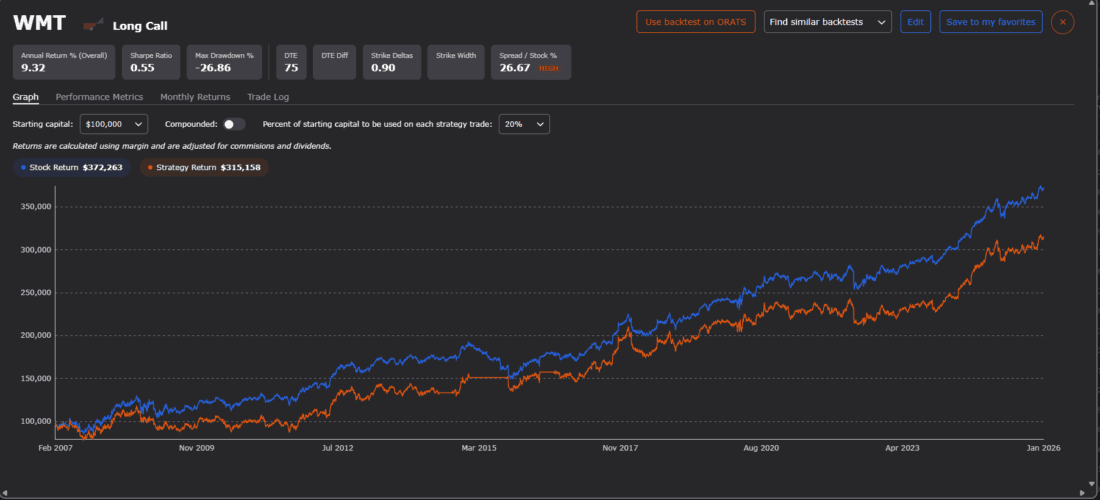
Choosing a strike price may significantly impact both income potential and stock participation.
At-the-Money (ATM)
ATM covered calls typically generate the highest premium but may result in higher assignment rates.
Out-of-the-Money (OTM)
OTM calls generally offer lower premiums while allowing greater upside participation if the stock rises.
Deep Out-of-the-Money
Deep OTM strikes usually provide maximum flexibility for stock appreciation but generate smaller option premiums.
Each approach creates a different balance between income generation and capital appreciation.
Suppose an investor wants to evaluate three covered call variations:
Historical analysis may reveal meaningful differences in:
There is rarely a single “best” covered call strategy. Instead, traders often seek the approach that best matches their income goals, risk tolerance and market outlook.
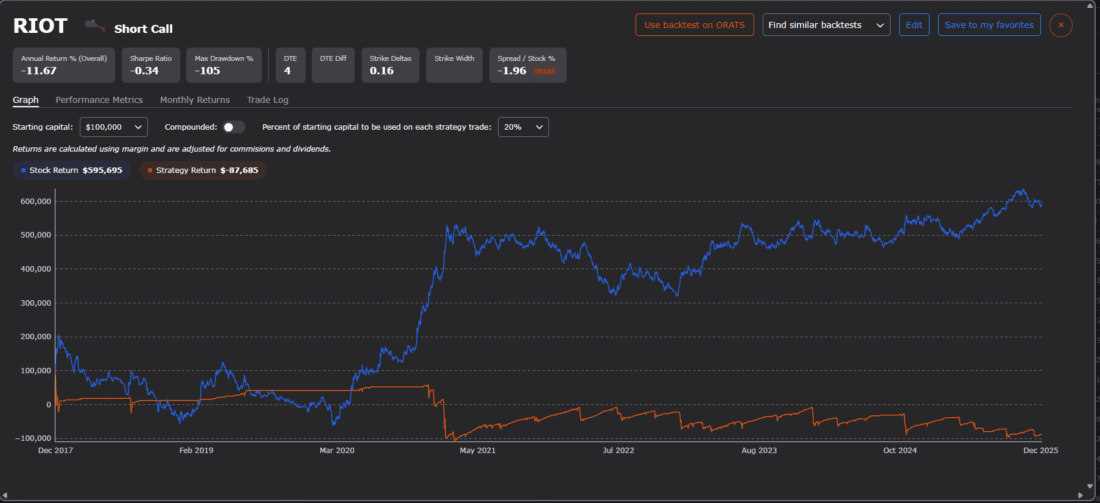


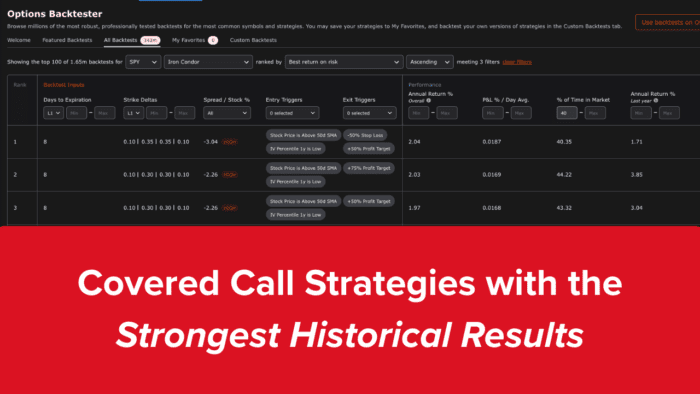
The ORATS Backtester allows traders to explore historical covered call performance across a large universe of liquid stocks, ETFs and indexes. Users can compare expiration cycles, strike selections and performance metrics while reviewing historical equity curves and trade logs. [interactiv…rokers.com], [orats.com]
This allows investors to move beyond general opinions and investigate how various covered call approaches performed historically across different market environments.
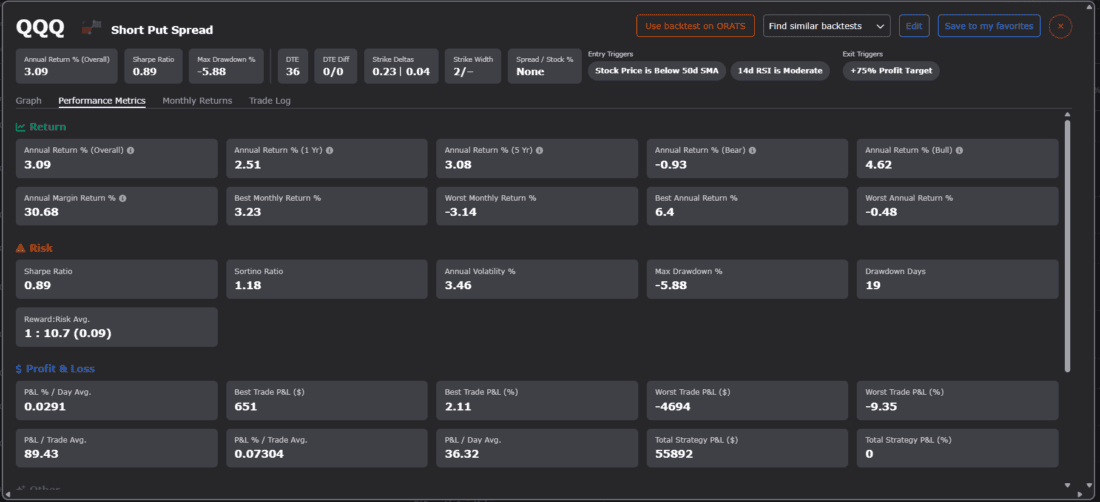
Covered calls remain popular because they can provide income while maintaining stock exposure. However, the choices surrounding expiration and strike selection can meaningfully influence outcomes. Historical analysis can help investors understand those differences and make more informed decisions before entering a trade.
The analysis in this material is provided for information only and is not and should not be construed as an offer to sell or the solicitation of an offer to buy any security. To the extent that this material discusses general market activity, industry or sector trends or other broad-based economic or political conditions, it should not be construed as research or investment advice. To the extent that it includes references to specific securities, commodities, currencies, or other instruments, those references do not constitute a recommendation by IBKR to buy, sell or hold such investments. This material does not and is not intended to take into account the particular financial conditions, investment objectives or requirements of individual customers. Before acting on this material, you should consider whether it is suitable for your particular circumstances and, as necessary, seek professional advice.
The views and opinions expressed herein are those of the author and do not necessarily reflect the views of Interactive Brokers, its affiliates, or its employees.
Options involve risk and are not suitable for all investors. For information on the uses and risks of options, you can obtain a copy of the Options Clearing Corporation risk disclosure document titled Characteristics and Risks of Standardized Options by going to the following link ibkr.com/occ. Multiple leg strategies, including spreads, will incur multiple transaction costs.
The analysis in this material is provided for information only and is not and should not be construed as an offer to sell or the solicitation of an offer to buy any security. To the extent that this material discusses general market activity, industry or sector trends or other broad-based economic or political conditions, it should not be construed as research or investment advice. To the extent that it includes references to specific securities, commodities, currencies, or other instruments, those references do not constitute a recommendation by IBKR to buy, sell or hold such investments. This material does not and is not intended to take into account the particular financial conditions, investment objectives or requirements of individual customers. Before acting on this material, you should consider whether it is suitable for your particular circumstances and, as necessary, seek professional advice. The views and opinions expressed herein are those of the author and do not necessarily reflect the views of Interactive Brokers, its affiliates, or its employees.











Join The Conversation
For specific platform feedback and suggestions, please submit it directly to our team using these instructions.
If you have an account-specific question or concern, please reach out to Client Services.
We encourage you to look through our FAQs before posting. Your question may already be covered!