
- Solve real problems with our hands-on interface
- Progress from basic puts and calls to advanced strategies
Interactive Options Course
Posted January 22, 2024 at 10:45 am
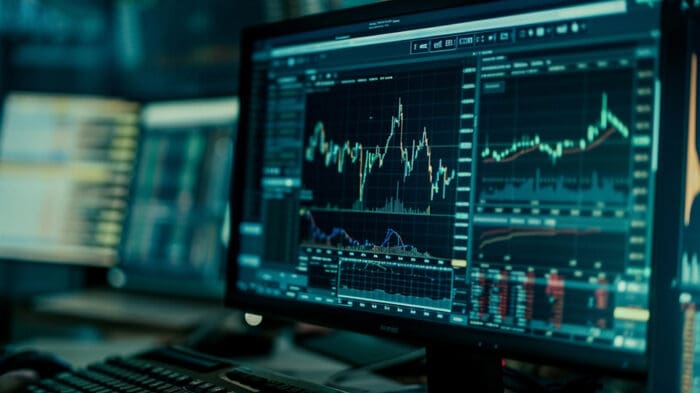
Artificial Intelligence (AI) has revolutionized the trading industry by introducing AI trading software, which combines sophisticated algorithms, machine learning techniques, and data analytics to assist both novice and seasoned traders in making informed decisions. These AI-driven platforms can analyze vast amounts of market data at incredible speeds, identifying trends and insights that would be impossible for humans to discern unaided. In doing so, they serve as powerful tools for risk management, strategy development, and automated execution of trades.
The software varies in complexity and functionality, ranging from basic robo-advisors suitable for beginners to complex systems that provide granular control over trading strategies for professional traders. With features like backtesting, predictive analytics, and real-time market alerts, these systems have become critical for those seeking to gain an edge in increasingly competitive markets. As the financial landscape evolves, this technology adapts, ensuring compliance with regulatory standards, enhancing security measures, and improving user interfaces to make advanced trading accessible to a broader audience.
(Note: This is not financial advice and is for educational purposes only)
AI trading software encompasses a range of tools that utilize artificial intelligence to aid investors and traders in navigating financial markets. They are designed to enhance the decision-making process by providing data-driven insights and automating trading actions.
Robo Advisors: Ideal for beginners or hands-off investors, robo advisors provide automated portfolio management using algorithms based on the user’s financial objectives and risk preferences.
Research and Alert Systems: These tools streamline the research process by aggregating news and providing alerts for potential trading opportunities. As an example this AI Trader Finder by Charlie Moon stands out for it’s ability to backtest option strategies and uncover high profit potential trade ideas.
The application of AI in trading aims to enhance efficiency and potentially increase profitability, while also aiming to reduce the emotional impact on trading decisions.
AI trading systems harness sophisticated algorithms to analyze data, inform investment strategies, and manage risks effectively. They comprise essential tools designed to enhance the decision-making process in trading.
AI trading systems are built upon algorithmic strategies. These strategies employ predefined sets of rules rooted in statistical analysis to automate buying and selling on the markets. They are designed to respond to a variety of market variables including price, volume, and time, often executing trades with higher speed and accuracy than human traders.
Backtesting tools are integral to AI trading systems, allowing traders to test their strategies against historical data before risking actual capital. This feature enables the identification of the risk and expected returns of strategies under different market conditions. It provides a sandbox for refining algorithmic strategies, improving overall efficiency.
To maintain their edge, AI trading systems depend on real-time market data integration. They are programmed to ingest and analyze live data streams to make in-the-moment trading decisions. Access to real-time data helps ensure that the systems can react instantly to market movements, capturing opportunities or curtailing losses as necessary.
Effective risk management protocols are foundational to AI trading systems. These protocols help in setting loss limits, hedging against potential downturns, and reducing the exposure to market volatility. They are designed to preserve capital and sustain profitability by mitigating potential risks associated with trading activities.
Machine learning enhances trading software by enabling predictive analytics and pattern recognition capabilities that assist traders in making informed decisions based on large volumes of market data.
Machine learning algorithms are employed to predict future market trends and movements. By analyzing historical data, these algorithms can detect subtle patterns and indicators that may influence future prices. For instance:
Pattern recognition is a fundamental aspect of machine learning in trading software. It allows:
When looking at the different AI trading software in the market place, traders should consider the software’s ability to provide data-driven insights and execute trades efficiently. The tools discussed below are good examples of software that is leveraging artificial intelligence to enhance trading strategies. You can see our full list of the various ai trading tools here.
(Note: This is not financial advice and is for educational purposes only)
One of the more unique AI trading tools on the list is one that is flying under the radar currently.
The AI Trade Finder run by Charlie Moon, a seasoned trader featured on networks like Fox Business and BNN Bloomberg, is a revolutionary A.I.-powered trading software. This tool, leveraging the capabilities of OpenAI’s ChatGPT, is designed to transform trading strategies and outcomes. It analyzes thousands of stocks and numerous technical indicators within seconds, offering daily trade ideas.
If you want to learn how AI can be applied to your trading link this, you can check out Charlie’s free AI trading guide by clicking here.
The software simplifies trading by narrowing down options and suggesting specific strategies, suitable for both beginners and experienced traders. It provides details like optimal stocks to trade, technical indicators, strike prices, and expiration dates for options trading, significantly reducing the time and effort required for successful trading.
In combination with the tool, Charlie reviews the A.I.’s recommendations in real-time, offering live trade signals based on his two decades of trading experience. He scans through to identify which have the highest profit potential for his students to learn and follow along with.
The program is exclusive, with limited public access.
Moon emphasizes the transformative potential of this technology in trading, suggesting that those not utilizing such A.I. tools will fall behind. He invites viewers to seize this opportunity to revolutionize their trading approach and potentially achieve significant financial success.
Vantage Point AI Software stands out for its predictive market forecasting abilities. Utilizing intermarket analysis and neural networks, it predicts market movements with a reported accuracy rate of up to 87.4%. Traders often utilize this software to gain a competitive edge in anticipating price shifts.
The operating principle of the VantagePoint software is rooted in how a single stock correlates with a range of different factors. Consider, for instance, the futures market, commodities like gold or oil, and other competitors in the field. The software assesses all these diverse elements to establish how a single stock might be influenced by various potential factors.
The software employs the VantagePoint AI and machine learning to analyze thousands of these different factors and assigns significance to them based on what the VantagePoint AI determines. For instance, a stock in the airline industry will likely be influenced by the performance of other stocks in the same industry. The AI will therefore assign a heavier weight to the performance of other airline stocks as compared to, say, a competitor in the microchip industry, which may bear no correlation.
The quality of user interfaces in AI trading software significantly affects the ease of use and efficiency for traders. With interfaces designed for clarity and functionality, users can navigate their trading tasks with greater confidence and less hassle.
AI trading software typically includes a range of customization options to suit individual trading styles and preferences. Users can often:
Accessibility and usability are central to the user experience. AI trading platforms strive to provide:
When considering AI trading software, two critical factors for both developers and users are adhering to data protection standards and ensuring compliance with financial regulations. These factors are indispensable for maintaining trust and legality in the digital trading space.
AI trading software must uphold stringent data protection standards to safeguard user information. These standards are governed by frameworks like the GDPR and involve encryption, secure data storage, and limited access to sensitive data. Compliance signifies:
AI trading platforms are obligated to comply with a range of financial regulations to prevent market manipulation, insider trading, and other unlawful activities. Regulatory bodies such as the SEC in the United States monitor and enforce rules including, but not limited to:
These standards and practices ensure that AI trading software operates within the legal frameworks designed to protect the integrity of financial markets and personal data.
AI trading software equips investors with sophisticated tools for evaluating performance through comprehensive analysis and reporting features. These systems scrutinize market behavior and trading efficiency, automating the generation of actionable insights.
Key Performance Indicators (KPIs) and metrics are crucial for assessing the success of trading strategies. AI trading software typically tracks a range of KPIs, including:
Investors depend on these metrics to fine-tune strategies and make data-driven decisions.
Automated reporting in AI trading software streamlines the process of data analysis. Features typically include:
These automated features enable investors to monitor their portfolios efficiently and make timely adjustments to their trading strategies.
The financial industry sees constant advancements in AI that are setting transformative trends in trading, with significant implications for trading professions.
Recent progress in artificial intelligence has led to the development of AI trading tools capable of complex analysis and real-time decision-making. Machine learning algorithms have become more refined, and they are now able to interpret vast amounts of market data to identify trading patterns that may not be visible to human traders. For instance, predictive analytics are being used to forecast market movements with greater accuracy, leveraging historical data and current market trends.
Additionally, the integration of natural language processing (NLP) allows AI systems to scan news and social media in real-time for sentiment analysis, which can influence trading decisions. The ongoing innovation in AI means that future trading bots will not just execute trades but also harness predictive insights for a more proactive trading strategy.
The rise of AI in trading is altering the landscape for trading professionals. Traditional roles such as traders and analysts need to adapt by gaining skills in data science and algorithmic trading. This is something we actively teach and help our students adjust to at Prosper Trading Academy. There is a growing demand for professionals who can oversee and improve AI trading systems. These individuals must possess a deep understanding of both finance and technology, with the expertise to interpret AI analyses and intervene when necessary.
The future may also see a shift in responsibilities, with AI handling routine and quantitative tasks, while humans focus on strategy and oversight. Job roles may evolve to emphasize the maintenance and ethical management of AI trading systems, as the human element becomes critical in supervising AI’s autonomous operations and ensuring regulatory compliance.
When evaluating AI trading software, investors must carefully assess the financial implications. Cost components such as licensing fees and total ownership expenses significantly influence the decision-making process.
AI trading software often employs a range of pricing models. The licensing fee for an AI trading bot might be a fixed rate or dependent on trade volume. For instance, certain providers charge a per-trade fee—like a reported $1.22/trade—while others offer monthly subscriptions, such as TrendSpider’s automated alert system at $35/month. Subscription details may vary, with some platforms offering discounts for annual commitments. For example, Trade Ideas Premium offers access to all AI features at $167 annually, a reduction from the monthly rate of $228.
The Total Cost of Ownership (TCO) for AI trading software is a comprehensive measure that combines initial fees, subscription costs, and other related expenses. An accurate TCO analysis includes:
Investors should compare options by considering both features and financial implications to ensure a cost-effective choice.
The evolution of artificial intelligence is reshaping the landscape of trading with AI trading software gaining popularity for its efficiency and advanced analytic capabilities. Investors are navigating this new terrain by frequently asking questions to maximize their understanding and use of these tools.
Some of the most powerful AI trading software include things like Charlie Moon’s AI Trade Finder and VantagePoint’s AI Charting Tool. These platforms have received positive user feedback for their advanced features and overall performance.
AI trading platforms utilize complex algorithms and machine learning to analyze market data and trends. They make predictions and execute trades at optimal times, however, profitability cannot be guaranteed due to the inherent risk in trading.
Yes, beginners can use AI trading software. Platforms like Capitalise.ai are designed with user-friendly interfaces to assist those new to trading, offering an easier entry point into using AI for trading decisions.
Key features to look for in an AI stock trading bot include real-time market scanning, automated trade execution, robust technical analysis tools, and bot-driven statistics.
—
Originally Posted January 2, 2024 – AI Trading Software: Here’s What You Need To Know
IMPORTANT NOTICE: Trading Stock, Stock Options, Cryptocurrencies, and their derivatives involves a substantial degree of risk and may not be suitable for all investors. Currently, cryptocurrencies are not specifically regulated by any agency of the U.S. government. Past performance is not necessarily indicative of future results. Prosper Trading Academy LLC provides only training and educational information. By visiting the website and accessing our content, you are agreeing to the terms and conditions.
Information posted on IBKR Campus that is provided by third-parties does NOT constitute a recommendation that you should contract for the services of that third party. Third-party participants who contribute to IBKR Campus are independent of Interactive Brokers and Interactive Brokers does not make any representations or warranties concerning the services offered, their past or future performance, or the accuracy of the information provided by the third party. Past performance is no guarantee of future results.
This material is from Prosper Trading Academy and is being posted with its permission. The views expressed in this material are solely those of the author and/or Prosper Trading Academy and Interactive Brokers is not endorsing or recommending any investment or trading discussed in the material. This material is not and should not be construed as an offer to buy or sell any security. It should not be construed as research or investment advice or a recommendation to buy, sell or hold any security or commodity. This material does not and is not intended to take into account the particular financial conditions, investment objectives or requirements of individual customers. Before acting on this material, you should consider whether it is suitable for your particular circumstances and, as necessary, seek professional advice.
For specific platform feedback and suggestions, please submit it directly to our team using these instructions.
If you have an account-specific question or concern, please reach out to Client Services.
We encourage you to look through our FAQs before posting. Your question may already be covered!
Related Articles














What is best AI trading or System to use when trading S&P Futures?