
- Solve real problems with our hands-on interface
- Progress from basic puts and calls to advanced strategies
Interactive Options Course
Posted April 1, 2026 at 10:30 am
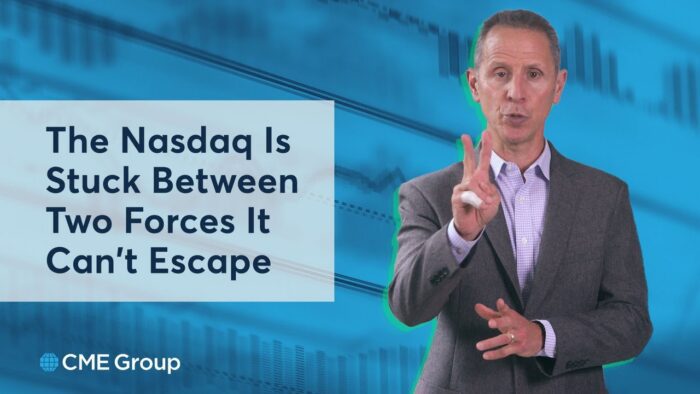
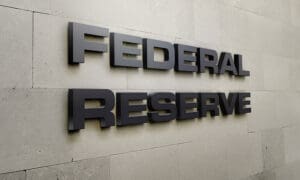
The Nasdaq 100 hit an all-time high near 26,700 in late October and has since fallen to approximately 23,000. Jim Iuorio of TJM Institutional Services examines the two parts of the decline and what it means for the broader market outlook. The first leg of weakness traces back to a rotation away from the multi-year AI trade, where stretched valuations left the index exposed. The second leg accelerated as the conflict with Iran pushed oil prices higher, raising inflation concerns that now complicate the Federal Reserve’s path forward. With inflation still elevated and the labor market softening, policymakers face the challenge of managing both sides of their mandate simultaneously. The March FOMC meeting left rates unchanged at 3.50 to 3.75 percent, and the dot plot still projects one cut for 2026, but uncertainty has grown. On the technical side, the Nasdaq 100 flashed a warning when its 50-day moving average crossed below the 100-day on February 23rd. Now the 50-day is converging on the 200-day, setting up what traders call a death cross. Jim explains what that pattern signals and how it tends to attract selling pressure. Looking ahead, the next Nonfarm Payrolls report drops on Friday, April 3rd. Expectations call for a rebound of around 65,000 jobs following the prior negative 92,000 print. Jim discusses how a weaker-than-expected number could reinforce the stagflation narrative and further complicate the Fed’s rate path. Insights from Jim Iuorio. https://www.cmegroup.com/markets/equi…
© [2023] CME Group Inc. All rights reserved. This information is reproduced by permission of CME Group Inc. and its affiliates under license. CME Group Inc. and its affiliates accept no liability or responsibility for the information contained herein, including but not limited to the currency, accuracy and/or completeness of this information, and delays, interruptions, errors or omissions. This information is an unofficial copy and may not reflect the official and accurate version. For the definitive and up-to-date version of any of this information, please see cmegroup.com.
Information posted on IBKR Campus that is provided by third-parties does NOT constitute a recommendation that you should contract for the services of that third party. Third-party participants who contribute to IBKR Campus are independent of Interactive Brokers and Interactive Brokers does not make any representations or warranties concerning the services offered, their past or future performance, or the accuracy of the information provided by the third party. Past performance is no guarantee of future results.
This material is from CME Group and is being posted with its permission. The views expressed in this material are solely those of the author and/or CME Group and Interactive Brokers is not endorsing or recommending any investment or trading discussed in the material. This material is not and should not be construed as an offer to buy or sell any security. It should not be construed as research or investment advice or a recommendation to buy, sell or hold any security or commodity. This material does not and is not intended to take into account the particular financial conditions, investment objectives or requirements of individual customers. Before acting on this material, you should consider whether it is suitable for your particular circumstances and, as necessary, seek professional advice.
Futures are not suitable for all investors. The amount you may lose may be greater than your initial investment. Before trading futures, please read the CFTC Risk Disclosure. A copy and additional information are available at ibkr.com.
Trading options on futures contracts involves substantial risk and is not suitable for all investors. Selling (writing) options on futures exposes the seller to potentially unlimited risk of loss, as the seller may be required to fulfill the terms of the contract if the market moves unfavorably. Losses can exceed the initial margin or premium received. Before engaging in short options strategies on futures, you should carefully consider your financial situation, investment objectives, and risk tolerance. You must fully understand the risks involved, including the possibility of losing more than your initial investment. The Commodity Futures Trading Commission (CFTC) and the National Futures Association (NFA) require that you receive and review the Options Disclosure Document (ODD) before trading options on futures. This document explains the characteristics and risks of options trading.
Related Articles














Join The Conversation
For specific platform feedback and suggestions, please submit it directly to our team using these instructions.
If you have an account-specific question or concern, please reach out to Client Services.
We encourage you to look through our FAQs before posting. Your question may already be covered!