
- Solve real problems with our hands-on interface
- Progress from basic puts and calls to advanced strategies
Interactive Options Course
Posted April 22, 2026 at 10:00 am
Last Friday, Iran declared the Strait of Hormuz open to commercial shipping, prompting a sharp decline in oil prices and a surge in airline stocks.
Alas, the relief lasted less than 24 hours.
By Saturday, Iran’s military had retaken strict control of the strait after its Revolutionary Guard Corps attacked two commercial vessels. The next day, the U.S. seized an Iranian-flagged cargo ship.
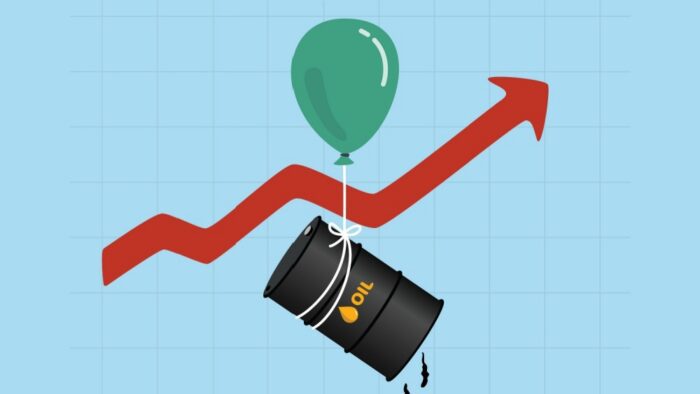
Oil prices jumped 5% overnight into Monday as the ceasefire, set to expire on Wednesday, hangs by a thread.
For a sector that’s been whipsawed by geopolitics and fuel costs, the volatility is a reminder that the path forward won’t be a straight line. But I believe the underlying investment case for airlines remains strong.
This past week also brought news that United Airlines CEO Scott Kirby pitched the White House on a potential merger with American Airlines, only for American to publicly reject the idea last Friday, while Spirit Airlines is seeking emergency government aid to continue operating.
First, let’s talk about airline industry M&A, a topic I’ve discussed many times before.
The history of the U.S. airline industry is really a history of consolidation driven by crisis. The pattern has been remarkably consistent. Historically, when an external shock has hit—a recession, a war, an energy spike—the weakest carriers have folded or been acquired, while the strongest have emerged leaner and more profitable.
After deregulation in 1978, fare wars and overcapacity crushed margins and triggered the first wave of mergers through the 1980s. Later, the September 11 attacks killed TWA outright and forced US Airways into a merger with America West. The 2008 financial crisis gave us Delta-Northwest, United-Continental and Southwest-AirTran.
By 2013, when American merged with US Airways, the modern “Big Three” structure was firmly in place. Today’s five largest carriers—Delta, American, United, Southwest and Alaska—have absorbed more than 40 smaller since 1960.

Now we may be starting to see it again as the war in Iran and closure of the Strait of Hormuz has sent jet fuel prices through the roof.
Spirit Airlines, already in Chapter 11 for the second time in under a year, is reportedly on the verge of liquidation. Its previous merger attempts—first with JetBlue, then with Frontier—both fell apart. The low-cost carrier, already on shaky ground, simply couldn’t absorb fuel at these prices.
Meanwhile, United’s Scott Kirby reportedly pitched the most ambitious airline deal in a generation during a February 25 meeting with President Trump. A combined United-American merger would create the world’s largest carrier, commanding roughly 40% of domestic capacity and generating over $100 billion in annual revenue.

No question, the deal would face enormous antitrust scrutiny. Analysts have already identified nearly 300 overlapping routes that would likely require divestitures.
So far, the White House has declined to take a position, which I take as neither encouragement nor discouragement.
However, American Airlines shot the idea down late Friday, stating it’s “not engaged with or interested in any discussions regarding a merger with United Airlines.” I don’t think that necessarily means the conversation is over, but for now, the deal appears to be on ice.
What’s changed since the last wave of consolidations is the business model itself. Many carriers have transformed themselves from transportation providers into sophisticated platforms built on premium products, loyalty programs, co-branded financial services and more.
Just look at Delta’s most recent earnings report. The carrier posted record first-quarter revenue of $14.2 billion, up more than 9% year-over-year, even as fuel costs surged dramatically. The Atlanta-based company projected fuel costs of $4.30 per gallon this quarter, up from $2.62 in the prior year’s quarter, an increase that will add more than $2 billion in costs. And yet earnings grew more than 40% over the prior year.
How did Delta manage this? Well, premium revenue climbed 14%. Loyalty revenue rose 13%. Its deal with American Express alone has exceeded $2 billion. Diversified, high-margin revenue streams now represent 62% of Delta’s total revenue and are growing in the mid-teens. CEO Ed Bastian noted the company is also reducing capacity growth and moving to recapture higher fuel costs through pricing, which is exactly the kind of disciplined behavior I want to see.
This is the “premiumization” model that industry analysts have been talking about, and it’s working. Today’s airlines are doing more than just selling seats. They’re closer to consumer and financial services firms that also happen to fly airplanes.
Last week, considering higher fuel prices, I analyzed historical data going back to 2001, looking at the relationship between Brent crude oil prices and the NYSE Arca Global Airlines Index.
What I found is that oil prices alone don’t tell you much about where airline stocks are headed. Instead, what matters is the trend.
When oil had been rising over the past four weeks, airline stocks returned an average of nearly 6% over the following year. Conversely, when oil had been falling for four weeks, they returned an average of almost 14%.
The direction of oil, then, mattered about twice as much as its price.

The most powerful setup was when oil was elevated (in the top 20% of its historical range) but had started to decline over the prior 13 weeks. In those instances, airline stocks returned an average of nearly 31% over the following 12 months, with positive outcomes roughly 84% of the time.
Think about what happened on Friday. Iran’s foreign minister announced the Strait of Hormuz is open to commercial vessels for the duration of the ceasefire. Crude dropped 11%, and airline stocks popped across the board. By Monday, though, after Iran reversed course and the U.S. seized a vessel, oil was back up 5%.
A sustained decline in oil prices from elevated levels hasn’t materialized yet, but the historical pattern remains intact. When it does arrive, and eventually it will, history suggests we could be entering one of the most favorable entry points for airline stocks in years. The key is to watch for the rollover in the oil trend, not reacting to any single headline.
It’s worth pointing out that travel demand remains robust. The World Travel & Tourism Council (WTTC) reported this week that the global sector hit a record $11.6 trillion GDP contribution in 2025, growing nearly 50% faster than the overall global economy.
Here at home, the U.S. Travel Association estimates that larger tax refunds this year could pump an additional $5.1 billion into domestic leisure travel spending, with middle-income households driving the bulk of it.
Granted, airfares were up about 15% year-over-year in March, but as Southwest CEO Bob Jordan told ABC News this week, fares haven’t outpaced broader inflation since the pandemic. Consumers are still traveling.

The risk has always been on the cost side, specifically fuel. The Hormuz reopening didn’t hold, and the ceasefire’s fate remains uncertain.
But that’s precisely the point I’m making: the airlines that have built premium, diversified revenue models are proving they can weather this kind of turbulence. When the fuel headwind eases, those carriers will be in the strongest position.
Holdings may change daily. Holdings are reported as of the most recent quarter-end. The following securities mentioned in the article were held by one or more accounts managed by U.S. Global Investors as of (03/31/2026): United Airlines, American Airlines, JetBlue Airways, Frontier Group Holdings, Delta Air Lines, Southwest Airlines, Alaska Air Group, JetBlue Airways, Frontier Group Holdings, Air France-KLM, Deutsche Lufthansa.
The NYSE Arca Global Airline Index is a modified equal-dollar weighted index designed to track the performance of highly capitalized and liquid international passenger airline companies.
—
Originally Posted April 20, 2026 – Hormuz Whiplash Shows Why the Oil Trend Matters More Than the Price for Airlines
All opinions expressed and data provided are subject to change without notice. Some of these opinions may not be appropriate to every investor. By clicking the link(s) above, you will be directed to a third-party website(s). U.S. Global Investors does not endorse all information supplied by this/these website(s) and is not responsible for its/their content.
All opinions expressed and data provided are subject to change without notice. Holdings may change daily.
Some of these opinions may not be appropriate to every investor. By clicking the link(s) above, you will be directed to a third-party website(s). U.S. Global Investors does not endorse all information supplied by this/these website(s) and is not responsible for its/their content.
About U.S. Global Investors, Inc. – U.S. Global Investors, Inc. is an investment adviser registered with the Securities and Exchange Commission (“SEC”). This does not mean that we are sponsored, recommended, or approved by the SEC, or that our abilities or qualifications in any respect have been passed upon by the SEC or any officer of the SEC.
This commentary should not be considered a solicitation or offering of any investment product.
Certain materials in this commentary may contain dated information. The information provided was current at the time of publication.
Some links above may be directed to third-party websites. U.S. Global Investors does not endorse all information supplied by these websites and is not responsible for their content.
Please consider carefully a fund’s investment objectives, risks, charges and expenses. For this and other important information, obtain a fund prospectus by clicking here or by calling 1-800-US-FUNDS (1-800-873-8637). Read it carefully before investing. Foreside Fund Services, LLC, Distributor. U.S. Global Investors is the investment adviser.
Information posted on IBKR Campus that is provided by third-parties does NOT constitute a recommendation that you should contract for the services of that third party. Third-party participants who contribute to IBKR Campus are independent of Interactive Brokers and Interactive Brokers does not make any representations or warranties concerning the services offered, their past or future performance, or the accuracy of the information provided by the third party. Past performance is no guarantee of future results.
This material is from US Global Investors and is being posted with its permission. The views expressed in this material are solely those of the author and/or US Global Investors and Interactive Brokers is not endorsing or recommending any investment or trading discussed in the material. This material is not and should not be construed as an offer to buy or sell any security. It should not be construed as research or investment advice or a recommendation to buy, sell or hold any security or commodity. This material does not and is not intended to take into account the particular financial conditions, investment objectives or requirements of individual customers. Before acting on this material, you should consider whether it is suitable for your particular circumstances and, as necessary, seek professional advice.
Related Articles


















Join The Conversation
For specific platform feedback and suggestions, please submit it directly to our team using these instructions.
If you have an account-specific question or concern, please reach out to Client Services.
We encourage you to look through our FAQs before posting. Your question may already be covered!