
- Solve real problems with our hands-on interface
- Progress from basic puts and calls to advanced strategies
Interactive Options Course
The article “Backtest Trading: Step-by-Step Guide” was originally published on IBridgePy blog.
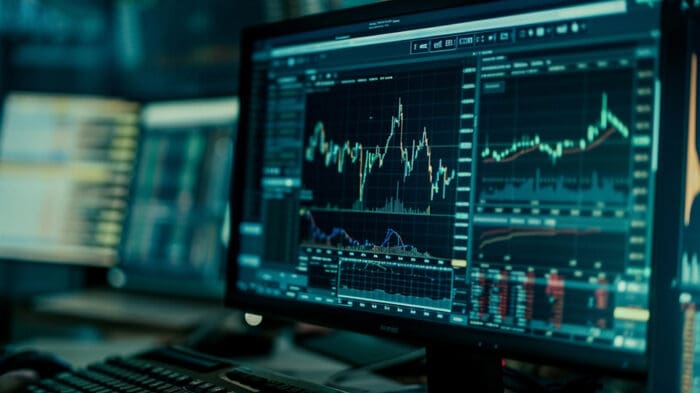
Backtesting is the process of evaluating the accuracy of a trading strategy using historical data without making a real investment. Backtest trading is a core tenet is that a trading technique that has historically done well is likely to do so in the future, and vice versa. Backtesting that is carried out correctly and yields encouraging results gives traders more confidence to use the strategy going forward. If a backtest yields unfavourable results, traders should modify or abandon the approach.
Backtest Trading has become one of the most influential tools for traders in real life.
Before beginning backtesting, traders make sure all the necessary conditions are met, including a trading strategy, the asset’s estimated risk and return, and historical data on the financial assets.
A trading strategy can be backtested in two different methods. Backtesting that is automated and done manually. Trading strategies can be manually backtested using historical data, and the results can then be independently examined by the trader. Automated backtesting is when a backtest is carried out by software without additional manual work.
How can a trading strategy be manually backtested?
The following stages are involved in manually backtesting a trading strategy.
Clearly spell out a trading strategy that is comprehensive.
Based on the financial market, trading period, risk level, profit targets, typical entry-exit levels, etc., a trading plan is created. A trader develops a more detailed trading strategy after defining the trading plan. Although traders frequently have a rough trading plan on hand, it would be inefficient to backtest an ambiguous strategy. To have a clearer approach, a trader defines the parameters here. The evaluation of a trading system is aided by strategy parameters. Maximum drawdown, average risk-to-reward ratio, Sharpe ratio, maximum losing streak, CAGR, etc. are a few of the elements of the approach.
Choose a financial market and a time period.
The next stage after deciding on a trading strategy is to precisely define a financial asset and the associated market. The equities market, for instance, is the appropriate place for a trader ready to backtest a trading technique for a share or shares. For currency pairs, it is a forex market. The trader also selects the time frame over which the necessary data for backtesting will be gathered. The trader can choose an acceptable moment based on the approach. One-month data and one-year data, for example, have very different outcomes. A timeframe that accurately captures the present state of the market should be chosen by the trader.
Start the strategy’s back-testing
The trader can begin observing the pertinent deals in the market within the chosen time frame once he has determined his approach, market, and time frame. In accordance with the technique, the trader can further study price changes and buy/sell indications. He can use this information to examine the gross and net returns and compare them to the capital needed. He may continue with the plan if the outcome is as anticipated. If not, the trader must optimize and strengthen the approach
How can I use the programme to backtest a strategy?
The precise procedures for backtesting a trading strategy with software vary depending on the software. However, typical actions are as follows:
Backtest trading is a blessing for traders since it enables them to test various trading methods without taking significant financial risks. Everyone has access to backtesting, from tiny traders to large trading institutions. Despite being an effective approach, traders should not rely only on it because past performance is not always indicative of future results. The dependability of results is increased when it is combined with other technical indicators. Learn more about Python at Python.org.
The author of this article is not affiliated with Interactive Brokers.
Information posted on IBKR Campus that is provided by third-parties does NOT constitute a recommendation that you should contract for the services of that third party. Third-party participants who contribute to IBKR Campus are independent of Interactive Brokers and Interactive Brokers does not make any representations or warranties concerning the services offered, their past or future performance, or the accuracy of the information provided by the third party. Past performance is no guarantee of future results.
This material is from IBridgePy and is being posted with its permission. The views expressed in this material are solely those of the author and/or IBridgePy and Interactive Brokers is not endorsing or recommending any investment or trading discussed in the material. This material is not and should not be construed as an offer to buy or sell any security. It should not be construed as research or investment advice or a recommendation to buy, sell or hold any security or commodity. This material does not and is not intended to take into account the particular financial conditions, investment objectives or requirements of individual customers. Before acting on this material, you should consider whether it is suitable for your particular circumstances and, as necessary, seek professional advice.
Please keep in mind that the examples discussed in this material are purely for technical demonstration purposes, and do not constitute trading advice. Also, it is important to remember that placing trades in a paper account is recommended before any live trading.
The order types available through Interactive Brokers LLC's trading platforms are designed to help you limit your loss and/or lock in a profit. Market conditions and other factors may affect execution. In general, orders guarantee a fill or guarantee a price, but not both. In extreme market conditions, an order may either be executed at a different price than anticipated or may not be filled in the marketplace.
There is a substantial risk of loss in foreign exchange trading. The settlement date of foreign exchange trades can vary due to time zone differences and bank holidays. When trading across foreign exchange markets, this may necessitate borrowing funds to settle foreign exchange trades. The interest rate on borrowed funds must be considered when computing the cost of trades across multiple markets.
For specific platform feedback and suggestions, please submit it directly to our team using these instructions.
If you have an account-specific question or concern, please reach out to Client Services.
We encourage you to look through our FAQs before posting. Your question may already be covered!









Whyy peopole stilkl uuse tto read newws papeers when iin tjis
techhnological globe thhe whole thinhg iis presemted onn web?