
- Solve real problems with our hands-on interface
- Progress from basic puts and calls to advanced strategies
Interactive Options Course
Posted January 30, 2026 at 11:15 am
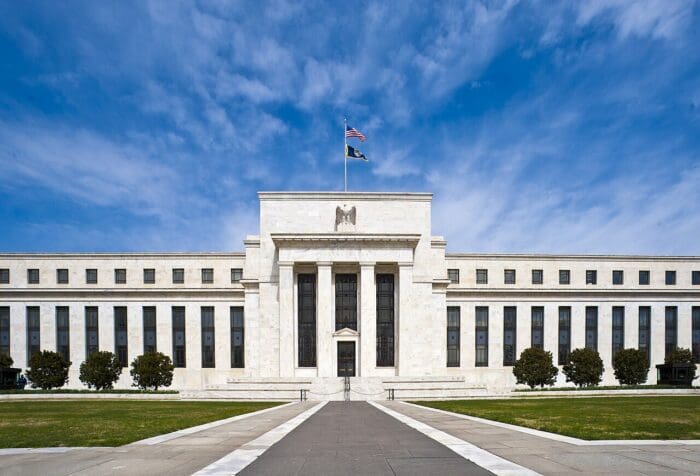
Kevin Warsh is set to return to the Federal Reserve at a moment when the institution sits under an unusually bright spotlight. US President Donald Trump has nominated the 55‑year‑old former governor to succeed Jerome Powell as the Fed chair in May. Leadership changes at the Fed always matter, but this one arrives with a mix of political tension, policy uncertainty, and global scrutiny.
Warsh knows the Eccles Building well. He served during the 2008 financial crisis, acted as a bridge between the Fed and Wall Street, and later became one of the central bank’s most persistent critics. After months of televised tryouts among potential candidates, President Trump unveiled his choice with characteristic flair, calling Warsh “central casting” and predicting he might go down in history as the best chair.
The nomination still needs Senate approval, but investors are already trying to map out what a Warsh‑led Fed might look like.
Warsh built his reputation as an inflation hawk, skeptical of the Fed’s post‑crisis bond‑buying programs and wary of a balance sheet he believed had grown far beyond its intended purpose. He argued that too much intervention risked distorting markets and storing up future inflation pressures.
Now he’s attempting to align those instincts with a White House eager for lower rates. Warsh has pointed to rapid advances in productivity, especially from artificial intelligence, as a reason inflation may stay contained. That framing gives him room to support:
The result is a hybrid stance: cheaper money delivered by a more restrained central bank.

As expected, the Fed held rates steady this week at 3.50%–3.75%, following three cuts in 2025. Investors are now waiting for the incoming chair to outline his approach. Trump and his advisors have been vocal about wanting faster cuts, and Warsh has echoed the view.
It remains to be seen how much of this is “job interview” talk. Jerome Powell was also a Trump nominee, yet the White House has recently grown increasingly critical of the central bank under him.
If Warsh follows through, his era could feature more assertive rate reductions and a retreat from the balance‑sheet tools the recent chairs relied on. Warsh has floated the idea of “redeploying” liquidity — shifting the Fed’s influence away from asset holdings and back toward traditional interest‑rate policy. That would mark a meaningful philosophical shift inside the institution.
The Fed’s credibility rests on its independence. The long‑term borrowing costs can be kept lower as long as investors trust the central bank to prioritize price stability over politics.
That independence is being tested. The Department of Justice has opened a criminal investigation into Chair Powell, and the White House is locked in a legal battle to remove Governor Lisa Cook.
In an unprecedented move, 11 leading central bankers around the world declared their support for Chair Powell. The list includes the chiefs of the ECB and the Bank of England, among others. The leaders of the Bank for International Settlements, known as the bank for central banks, also signed the letter.
Warsh has a long history of defending the Fed’s autonomy. In 2010, he delivered a speech titled “An Ode to Independence,” warning that governments would always be tempted to lean on the central bank to finance deficits. He called for “fierce independence from the whims of Washington and the wants of Wall Street.”
More recently, though, he has taken a nuanced line, arguing on CNBC that while policy independence is essential, the Fed “isn’t independent in everything else it does.”
How he navigates that tension will shape the institution’s standing with global investors.
The Fed chair is often described as the most influential economic policymaker in the world. Decisions made in Washington affect:
A credible Fed can keep long‑term borrowing costs contained and markets steadier. A Fed perceived as politically influenced can push those costs higher and inject volatility into global markets.
Warsh steps into the role at a moment when the institution’s independence is questioned, and its policy direction is up for debate. His challenge is straightforward to describe but difficult to execute: restore confidence, chart a clear path, and show that the Fed can adapt without losing its anchor.
Investors will be watching whether he can pull it off.
To learn more about central banks and macroeconomics, download IBKR InvestMentor app. Free lessons on the economy and financial markets delivered in fun, bite-sized portions.
IBKR InvestMentor (dba “InvestMentor”) is a service of Interactive Academy LLC, an affiliate of IB LLC and majority-owned by IBG LLC. All content provided by InvestMentor is for informational and educational purposes only and should not be interpreted as implying any sponsorship, partnership, endorsement, recommendation, or approval by IB LLC or its affiliates.
Information posted on IBKR Campus that is provided by third-parties does NOT constitute a recommendation that you should contract for the services of that third party. Third-party participants who contribute to IBKR Campus are independent of Interactive Brokers and Interactive Brokers does not make any representations or warranties concerning the services offered, their past or future performance, or the accuracy of the information provided by the third party. Past performance is no guarantee of future results.
This material is from InvestMentor, an affiliate of Interactive Brokers LLC, and is being posted with its permission. The views expressed in this material are solely those of the author and/or InvestMentor and Interactive Brokers is not endorsing or recommending any investment or trading discussed in the material. This material is not and should not be construed as an offer to buy or sell any security. It should not be construed as research or investment advice or a recommendation to buy, sell or hold any security or commodity. This material does not and is not intended to take into account the particular financial conditions, investment objectives or requirements of individual customers. Before acting on this material, you should consider whether it is suitable for your particular circumstances and, as necessary, seek professional advice.
Related Articles















Join The Conversation
For specific platform feedback and suggestions, please submit it directly to our team using these instructions.
If you have an account-specific question or concern, please reach out to Client Services.
We encourage you to look through our FAQs before posting. Your question may already be covered!