
- Solve real problems with our hands-on interface
- Progress from basic puts and calls to advanced strategies
Interactive Options Course
Posted August 24, 2026 at 12:04 pm
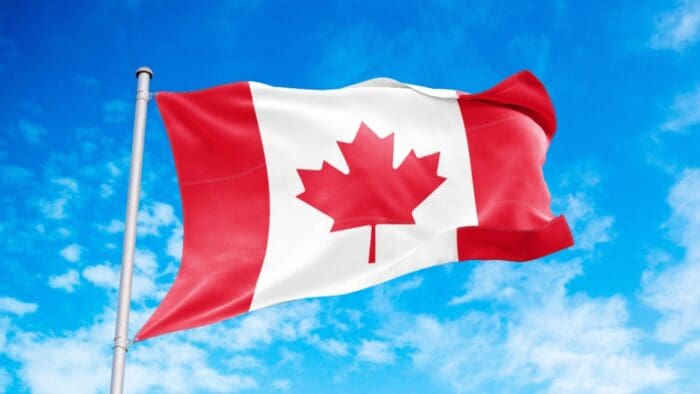
Some of you hopefully noticed that I didn’t publish anything last week. That was intentional – I was on a long-planned vacation to the Canadian Maritimes (Nova Scotia, New Brunswick, Prince Edward Island), hoping to see the Bay of Fundy tides and to unplug in a combination of small cities, unspoiled beaches, and sparsely populated towns. I happily checked all those boxes except one – I could not escape the news about the US-Canada trade negotiations. After spending the bulk of my professional life trading in the Canadian markets, I was unable to avoid pondering the ramifications of their breakdown.
If the usual patterns of news flow prevailed, this was likely a relatively minor story in the U.S., except for the 11th-hour extension on Tuesday and the actual cessation on Friday. It was hardly the case north of the border. We did a considerable amount of driving through sparsely populated areas in a car that had only terrestrial radio. That meant a lot of time listening to CBC Radio, their national broadcaster. The tariff talks were the lead story on news broadcasts and the main topic of conversation on public affairs shows.
To put it bluntly, they are seriously pissed off, and that anger extends across the political spectrum. Political enemies appeared to unite behind the idea that this was an unprovoked attack on their sovereignty. As it was reported up north, the US demands changed throughout the negotiations and included a say on with whom Canada can sign trade agreements, and limitations on the use of the French language. As a result, at least for now, they are professing a resolve to withstand the pain, and the Prime Minister’s team is undoubtedly planning measures to retaliate strategically. (Considering that US media is widely available throughout Canada, their citizenry tends to know much more about our country than most of ours does about theirs.)
A major US complaint is that American liquor is essentially unavailable in Canada. Most of their provinces sell liquor through their own stores, like what is done in Pennsylvania, New Hampshire, and other states.[i] We found this to be the case at the provincial liquor stores in Nova Scotia, New Brunswick, and Prince Edward Island. (Those channel checks were purely for research, by the way.) Unfortunately, their federal government has no say in those decisions.
This promises to be a slow-moving confrontation that probably damages both countries. While I fully understand the necessity for strategic tariffs on specific countries or products, I am not a fan of wide-ranging tariffs between well-intertwined trading partners. Considering that the President already upped the auto tariffs this morning, and that the Canadians are taking a couple of weeks to plan a response, this should be a source of friction and background noise for the coming months. Today’s minor dip in US stocks and the modest rise in the Canadian benchmark (TSE60), have this issue simmering on the back burner rather than boiling right now.
Among the other things I noticed while paying only minor attention to markets were the declines in the S&P 500 (SPX) and Nasdaq 100 (NDX) indices last week, and the relative stability in longer-term Treasury rates. The latter is particularly interesting in light of last week’s intervention at the long end of the yield curve, where the Treasury will be engaging in open market purchases of long-dated bonds using T-bills and the like. This is reminiscent of the Federal Reserve’s “Operation Twist,” which used a very similar methodology as part of a stimulative policy.
Two ramifications come to mind:
If the tides are moving in one direction or another, it takes an awful lot to shift them. I experienced this firsthand while kayaking in the Bay of Fundy last week. Unless you’re paddling furiously and continuously, the tides, whether monetary or market, will take you wherever they’re going, whether you like it or not.
[i] Ridiculous anecdote: a couple of years ago, I happened to meet Chris Sununu, the former governor of New Hampshire, at a party and started the pleasant conversation with, “I’ve bought a lot of liquor while passing through your state over the years.” He responded with, “yeah, I didn’t appreciate that one of my key responsibilities would be managing a large liquor business.” Considering that his father was also governor of N.H., I found that a bit disingenuous. But it could not have been the first time that some random guy approached him with that comment.
New to Interactive Brokers?
Open AccountAlready an Interactive Brokers Client?
Request Trading PermissionThe analysis in this material is provided for information only and is not and should not be construed as an offer to sell or the solicitation of an offer to buy any security. To the extent that this material discusses general market activity, industry or sector trends or other broad-based economic or political conditions, it should not be construed as research or investment advice. To the extent that it includes references to specific securities, commodities, currencies, or other instruments, those references do not constitute a recommendation by IBKR to buy, sell or hold such investments. This material does not and is not intended to take into account the particular financial conditions, investment objectives or requirements of individual customers. Before acting on this material, you should consider whether it is suitable for your particular circumstances and, as necessary, seek professional advice.
The views and opinions expressed herein are those of the author and do not necessarily reflect the views of Interactive Brokers, its affiliates, or its employees.
There is a substantial risk of loss in foreign exchange trading. The settlement date of foreign exchange trades can vary due to time zone differences and bank holidays. When trading across foreign exchange markets, this may necessitate borrowing funds to settle foreign exchange trades. The interest rate on borrowed funds must be considered when computing the cost of trades across multiple markets.
Spot currencies are not available at IBKR Singapore.
Municipal Bonds are only available from Interactive Brokers for IBKR LLC, IBKR Canada, IBKR Hong Kong, IBKR Australia and IBKR Singapore entities.
Related Articles














Join The Conversation
For specific platform feedback and suggestions, please submit it directly to our team using these instructions.
If you have an account-specific question or concern, please reach out to Client Services.
We encourage you to look through our FAQs before posting. Your question may already be covered!