
- Solve real problems with our hands-on interface
- Progress from basic puts and calls to advanced strategies
Interactive Options Course

Posted October 22, 2025 at 10:15 am
At a Glance
Factors like protein, yield and stocks are contributing to an inversion in the spread between KC HRW and Chicago Wheat futures
Late-season moisture has contributed to lower protein levels in HRW wheat
The normal relationship between Kansas City Hard Red Winter Wheat (KC HRW) and Chicago Wheat (Chicago) futures has upended in recent months due to unusual supply-side conditions in the present crop year.
Aligning with perceived quality, KC HRW Wheat is normally priced higher than Chicago Wheat, though in times of supply imbalance, the KC HRW-Chicago Wheat spread can invert. The spread has averaged negative since mid-August 2025 on the back of abundant hard red winter wheat supply and lower protein levels.
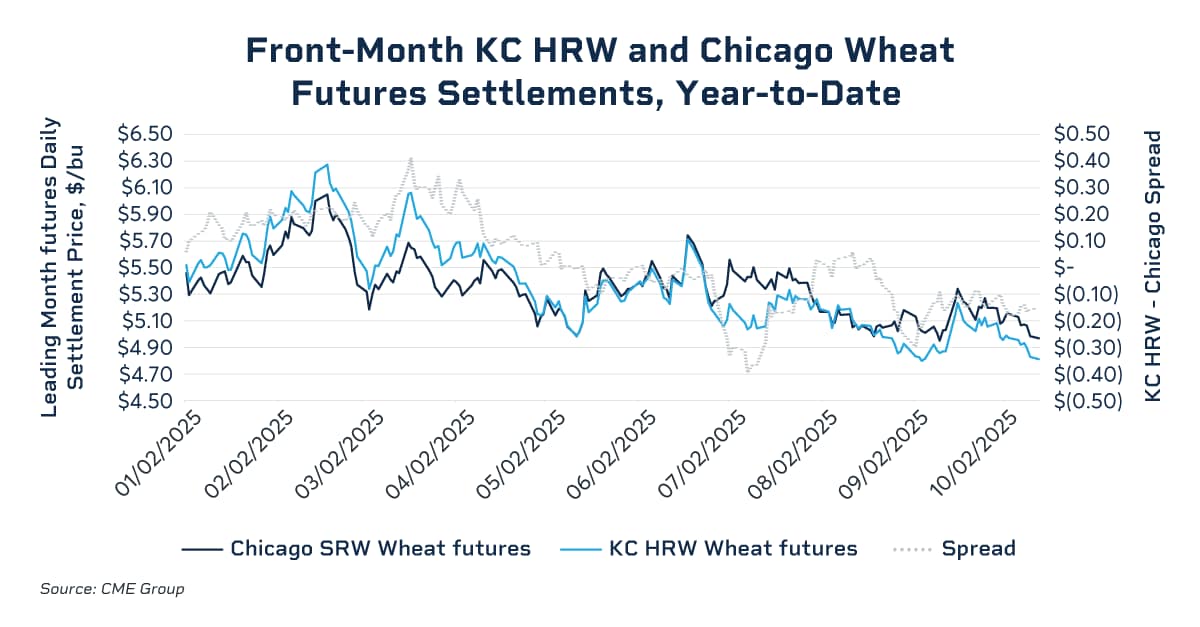
CME Group KC HRW and Chicago Wheat futures are physically deliverable, with robust and distinct underlying supplies.
Hard Red Winter: Underlying KC HRW futures is the national crop of hard red winter (HRW) wheat, the predominant class of wheat produced in the United States. HRW wheat is used traditionally in the production of bread, hardy baked goods and all-purpose flour. Planted in the fall and harvested in the spring and early summer, HRW wheat thrives after overwintering in the cold, snowy and semi-arid plains of the Midwestern and near-Western United States.
Soft Red Winter: Soft red winter wheat (SRW) is the wheat class that typically underlies the Chicago Wheat futures contract (though other wheat classes are also deliverable against the contract, including potentially HRW if conditions are economical). It has a softer texture due to its higher moisture content and is used in the production of cakes, cookies and other baked goods. Soft wheat, naturally, is grown in wetter climates such as in the Great Lakes and Eastern regions of the United States and has a lower protein content than hard wheat varieties.
The protein percentage of wheat responds to the growing conditions of the crop. The wheat endosperm, comprising the majority of the wheat berry’s weight, is composed of protein, carbohydrate, vitamins and minerals. When wheat is grown in wet climates, the endosperm fattens with moisture, resulting in a higher carbohydrate-to-protein ratio. Conversely, wheat grown in dry climates can have kernels that appear shriveled, with high-protein endosperm and a lower relative portion of carbohydrate.
Spring wheat, which is planted in dryer and colder regions than winter wheat, has significantly higher protein than either winter wheat variety. Note that CME Group Hard Red Spring Wheat futures continue to trade at a significant premium to Chicago and KC HRW Wheat futures as expected, with quality reports in 2025 noting strong protein development. In times of low protein in the nation’s HRW wheat supply, millers may choose to blend spring wheat with HRW wheat to increase total protein, though blended wheat is ineligible for delivery against KC HRW Wheat futures.
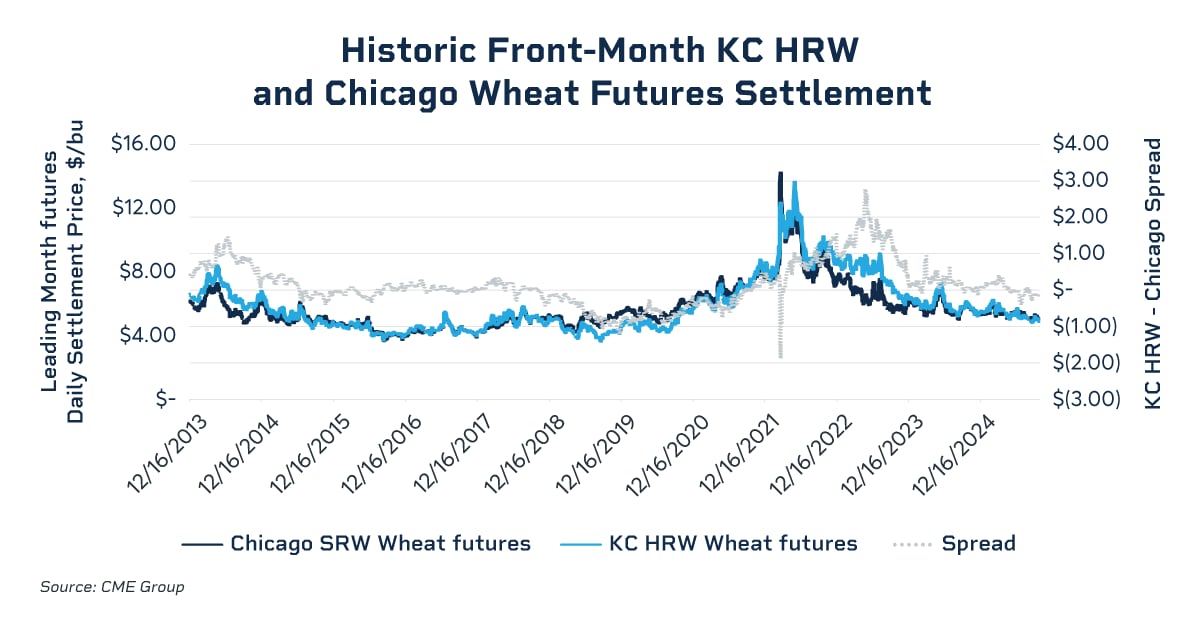
The spread between the two winter wheats (KC HRW minus Chicago wheat) stood firmly above zero until mid-2015, at which point it hovered at or just above parity before dipping negative from 2019 until late 2021. The negative spread that persisted for these two years was attributable to a supply crunch of SRW wheat from poor weather in SRW wheat-producing states as well as a downward trend of planted domestic acreage amid continual national and international demand.
Both KC HRW and Chicago Wheat futures sustained extraordinary spikes in price following the late-February 2022 Russian invasion of Ukraine, as the war was expected to cause a global wheat supply crunch. Chicago Wheat, the deliverable supply for which is closer in nutritional profile to Ukrainian wheat, saw a more pronounced spike, resulting in the spread registering a low of -187.5 cents per bushel on March 7, 2022.
This year, we are seeing renewed inversion in the spread between KC HRW and Chicago SRW Wheat futures. Why? Protein, yield and stocks.
Most Recent in Agriculture
Is the Market Really Sure About Its Direction?
How Is Weather Reshaping Wheat Production?
What Do Cattle and TBA Markets Have in Common?
Hard red winter wheat is prized for its moderate to high protein content, striking a balance between high-protein hard red spring wheat and low-protein soft red winter wheat; perfect for mass-produced white breads and all-purpose flour.
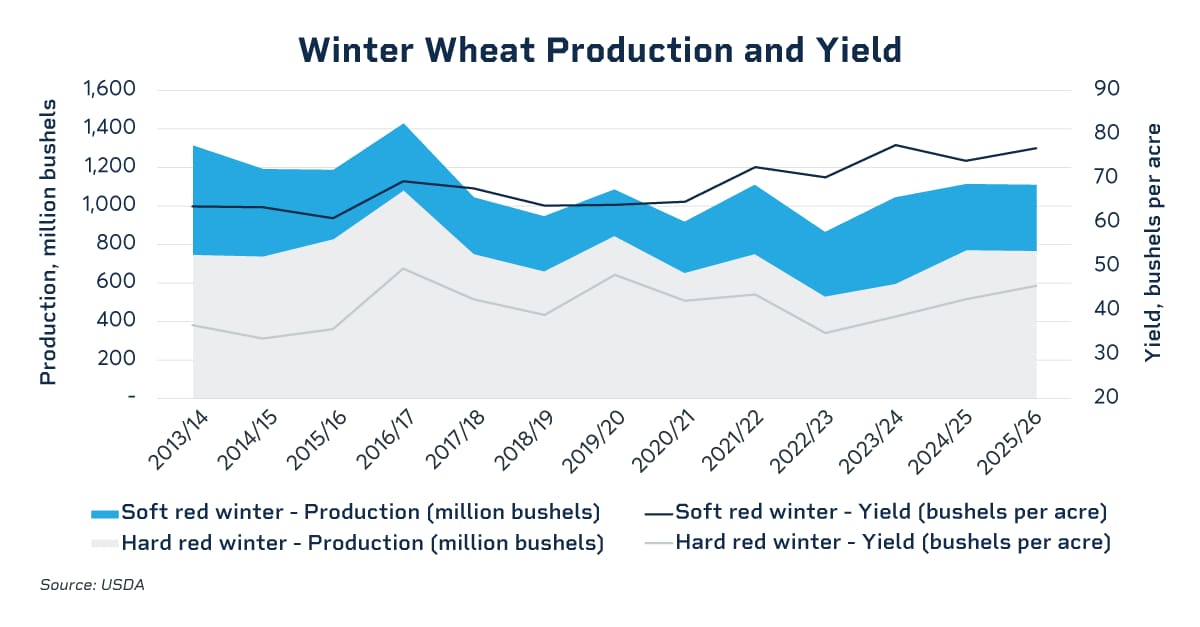
As discussed above, fuller wheat kernels grown in wetter and warmer climates have a higher percentage of carbohydrate by mass and thus a lower percentage of protein. As such, there is generally an inverse relationship between yield and protein percentage, demonstrated in the comparative yields of SRW and HRW wheat. This year, the USDA projects both SRW and HRW wheat yields to increase over the prior year, suggestive of low protein in the nation’s HRW wheat crop.
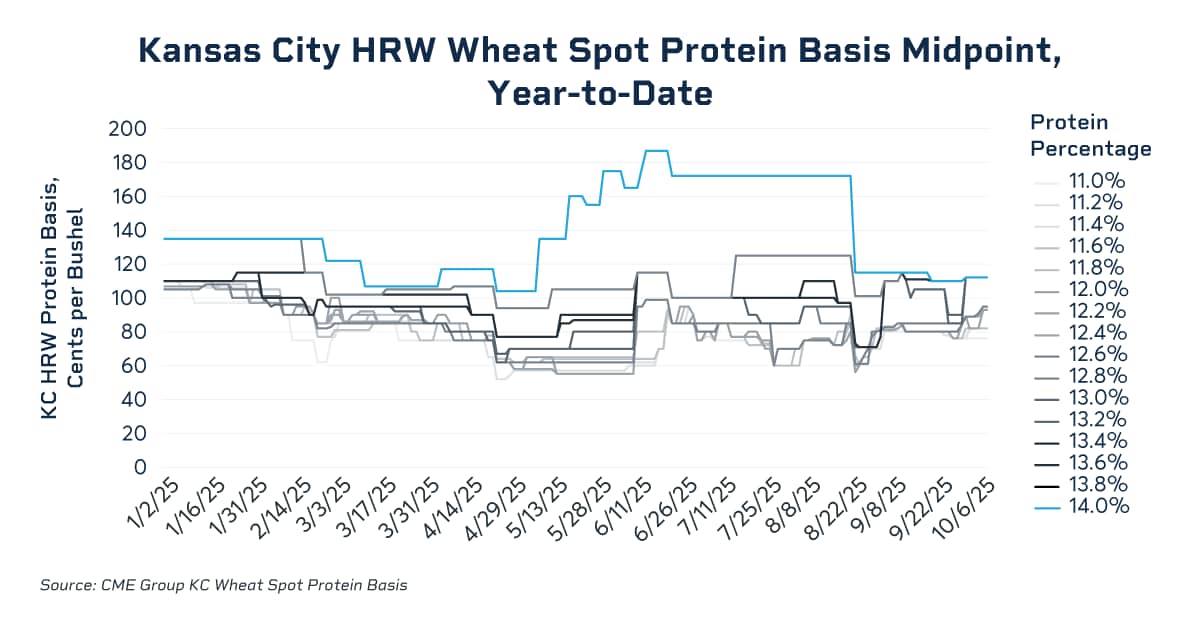
KC HRW futures are physically delivered, with deliverable grades of HRW wheat required to contain a minimum 11% protein level. In the past few months, high protein (14%) HRW wheat has fetched premia of over $1.80 per bushel, suggesting a dearth of high-protein wheat in the market. Late-season moisture in HRW wheat producing regions was identified as a cause of low protein by U.S. Wheat Associates.
The stocks-to-use ratio – the level of carryover stocks for a given commodity as a percentage of total demand or use – can reveal the supply and demand dynamics behind commodity prices. Reflective of lower overall production, HRW endstocks exceed SRW endstocks by an average factor of 3.5 since reporting began. The relatively low national stock of SRW wheat makes it particularly sensitive to supply disruption or changes in demand.
A lower stocks-to-use ratio is indicative of lower supply relative to demand (potentially causing higher prices), while a higher stocks-to-use ratio indicates a higher or more abundant supply relative to demand (potentially causing lower prices). Stocks-to-use for both HRW and SRW wheats are projected to be down in the present crop year compared to the prior.
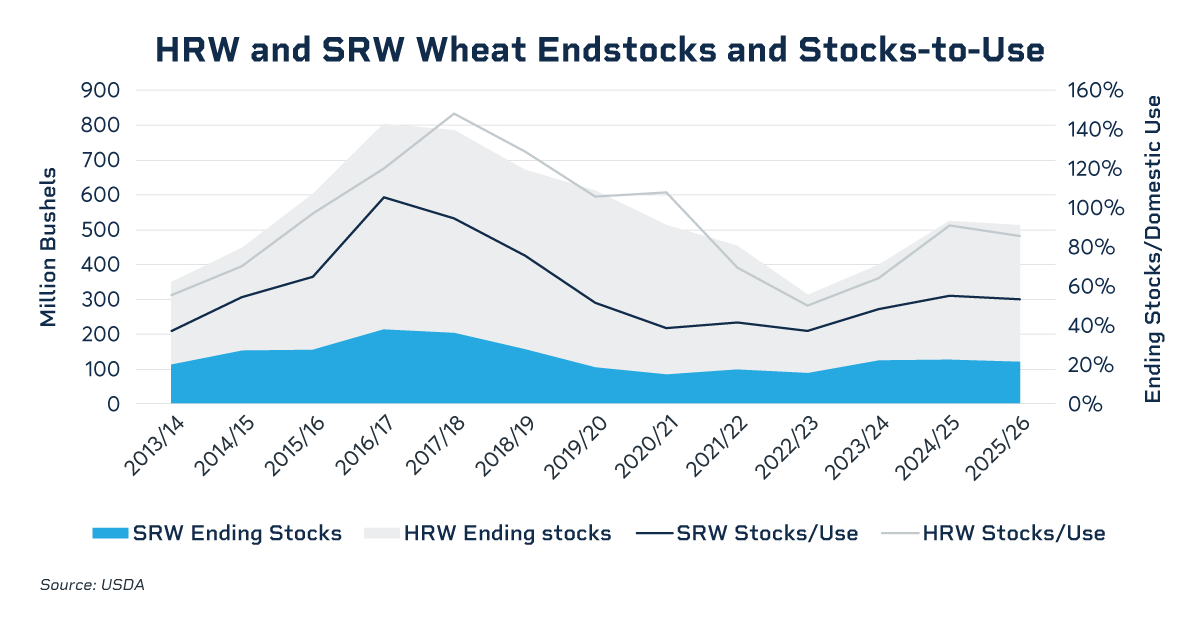
The recent inversion of the KC HRW and Chicago Wheat futures spread offers a powerful lesson: in commodity markets, quality often dictates price more than quantity alone. While KC HRW wheat typically enjoys a premium for its high-protein versatility, growing conditions this year may have yielded an abundance of lower-quality wheat that has weighed down the KC HRW futures contract price, simultaneously making the scarcer, high-protein variety more valuable on the spot market. As the Chicago Wheat futures contract maintains a relatively higher value due to the inherent sensitivity of its lower national stocks, the historic relationship remains inverted.
—
Originally Posted October 21, 2025 – The Shifting Value Dynamics Between Winter Wheats
© [2023] CME Group Inc. All rights reserved. This information is reproduced by permission of CME Group Inc. and its affiliates under license. CME Group Inc. and its affiliates accept no liability or responsibility for the information contained herein, including but not limited to the currency, accuracy and/or completeness of this information, and delays, interruptions, errors or omissions. This information is an unofficial copy and may not reflect the official and accurate version. For the definitive and up-to-date version of any of this information, please see cmegroup.com.
Information posted on IBKR Campus that is provided by third-parties does NOT constitute a recommendation that you should contract for the services of that third party. Third-party participants who contribute to IBKR Campus are independent of Interactive Brokers and Interactive Brokers does not make any representations or warranties concerning the services offered, their past or future performance, or the accuracy of the information provided by the third party. Past performance is no guarantee of future results.
This material is from CME Group and is being posted with its permission. The views expressed in this material are solely those of the author and/or CME Group and Interactive Brokers is not endorsing or recommending any investment or trading discussed in the material. This material is not and should not be construed as an offer to buy or sell any security. It should not be construed as research or investment advice or a recommendation to buy, sell or hold any security or commodity. This material does not and is not intended to take into account the particular financial conditions, investment objectives or requirements of individual customers. Before acting on this material, you should consider whether it is suitable for your particular circumstances and, as necessary, seek professional advice.
Futures are not suitable for all investors. The amount you may lose may be greater than your initial investment. Before trading futures, please read the CFTC Risk Disclosure. A copy and additional information are available at ibkr.com.
Related Articles

















Join The Conversation
For specific platform feedback and suggestions, please submit it directly to our team using these instructions.
If you have an account-specific question or concern, please reach out to Client Services.
We encourage you to look through our FAQs before posting. Your question may already be covered!