
- Solve real problems with our hands-on interface
- Progress from basic puts and calls to advanced strategies
Interactive Options Course

Posted January 9, 2026 at 2:00 pm
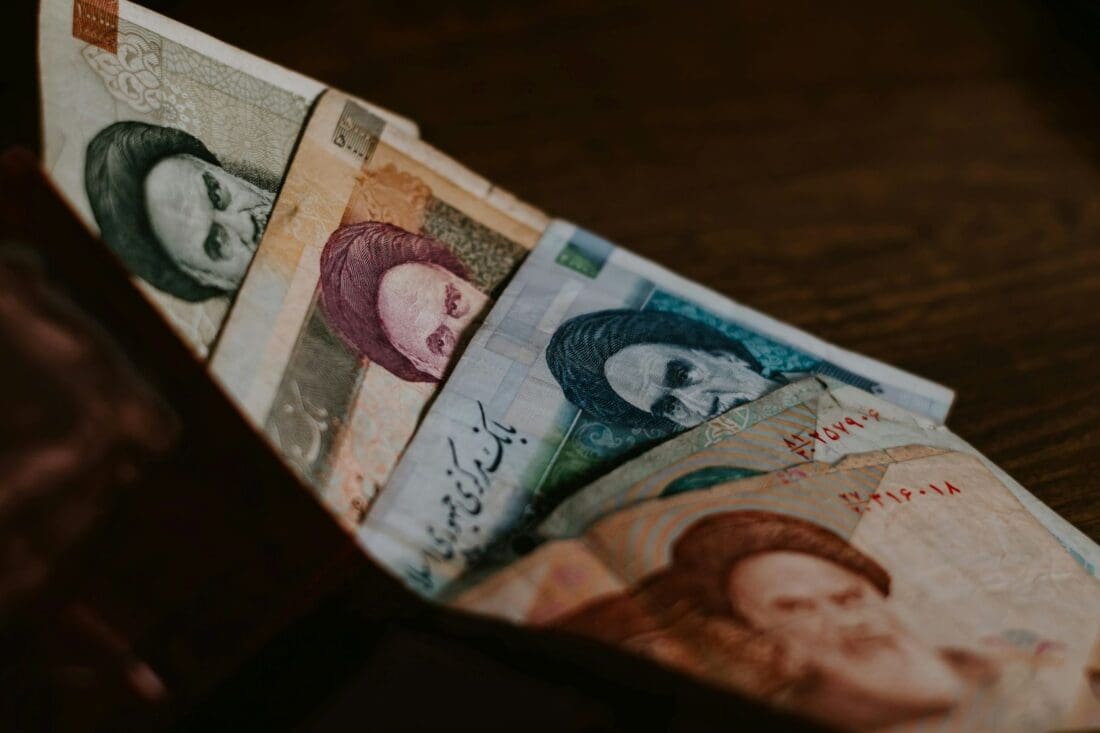
Iran’s economy is buckling under a severe currency collapse. The rial has fallen to record lows, losing half of its value against the US dollar last year, and the impact is hitting households with full force. Food, medicine, rent — everything essential has become harder to afford.
Traders and shopkeepers were among the first to take to the streets as inflation accelerated, but protests have since spread across major cities and universities. The central bank chief has resigned, flights are being cancelled, and the country is now in a near‑total internet blackout.
Phones, payments, and even satellite‑based services like Starlink are being disrupted, slowing commerce and cutting off digital tools people rely on to navigate daily life.
Years of sanctions have left Iran with limited access to foreign currency and global finance. Oil exports remain restricted, starving the central bank of the dollars it needs to stabilize the rial. With most buyers unwilling to touch oil sanctioned by the US, Iran has very little pricing power and relies heavily on China, which buys the vast majority of its crude at steep discounts.
Importers face higher costs and unpredictable delays, while businesses struggle with unstable exchange rates and limited credit. In this environment, even small shocks cascade into broader instability, feeding the inflation spiral.
For households, the crisis is felt in the rising cost of everyday essentials. A weakening currency makes imports more expensive, pushing inflation into punishing territory. Wages lag behind, savings evaporate, and people turn to dollars, gold, real estate, and cryptocurrencies to protect what they have left.
But with the country largely offline, even crypto has become difficult to access or move. Economic frustration is widespread, and bazaars in major cities have closed in protest. The erosion of purchasing power is fueling the economic crisis and public anger.
Iran’s internal turmoil carries global implications. The next phase of the crisis will hinge on how the Iranian state responds to growing unrest and how outside powers choose to react. The White House has signaled a willingness to intervene militarily if violence against civilians escalates, and strikes on Iranian nuclear sites last summer show that these threats may not be idle.
A sudden collapse of Iran’s government would send shockwaves through global energy markets, affecting supply expectations, shipping, and investment decisions.
China, heavily reliant on that discounted Iranian crude, would face renewed uncertainty just when it lost its other cheap supplier: Venezuela.
And tensions around the Strait of Hormuz, one of the world’s most critical energy corridors, could raise insurance and transport costs even without direct disruption.
About a fifth of the global oil supply and a major share of LNG exports pass through this narrow waterway between Iran and Oman. Any instability in Iran always raises concerns because Tehran sits on one side of the Strait and has a large military presence in the area.
Iran’s currency crisis has exposed the fragility of an economy strained for years by sanctions, mismanagement, and public frustration.
What began as a financial shock has evolved into a broader test of Tehran’s ability to maintain stability in the face of mounting pressure.
The rial’s collapse is a political reckoning that could shape Iran’s trajectory and influence global energy dynamics.
With geopolitical tensions already stretching from Venezuela to Greenland, Iran’s unraveling adds yet another fault line to the start of 2026.
Check out IBKR InvestMentor app for free lessons on foreign exchange, commodities, and much more.
IBKR InvestMentor (dba “InvestMentor”) is a service of Interactive Academy LLC, an affiliate of IB LLC and majority-owned by IBG LLC. All content provided by InvestMentor is for informational and educational purposes only and should not be interpreted as implying any sponsorship, partnership, endorsement, recommendation, or approval by IB LLC or its affiliates.
Information posted on IBKR Campus that is provided by third-parties does NOT constitute a recommendation that you should contract for the services of that third party. Third-party participants who contribute to IBKR Campus are independent of Interactive Brokers and Interactive Brokers does not make any representations or warranties concerning the services offered, their past or future performance, or the accuracy of the information provided by the third party. Past performance is no guarantee of future results.
This material is from InvestMentor, an affiliate of Interactive Brokers LLC, and is being posted with its permission. The views expressed in this material are solely those of the author and/or InvestMentor and Interactive Brokers is not endorsing or recommending any investment or trading discussed in the material. This material is not and should not be construed as an offer to buy or sell any security. It should not be construed as research or investment advice or a recommendation to buy, sell or hold any security or commodity. This material does not and is not intended to take into account the particular financial conditions, investment objectives or requirements of individual customers. Before acting on this material, you should consider whether it is suitable for your particular circumstances and, as necessary, seek professional advice.
There is a substantial risk of loss in foreign exchange trading. The settlement date of foreign exchange trades can vary due to time zone differences and bank holidays. When trading across foreign exchange markets, this may necessitate borrowing funds to settle foreign exchange trades. The interest rate on borrowed funds must be considered when computing the cost of trades across multiple markets.
Trading in digital assets, including cryptocurrencies, is especially risky and is only for individuals with a high risk tolerance and the financial ability to sustain losses. Eligibility to trade in digital asset products may vary based on jurisdiction.
Spot currencies are not available at IBKR Singapore.
Related Articles














Join The Conversation
For specific platform feedback and suggestions, please submit it directly to our team using these instructions.
If you have an account-specific question or concern, please reach out to Client Services.
We encourage you to look through our FAQs before posting. Your question may already be covered!