
- Solve real problems with our hands-on interface
- Progress from basic puts and calls to advanced strategies
Interactive Options Course
Posted May 12, 2026 at 12:35 pm
A hotter-than-expected CPI report combined with flaring Middle East tensions is weakening investor sentiment on Wall Street today as participants play defense with rates climbing past pivotal resistance levels. Indeed, the 3.8% headline reading has the 2-year note and 30-year bond exceeding 4% and 5%, as the fixed-income complex removes cuts from the medium-term outlook while beginning to increasingly consider the potential for a hike. Improvements in ADP’s weekly hiring numbers and in small business optimism didn’t offer any relief for borrowing costs, as they signaled healthy labor trends and better entrepreneurial confidence. The Treasury losses come just as the new Fed Chair is scheduled to be confirmed this week and top of mind is whether Kevin Warsh views this oil-driven inflation as a one-time shock, or if he’s concerned that heavier fuel charges will broaden out and spread throughout the economy. Another critical consideration is if he’s worried about the central bank remaining above its 2% inflation target for over five years and counting, similar to the angst some of the dissenters at last month’s meeting reflected.
Stocks are retreating in light of the tighter financial conditions, waning easing prospects and a tech sector that was battered overnight after a South Korean official proposed an AI tax to pay citizen dividends. All equity sectors and subcategories are in the red minus energy and healthcare, with commodities and cryptocurrencies sinking as well. Conversely, volatility protection instruments, the greenback and prediction markets are catching bids.
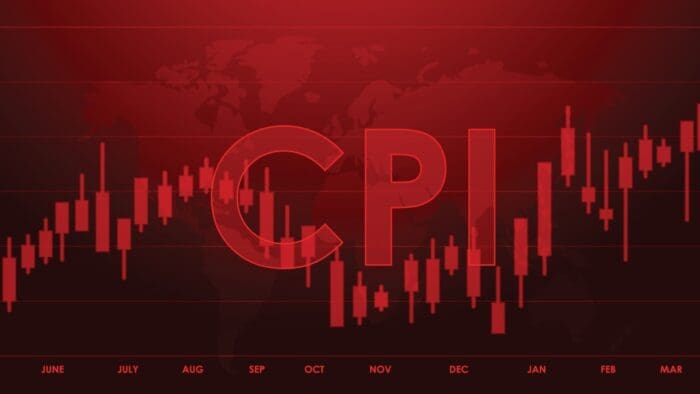
Annualized consumer prices rose at the fastest pace in 35 months as broad-based increases lifted the April Consumer Price Index (CPI). The 0.6% month-over-month (m/m) and 3.8% year-over-year (y/y) results arrived in-line on the former but a tenth hotter on the latter. They were both hotter than 0.9% and 3.3% results in March. The core numbers, which exclude food and energy due to their volatile characteristics, advanced 0.4% m/m and 2.8%, a tenth of a percentage point loftier than expected and 0.2% greater than the prior print on both fronts. Gasoline, electricity, food at markets, apparel and shelter led the climb, rising 5.4%, 2.1%, 0.7%, 0.6% and 0.6%. Transportation services and food at cafeterias, restaurants and bars rose at more modest degrees of 0.3% and 0.2%. Used cars and medical care services were unchanged, while new vehicles and medical commodities became 0.2% and 0.4% cheaper.
Private sector hiring momentum rose at the end of last month and remained on firm footing. Payrolls expanded by an average of 33k employees in each of the four weeks during the period that ended April 25, stronger than the 30.25k figure from the prior print, according to ADP. The ongoing strong performance weakens the argument of Fed doves that interest rate cuts are needed to bolster a sluggish labor market.
Improving profitability trends, higher job openings and inventories alongside plans to raise payrolls and capital expenditures contributed to a modest lift in small business optimism last month. The National Federation of Independent Business (NFIB)’s Index rose marginally to 95.9 in April, above March’s 95.8 but below the median estimate of 96.1. What hampered faster progress, meanwhile, were weaker responses to the economic outlook and sales prospects, as rising input prices pressures, quickening wage gains and softening consumer sentiment served as headwinds to margins.
The Treasury complex’s ability to withstand elevated oil prices is being threatened by those higher fuel charges driving accelerating inflation. And every day that the Strait of Hormuz remains blocked, the fixed-income space is under greater stress as it lifts its cost pressure expectations while demanding a tighter stance by the Federal Reserve. Meanwhile, May’s CPI is poised to come in north of 4%, in reflection of energy inputs beginning to broaden out to the overall economy. Finally, rates are likely to jump further from here absent a US-Iran deal, and levels to watch for a spark in equity market volatility are 4.06% on 2s, 4.53% on 10s and 5.10% on 30s, because at those points, the risk premium calculation becomes too much of a headwind in my opinion for animal spirits to thrive.
UK retail sales during the four-week period started on April 5 fell 3.4% y/y, posting the first decline since November 2024. The recent result, provided by the British Retail Consortium (BRC), was a sharp reversal from March’s 3.1% climb and substantially below the 0.7% growth anticipated by a consensus of economists. Food sales sank 2.5% y/y and were below the 12-month average growth of 3.5%. Non-food sales were down 3.3% compared to the 12-month average increase of 0.3%. The decline was driven, in part, by Easter occurring on April 5 of this year. As such, spending in preparation of the holiday occurred prior to the recent measurement period. Last year, the holiday was later in April, causing a higher base effect. The BRC also believes consumers’ fears about the US-Iran war driving up living expenses caused households to tighten their purse strings. Going forward, the upcoming World Cup could help juice sales of big-ticket items because sports fans may want to upgrade their TVs and sound systems. Nevertheless, the BRC maintains that UK ministers should respond to low consumer sentiment with measures to ease living costs, such as reducing taxes and levies that increase retailers’ energy bills, reforming taxes on packaging and delaying changes to how nutritional content is measured.
Household spending in Japan sank 1.3% y/y in March, a worse showing than the 0.6% growth predicted by economists and a reversal from February’s 1.5% jump. When accounting for inflation, sales were down by 2.9%, the fourth consecutive month of contraction, according to the Ministry of Internal Affairs and Communications.
The following categories and the extent of their nominal declines contributed to the weak headline results:
Households, which Japan defines as having a minimum of two individuals, increased outlays for medical care by 20.3%. Spending on housing, furthermore, grew 17.6% and purchases of furniture and household utensils was up 8.3%. Households also dished out 7% more for culture and recreation. Also in March, nominal and real incomes were up 6.4% and 4.7%, respectively.
Japan’s Leading Index climbed from 113.2 in February to 114.5 as of March, according to a preliminary estimate. The result exceeded the economist consensus estimate of 114.4 and hit its highest level since April 2022. The preliminary Coincident Indicator for March also rose, reaching 116.5, which was slightly below the economist consensus estimate of 116.6. The February reading was 116.2.
The National Australia Bank (NAB) Business Confidence Index climbed five points to -24 this month, but entrepreneurs’ views of conditions fell three points to three. Improving sentiment in retail, construction and the category of recreation and personal services helped lift the confidence headline, according to the NAB. Nevertheless, confidence is still strongly negative across all industries and regions. Regarding business conditions, costs climbed 4.5% while product stickers grew only 1.8%, creating margin pressure. The employment component weakened and profits were flat.
New to Interactive Brokers?
Open AccountInformation posted on IBKR Campus that is provided by third-parties does NOT constitute a recommendation that you should contract for the services of that third party. Third-party participants who contribute to IBKR Campus are independent of Interactive Brokers and Interactive Brokers does not make any representations or warranties concerning the services offered, their past or future performance, or the accuracy of the information provided by the third party. Past performance is no guarantee of future results.
This material is from IBKR Macroeconomics, an affiliate of Interactive Brokers LLC, and is being posted with its permission. The views expressed in this material are solely those of the author and/or IBKR Macroeconomics and Interactive Brokers is not endorsing or recommending any investment or trading discussed in the material. This material is not and should not be construed as an offer to buy or sell any security. It should not be construed as research or investment advice or a recommendation to buy, sell or hold any security or commodity. This material does not and is not intended to take into account the particular financial conditions, investment objectives or requirements of individual customers. Before acting on this material, you should consider whether it is suitable for your particular circumstances and, as necessary, seek professional advice.
Trading in digital assets, including cryptocurrencies, is especially risky and is only for individuals with a high risk tolerance and the financial ability to sustain losses. Eligibility to trade in digital asset products may vary based on jurisdiction.
Related Articles

















Join The Conversation
For specific platform feedback and suggestions, please submit it directly to our team using these instructions.
If you have an account-specific question or concern, please reach out to Client Services.
We encourage you to look through our FAQs before posting. Your question may already be covered!