
- Solve real problems with our hands-on interface
- Progress from basic puts and calls to advanced strategies
Interactive Options Course

Posted July 14, 2026 at 1:11 pm
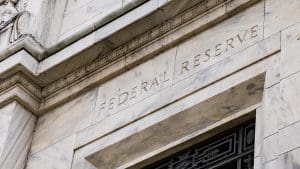
An ice-cold CPI signaling the first monthly decline after rounding in over six years has investors overlooking a lift in oil prices ignited by military attacks between the US and Iran. The colossal miss is restoring risk-on sentiments on Wall Street after yesterday’s selloff, and the recovery is being supported by a wider path for a steady Federal Reserve that may avoid hikes this year. Indeed, the yield curve is plunging in bull-steepening fashion led by the monetary policy sensitive shorter tenors, as a 2.6% core reading signals significant progress in just a few short weeks. Still the Treasury gains, while substantial, were pared back by Fed Chair Warsh stating in today’s House testimony that the central bank has no tolerance for persistent inflation. The fixed-income advance was additionally capped by rising fuel costs, with WTI jumping north of $81 in the early morning. Stocks are higher, too, with AI spending prospects being bolstered by a declining bid for software shares after IBM blamed elevated expenditures on AI servers and associated semiconductors for depriving their customers of cash that could have otherwise been used to purchase the firm’s marquee mainframe products. Robust profit performances from the big financials also aided equities, with all major benchmarks appreciating amidst 6 of the 11 principal sectors in the green. The depreciating greenback, driven by cheaper domestic credit, is lifting the cryptocurrency and commodity complexes, especially precious metals, while a reduction in hedging demand weighs on volatility protection instrument premiums. Elsewhere, prediction markets are seeing engagement.
The Consumer Price Index (CPI) declined broadly month-over-month (m/m) in June as lighter fuel costs and elevated interest rates spread across the economy and put the brakes on gasoline, goods, housing and services charges. The headline figure fell 0.4% m/m and rose 3.5% year over year (y/y), much softer than the -0.1% and 3.8% expected and the 0.5% and 4.2% from May. The core versions, which exclude food and energy due to their volatile characteristics, were flat m/m and up 2.6% y/y, beneath the 0.2% and 2.8% projections and the 0.2% and 2.9% from the preceding period. The following components and the extent of their changes became less expensive compared to May:
Conversely, heating, food and shelter saw modest overall increases of 0.5%, 0.2% and 0.1%. New cars were unchanged.

A lift in sales expectations resulting from a stronger economic outlook drove a robust recovery in the National Federation of Independent Business’s sentiment indicator. Small business optimism rose to 97.4 in June, exceeding the 95.8 median estimate and 95.3 from the previous period. While GDP prospects and revenue projections climbed 10 and 8 points, capital expenditure intentions, job opening levels, hiring plans and scaling programs improved by 4, 3, 2 and 1. Conversely, earnings trends, inventory growth objectives and expected credit conditions dropped by 5, 4 and 2. When asked what the single most important problem was for entrepreneurs in the survey, meanwhile, 21%, 19% and 19% answered inflation, taxes, and the availability of workers.

Plunging fuel costs are likely to drive a miss in tomorrow’s Producer Price Index (PPI) and today’s Treasury rally is poised to extend further assuming geopolitical tensions don’t worsen from here. Indeed, the indicator is expected to sport an unchanged m/m figure amidst a y/y deceleration from 6.5% to 6.2% on the heels of this morning’s CPI falling sharply m/m and printing a 0.7% slowdown from 4.2% to 3.5% on the annualized statistic. Bondholders are positioned to benefit from this road south on inflation even if equities stumble, as the 20- and 30-year maturities remain significantly undervalued, in my opinion, with rates well above 5% amidst core charges running in the mid 2s. This spread in real restriction is far too wide from a historical perspective, in my view, and should narrow in the near future as the yield curve flattens or continues its bull-steepening.
With a tailwind of growing demand for AI technology and automobiles, China boosted its exports by 27% y/y last month, which pushed its trade surplus to $125.6 billion. The value of exports, furthermore, hit a 53-month high with the y/y jump exceeding the 18.2% expansion anticipated by a consensus of economists. In May, the value of items shipped abroad climbed 19.4%. Meanwhile, imports grew 36% y/y, exceeding the estimate of 24% and May’s 27.4% increase. Foreign countries increased their purchases of Chinese semiconductors by a staggering 121.9% y/y. The values of automobiles and ships sent beyond the country’s border, furthermore, were 69.6% and 42.3% higher than in the year-ago period. Demand from Southeast Asian nations, South Korea and Europe grew the fastest at 42.6%, 34.5% and 18.5% but decelerated in the US and Japan. Imports grew the most from South Korea and Taiwan. Among products, electrical items led the growth due to imports of automatic data processing machines and semiconductors. Oil imports, however, sank to an approximately 10-year low as China has relied on its huge strategic reserve as a buffer against higher prices for the black gold. The practice has dampened the impact upon oil prices of the US-Iran war. Also in June, coal imports surged after stricter enforcement of safety regulations within the country caused a drop in production.
Singapore’s second-quarter gross domestic product grew 5.7% y/y and 1.1% quarter over quarter (q/q) after posting 6.3% and 1.3% y/y and m/m growth during the first three months of this year, according to preliminary data from Statistics Singapore. On a y/y basis, manufacturing, construction and services producing industries expanded 12.2%, 6.2% and 4.6%. Within the services component, wholesale and retail trade and transportation and storage expanded by 6.3%. Strong demand for semiconductors and prevision energy resulting from the development of artificial intelligence was a tailwind for the country’s manufacturing sector. Conversely, chemicals and biomedical manufacturing weakened, largely due to supply disruptions from the Iran-US war. For the q/q print, construction contracted by 2.1% while manufacturing grew 5.3%. The services producing industries group was only 0.3% higher.
Industrial production in Japan during May was up 0.1% m/m, missing the economist consensus estimate for a 0.5% expansion, which would have matched April’s result. When compared to the same month of 2025, production was down 2.1%. Also in May, inventories fell 1.1% m/m and 5% y/y and capacity utilization strengthened by 0.1% following a 0.8% drop in the prior period.
Easing fuel prices and a decline in expectations for interest rate increases nudged the Westpack-Melbourne Institute Consumer Sentiment Index up 4.1% to 83.9, but pessimism is still prevalent. Indeed, the July reading is among the worst 10% of results in the survey’s 50-year history. The research found that family finances continue to be under intense pressure and sentiment is being held hostage to developments abroad, namely, the US-Iran war. Despite that, family finances compared to a year ago were up 5.6% to 71.1, but the print is still 14% below the start of the Middle East crisis. In other areas, 60% of respondents expect mortgage rates to increase, a decline from 66% in June and the assessment regarding if this is a good time to buy a dwelling rose 5.3% to 85.4.
New to Interactive Brokers?
Open AccountInformation posted on IBKR Campus that is provided by third-parties does NOT constitute a recommendation that you should contract for the services of that third party. Third-party participants who contribute to IBKR Campus are independent of Interactive Brokers and Interactive Brokers does not make any representations or warranties concerning the services offered, their past or future performance, or the accuracy of the information provided by the third party. Past performance is no guarantee of future results.
This material is from IBKR Macroeconomics, an affiliate of Interactive Brokers LLC, and is being posted with its permission. The views expressed in this material are solely those of the author and/or IBKR Macroeconomics and Interactive Brokers is not endorsing or recommending any investment or trading discussed in the material. This material is not and should not be construed as an offer to buy or sell any security. It should not be construed as research or investment advice or a recommendation to buy, sell or hold any security or commodity. This material does not and is not intended to take into account the particular financial conditions, investment objectives or requirements of individual customers. Before acting on this material, you should consider whether it is suitable for your particular circumstances and, as necessary, seek professional advice.
Futures, event contracts, and forecast contracts are not suitable for all investors. Before trading these products, please read the CFTC Risk Disclosure. For a copy, visit our Warnings and Disclosures Page.
Investments in certain commodities (precious metals) may be subject to significant price volatility and often involve risks related to market fluctuations, liquidity constraints, geopolitical events, and changes in global economic conditions that could adversely affect their value.
Trading in digital assets, including cryptocurrencies, is especially risky and is only for individuals with a high risk tolerance and the financial ability to sustain losses. Eligibility to trade in digital asset products may vary based on jurisdiction.
Related Articles
















Join The Conversation
For specific platform feedback and suggestions, please submit it directly to our team using these instructions.
If you have an account-specific question or concern, please reach out to Client Services.
We encourage you to look through our FAQs before posting. Your question may already be covered!