
- Solve real problems with our hands-on interface
- Progress from basic puts and calls to advanced strategies
Interactive Options Course
Lesson 8 of 11
New to Interactive Brokers?
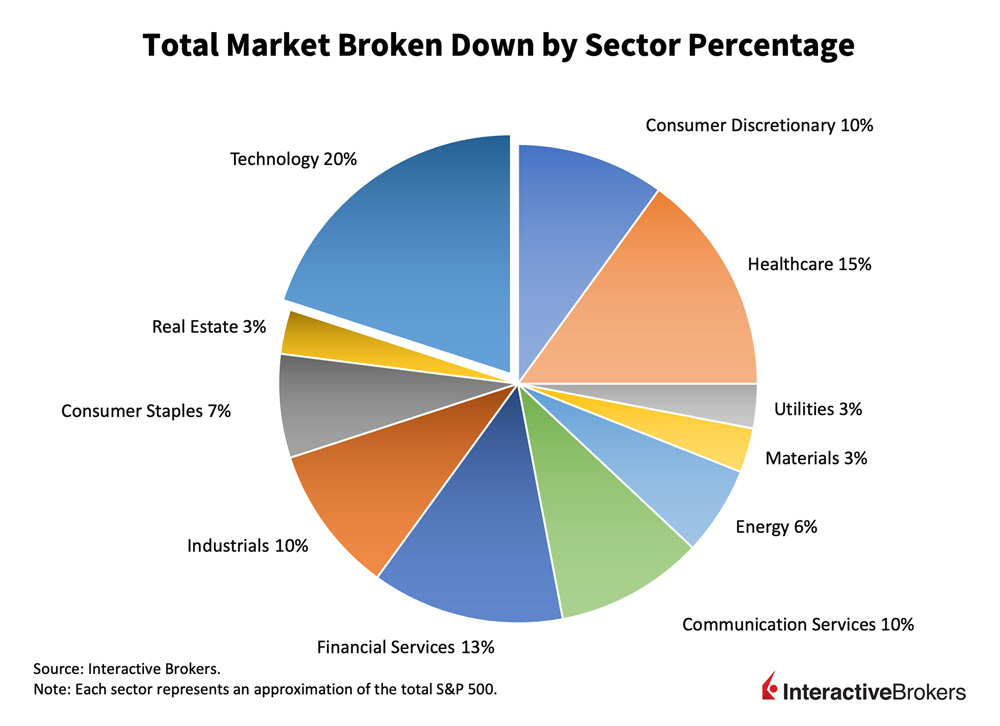
The Information Technology (IT) sector is one of the most dynamic and rapidly evolving sectors in the economy, playing a pivotal role in driving innovation and efficiency across various industries. As of 2022, the IT sector represents approximately 20% of the total market and contributes about 21.5% to the US GDP. From 2021 to 2022, the sector expanded by 8.2%, reaching a valuation of $7.5 trillion or $22,456 per capita. In 2022, 23.5 million people aged 16 and older were employed in IT-related occupations, making up 14.2% of total employment in the US. Information Technology is an immense sector for investing, with 784 stocks and a total market cap of $19.37 trillion. Investing in the IT sector is highly sought after by investors due to its high growth potential and the critical role it plays in shaping the future of work and commerce. Despite global economic uncertainties, the sector continues to attract significant investment, driven by the relentless pursuit of technological advancements and the increasing digitization of economies worldwide.
The broader markets within the IT sector have witnessed remarkable growth and transformation over the past few years, with venture capital funds actively investing in startups and early-stage companies with high growth potential. The escalating adoption of cloud computing and Software as a Service (SaaS) solutions has fueled investment activity, particularly in companies specializing in these areas. Private equity firms have also been increasingly acquiring publicly traded organizations to take them private, reducing market scrutiny and stock pricing pressures. The IT sector now includes such a wide array of companies that investing and understanding the individual industries and sub-sectors may be more useful to investors then viewing it as a collective. Certain industries within the sector, such as those driven by AI and machine learning developments, are continuously reclassified to other sectors as more developments are made. Financial experts predict that the IT industry is poised for even greater investment growth, driven by the ongoing digital transformation and the emergence of new technologies such as artificial intelligence and machine learning.
Under the umbrella of the IT sector, there are three industry groups under the Global Industry Classification Standard (GICS) in which different companies are designated. The Technology Hardware and Equipment industry group is responsible for creating the equipment and hardware for the devices that many use every single day, such as smartphones, laptops, and more. The Software and Services industry group encompasses firms that create and distribute software applications and systems, ranging from operating systems to enterprise-level solutions. The Semiconductors and Semiconductor Equipment industry is a huge part of the sector and is responsible for creating and developing semiconductor technology, one of the most demanded products in the world. While there are numerous companies that offer artificial intelligence technologies and services under the industries in the technology sector, many of the companies were redistributed to the Communications sector. Similarly, renewable energy technology and solutions are usually designated to the Utilities or Energy sector. Yet these reclassifications did cause shocks the IT sector, as now a significant portion of it is dominated by two companies: Apple and Microsoft.

The Information Technology Sector is an extremely profitable portion of the market for sourcing capital appreciation and long-term revenue. However, the sector is subject to volatile movements as certain companies gain rapid activity or rapid loss.
There are some notable risks that one must be aware of when investing in the IT sector. While there is quite consistent demand for new technologies and the sector is not inherently cyclical, companies within the sector can be affected by global technology shortages (semiconductors, for example,) or overestimated earnings expectations that skew valuations. These factors cause for increased uncertainty and volatility within the sector, particularly when developments happen at such high rates. Additionally, cybersecurity threats pose a significant risk to IT companies, requiring ongoing investment in security measures.
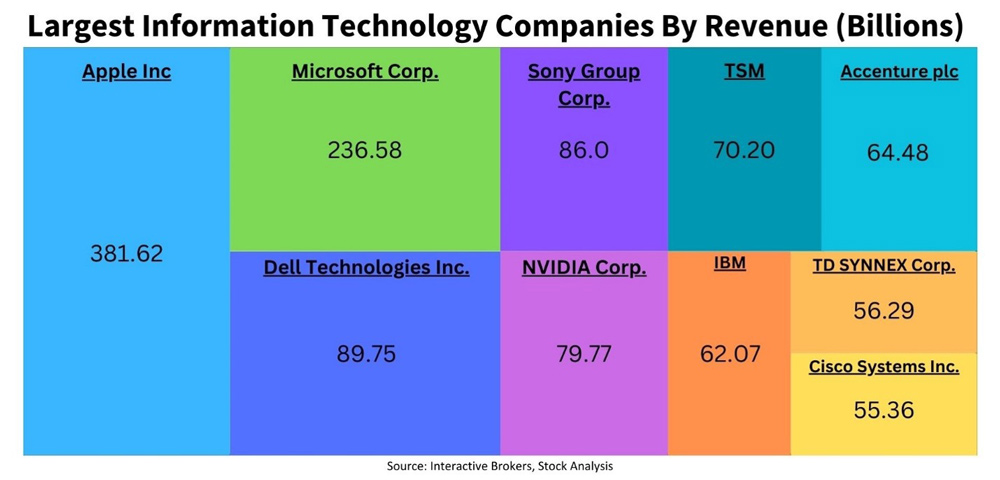
Despite the risks, investing in the IT sector offers unique opportunities for capital appreciation and income generation, given the rapid pace of innovation and the critical role it plays in the modern economy. The sector’s growth is driven by the increasing digitization of business processes and the growing demand for efficient and secure technology solutions. Some of the largest companies within the sector includes Microsoft Corporation (MSFT), Apple Inc. (AAPL), and Dell Technologies Inc (DELL). These companies represent a mix of hardware, software, and internet service providers that dominate the IT space and provide significant profit to their shareholders.
There are numerous advantages and disadvantages to investing in Information Technology that one must carefully consider when deciding to invest in the sector.
Investing in the IT sector presents several advantages, including the potential for high returns due to the sector’s rapid growth and innovation. The sector’s diversity ensures that there are opportunities across various sub-sectors and geographies, allowing for portfolio diversification. Moreover, the sector’s growth is supported by underlying demographic trends, such as the increasing penetration of internet and mobile technologies, which enhance consumer and business spending on digital services.
However, the sector also faces challenges, such as the risk of technological obsolescence, intense competition, and the impact of regulatory changes on business models. Additionally, geopolitical events and trade tensions can affect the supply chain and intellectual property rights, posing risks to investor returns. Technology companies can also be subject to governmental and environmental regulation. To use Apple as an example, the EU’s new regulations forced the smartphone leader to change their iPhone chargers to match every other smartphone’s USB-C, something the company did not want to change as they profited off of having unique ports. Despite these risks, one can balance against the disadvantages by alternatively investing in mutual funds, or ETFs that have higher expense ratios and thus protect the investor from downside loss.
Looking ahead, the IT sector is poised for continued growth, driven by the ongoing digital transformation, the emergence of new technologies, and the increasing demand for innovative solutions. The sector is expected to benefit from the continued adoption of cloud computing and AI, with investments in these areas likely to yield significant returns. Additionally, the growing emphasis on cybersecurity and data privacy is likely to create opportunities for companies that can offer robust and secure solutions.
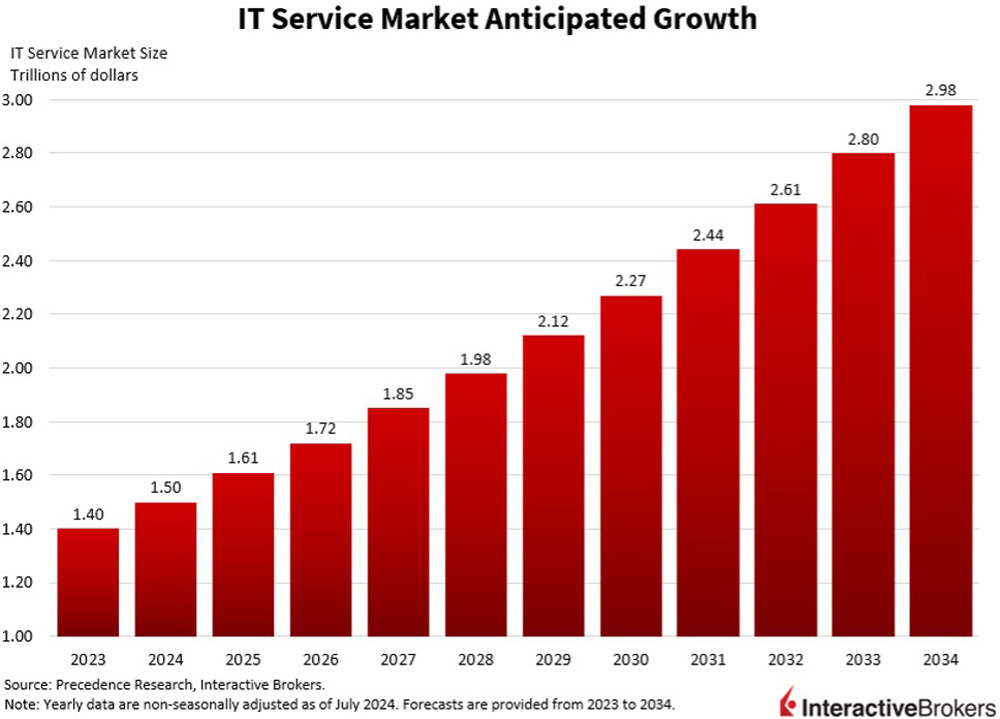
The sector is expected to reach an estimated global market size of $2.6 trillion by 2032, growing at a CAGR of 11.0%. As digital solutions and technologies become further integrated into the workspace and personal lives, the sector will further catalyze to expand in unforeseen ways.
The IT sector offers compelling investment opportunities, but it’s essential for investors to stay informed about the sector’s dynamics, including its rapid pace of innovation and the risks associated with technological change and cybersecurity. By doing so, investors can position themselves to take advantage of the sector’s growth prospects while managing the inherent risks.
For specific platform feedback and suggestions, please submit it directly to our team using these instructions.
If you have an account-specific question or concern, please reach out to Client Services.
We encourage you to look through our FAQs before posting. Your question may already be covered!
The analysis in this material is provided for information only and is not and should not be construed as an offer to sell or the solicitation of an offer to buy any security. To the extent that this material discusses general market activity, industry or sector trends or other broad-based economic or political conditions, it should not be construed as research or investment advice. To the extent that it includes references to specific securities, commodities, currencies, or other instruments, those references do not constitute a recommendation by IBKR to buy, sell or hold such investments. This material does not and is not intended to take into account the particular financial conditions, investment objectives or requirements of individual customers. Before acting on this material, you should consider whether it is suitable for your particular circumstances and, as necessary, seek professional advice.
The views and opinions expressed herein are those of the author and do not necessarily reflect the views of Interactive Brokers, its affiliates, or its employees.










I have been conferdance of reading the content that you have layed out and i am surely learning the coarse and gather the information that i need for myself
I have been conferdance of reading the content that you have layed out and i am surely learning the coarse and gather the information that i need for myself
Hope to see your insights on quantum computing and AI included in your lessons.