
- Solve real problems with our hands-on interface
- Progress from basic puts and calls to advanced strategies
Interactive Options Course
Lesson 4 of 11
New to Interactive Brokers?
The Energy Sector is a critical component of the global economy, encompassing the exploration, production, refining, and distribution of energy resources. This sector is vast and multifaceted, covering everything from traditional fossil fuels like oil and gas to renewable energy sources such as wind, solar, and hydroelectric power. As of the latest data, the Energy Sector represents approximately 6% of the total market and plays a significant role in the US GDP; the oil and natural gas industries provide nearly 10.3 million jobs and contributed to around 8% of the GDP, and the renewable energy industry provides 7 million jobs and contributed to 6% of GDP growth in 2023. The sector contains 253 stocks with a market cap of $3.714 trillion and a revenue of $3.482 trillion. The sector’s performance is inherently cyclical, influenced by global economic conditions, energy prices, and technological advancements. Despite facing challenges such as environmental concerns and regulatory changes, the sector remains resilient, offering investors opportunities for growth and income generation, particularly through dividends and capital appreciation.
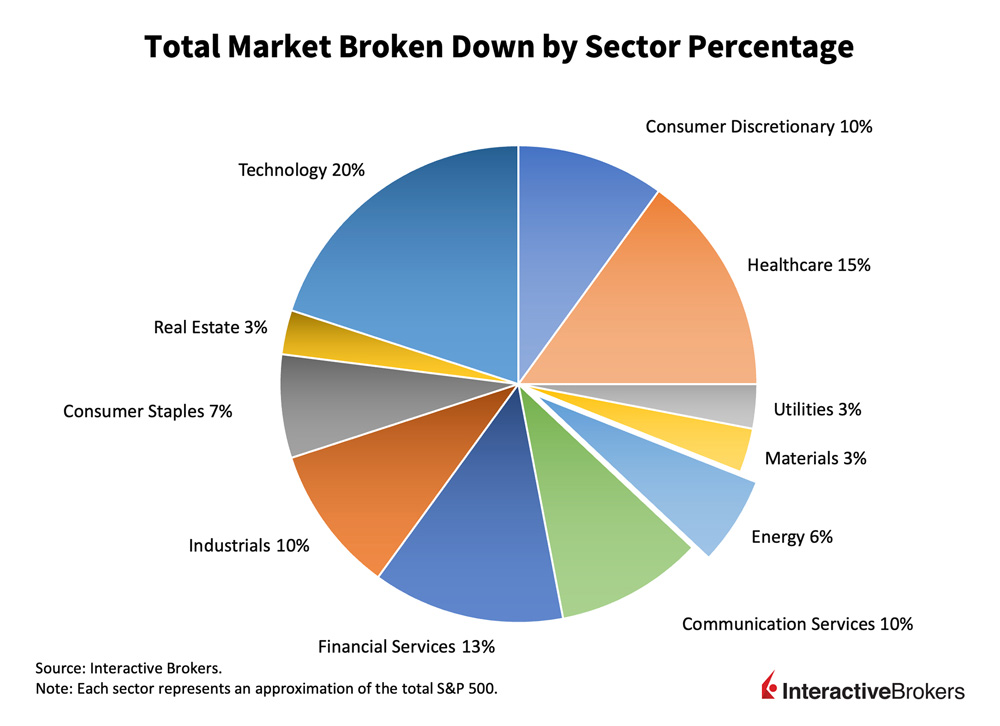
The broader Energy Market is characterized by its volatility and dependence on global economic and geopolitical factors. The sector’s performance is closely tied to the price of crude oil, with fluctuations in oil prices having a direct impact on the revenues and profits of energy companies. Furthermore, the US relies on certain regions for sources of oil, which can get complicated by geopolitical trends and conflicts. For example, the US imports approximately 10% of its oil from the Middle East, half of the 20% it was importing five years ago. Recent years have also seen a significant shift towards renewable energy sources, driven by environmental concerns, technological advancements, and policy incentives aimed at reducing carbon emissions. This transition is reshaping the energy landscape, with renewable energy becoming an increasingly important part of the mix. However, the fossil fuel sector remains dominant, particularly in regions where access to affordable and reliable energy is crucial. The sector’s future is likely to be defined by the balance between meeting current energy demands and transitioning towards more sustainable energy sources.
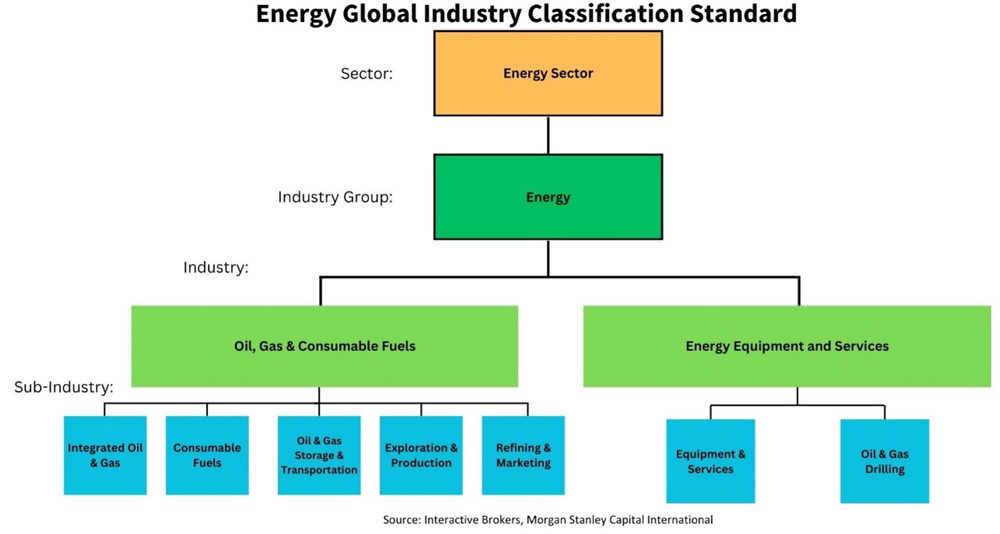
The umbrella of the Energy Sector is comprised of numerous industries and sub-industries in which companies are designated by the Global Industry Classification Standard. The Oil, Gas & Consumable Fuels industry involves the exploration, production, and refining of petroleum products. It is characterized by high volatility due to fluctuations in oil prices and geopolitical tensions. The sub-industries in this group include Integrated Oil & Gas, Consumable Fuels, Oil & Gas Storage and Transportation, Exploration & Production, and Refining & Marketing. Companies in this sector are also investing in alternative energy sources and digital technologies to enhance efficiency and reduce environmental impact. The Energy & Equipment Services industry encompasses firms that manufacture equipment and provide services integral to the exploration and extraction of energy resources. The sub-industries include Equipment & Services and Oil & Gas drilling. The companies within this industry specialize in drilling methodology, equipment maintenance, and other ancillary services crucial to the energy extraction process. It is worth noting that renewable energy is not an industry within the Energy sector according to the GICS. Instead, Renewable Energy is a sub-industry that exists within the Utilities sector, which is closely tied to the Energy sector and thus often discussed simultaneously.
The Energy sector is a volatile sector of the market that can be riskier when making investments seeking stable returns. Yet, there is certainly profitability to be found if an investor does thorough research and invests accordingly.
There are some associated risks of investing in the Energy sector. The sector is considered a medium-risk level investment in North America, and a high-risk investment when looking towards Asia-Pacific, Eastern European, and Latin American markets. The sector is also entering a new stage; as natural gas and coal prices continue to get higher, the power of the market is facing deep risks. These prices are affected by geopolitical risks and depleting resources, and further jeopardized by regulatory changes. In the future, the sector will likely be entirely reconfigured due to the transition into renewable energy.
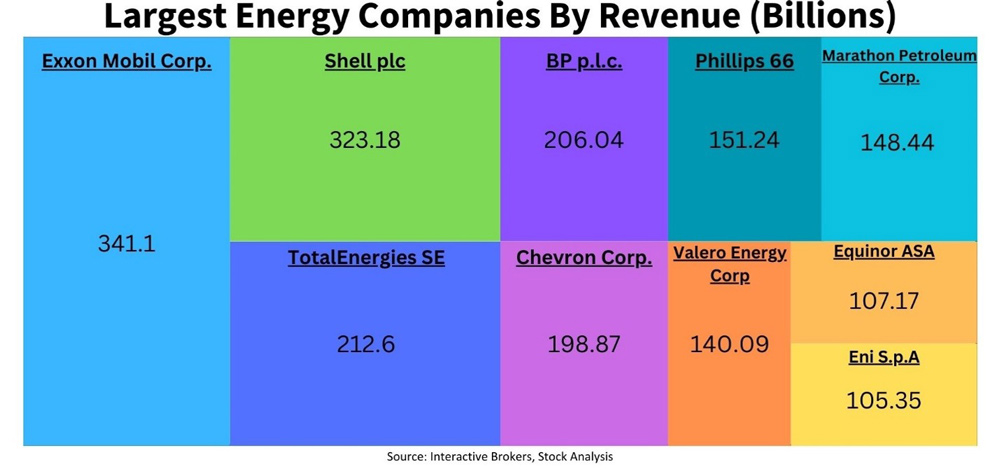
However, investing in the Energy Sector can offer compelling opportunities for those willing to navigate its inherent volatility and risks. The sector’s cyclical nature and its critical role in the global economy make it an attractive option for investors seeking exposure to commodities and infrastructure. Diversification across different sub-sectors and regions can help mitigate risks and enhance potential returns, or investing in an ETF or mutual fund can provide downside protection at a higher expense ratio. Examples of companies in the sector include ExxonMobil (XOM), Chevron (CVX), and TotalEnergies SE (TTE), which offer exposure to various aspects of the energy market.
Advantages and Disadvantages of Energy Sector Investing:
There are numerous advantages and disadvantages to investing in the energy sector that one must carefully consider when deciding to invest.
In terms of benefits, the Energy Sector provides investors with opportunities for significant capital appreciation and income generation, particularly through dividends. Its cyclical nature allows investors to benefit from periods of economic growth and expansion. Additionally, the sector’s importance to the global economy ensures its relevance and resilience, even in challenging times. The energy sector also emphasizes diversification and allows for specialized investments within certain industries and sectors. Understanding the volatility of the market, companies are opening new methods of financing that share risks between the producers and investors. And lastly, the transition to renewable energy provides hope that the vitality of the sector may continue far into the future.
There are also numerous drawbacks to investing within the Energy sector. The sector’s volatility and the risks associated with environmental regulation, geopolitical instability, and technological change pose significant challenges. The sector poses high levels of debt for companies that exploit non-conventional oils, increasing costs and legal concerns. There is an overcapacity of companies within the sector in general, particularly in the oil and gas services industry. Investors must also consider the sector’s environmental impact and the potential for regulatory changes that could affect the industry’s operations and profitability. The transition to renewable energy sources also introduces uncertainties, as the pace and scale of this transition can vary significantly across different regions and markets.
Future Outlook and Opportunities:
The Energy Sector is poised for significant transformation, driven by the global push towards sustainability and the decarbonization of the economy. The sector’s future will likely be shaped by the balance between meeting current energy demands and transitioning towards more sustainable and renewable energy sources. Technological advancements, such as battery storage and grid management, are expected to play a crucial role in this transition, enhancing the reliability and efficiency of energy systems. The sector’s long-term prospects are also influenced by demographic trends, urbanization, and the increasing demand for energy in emerging economies.
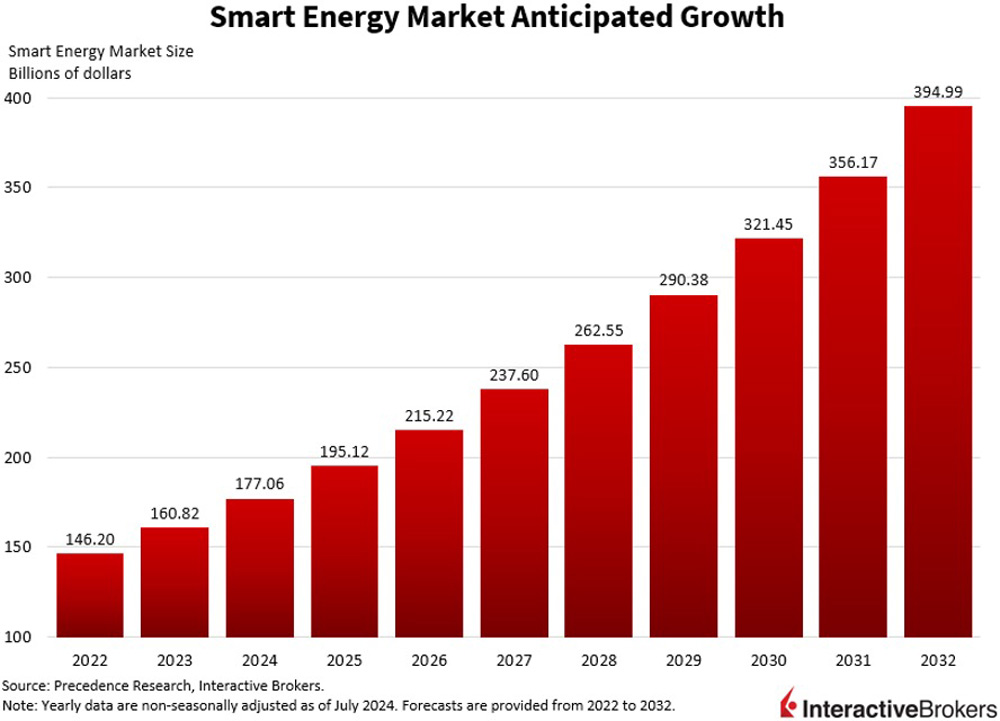
The future of the Energy sector can be reflected in the growth of the “smart energy” market. This market takes numerous forms of energy and focuses on converting them to be as efficient as possible. The smart energy market is estimated to have a market size of $394.99 billion by 2032, growing at a compounded annual growth rate (CAGR) of 10.5%. In the years to come, the energy sector will likely be reorganized to both further integrate renewable energy sources and prioritize energy efficiency alongside economic growth.
The Energy Sector offers a complex and rewarding investment landscape, characterized by its cyclical nature, its critical importance to the global economy, and the challenges and opportunities presented by the transition to renewable energy. By navigating the sector’s unique features and opportunities, investors can position themselves to benefit from its growth and resilience.
The analysis in this material is provided for information only and is not and should not be construed as an offer to sell or the solicitation of an offer to buy any security. To the extent that this material discusses general market activity, industry or sector trends or other broad-based economic or political conditions, it should not be construed as research or investment advice. To the extent that it includes references to specific securities, commodities, currencies, or other instruments, those references do not constitute a recommendation by IBKR to buy, sell or hold such investments. This material does not and is not intended to take into account the particular financial conditions, investment objectives or requirements of individual customers. Before acting on this material, you should consider whether it is suitable for your particular circumstances and, as necessary, seek professional advice.
The views and opinions expressed herein are those of the author and do not necessarily reflect the views of Interactive Brokers, its affiliates, or its employees.










Join The Conversation
For specific platform feedback and suggestions, please submit it directly to our team using these instructions.
If you have an account-specific question or concern, please reach out to Client Services.
We encourage you to look through our FAQs before posting. Your question may already be covered!