
- Solve real problems with our hands-on interface
- Progress from basic puts and calls to advanced strategies
Interactive Options Course
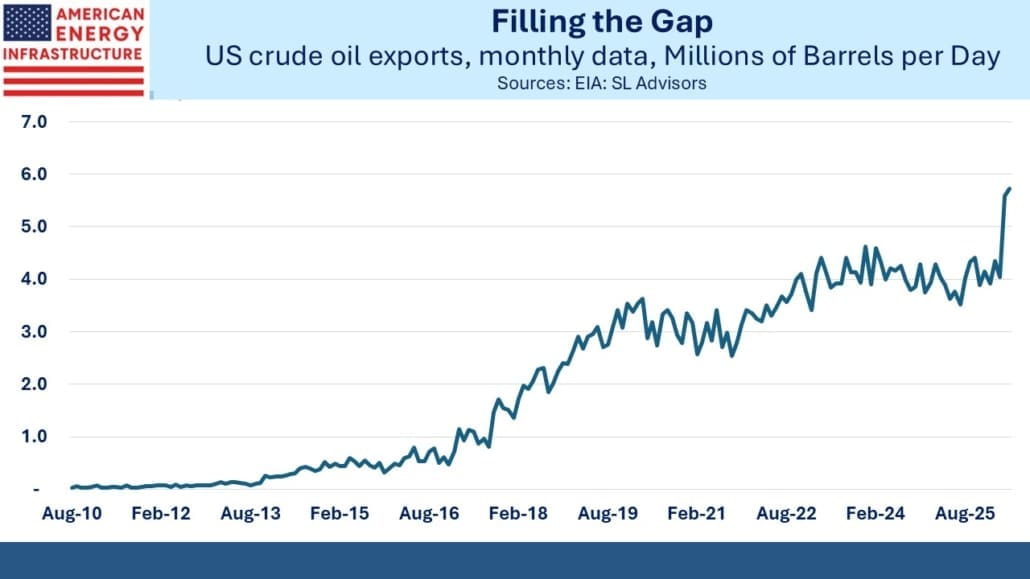
Although the war with Iran has inflicted higher energy prices on the world, companies involved in US energy exports have been among the biggest beneficiaries. The availability of oil and gas that doesn’t need to dodge Iranian missiles in the Strait of Hormuz or Houthis as it exits the Red Sea has boosted US trade. Oil exports are running at 5.7 Million Barrels per Day (MMB/D), +57% compared with a year ago.
The continuing stalemate involving low level conflict boosts the prospects for US energy exporters every week it persists. The President’s announcement of “economic warfare” against Iran suggests “strategic patience” is currently driving policy. I talk to a lot of people who voted for Trump and are happy they did so, but few have anything positive to say about the choice to go to war or the way it’s been conducted.
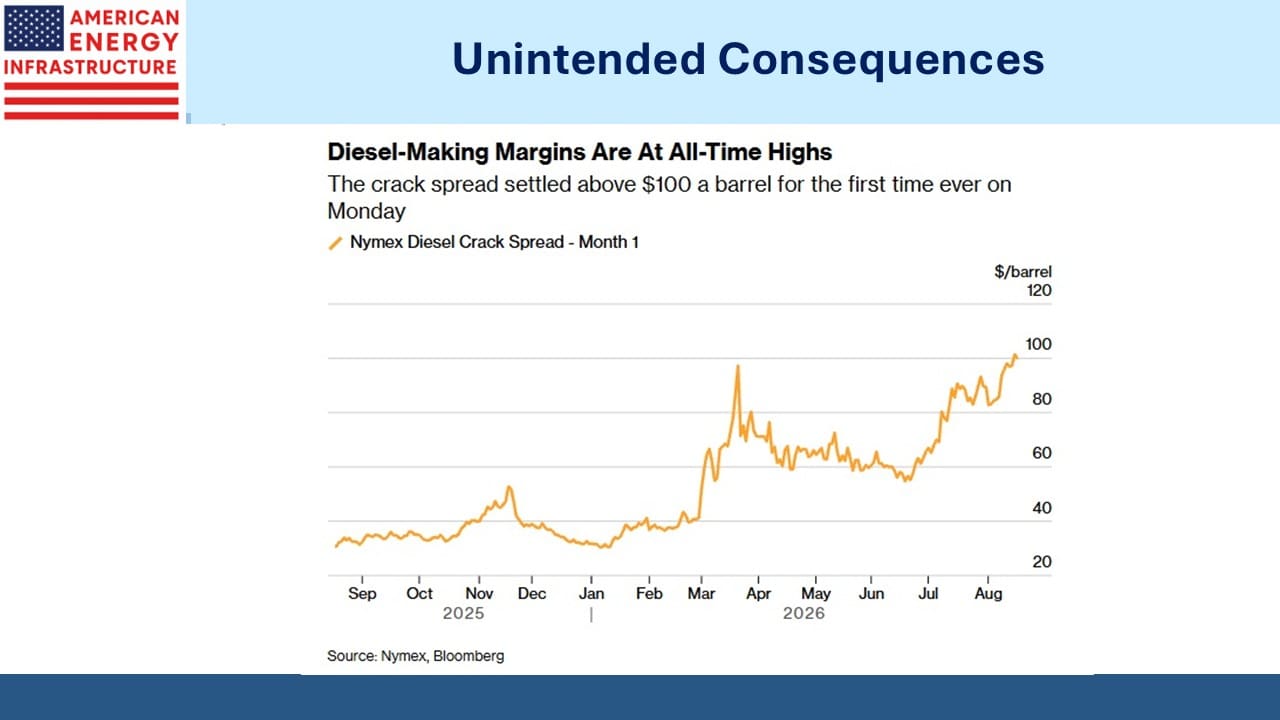
Nonetheless, the protracted interruption of oil and gas shipments out of the Persian Gulf is good for investors in this sector. In time Iran’s influence over world energy markets will dissipate, but building the infrastructure to reroute shipments away from the Strait of Hormuz will take years. In the meantime, US firms are well positioned to gain market share.
South Korea, Japan and India are Asia’s biggest buyers as they’ve sought replacements for what used to come from the Middle East. The Netherlands and UK have shifted from sanctioned Russian oil as Europe ever so slowly disengages from Ukraine’s invader.
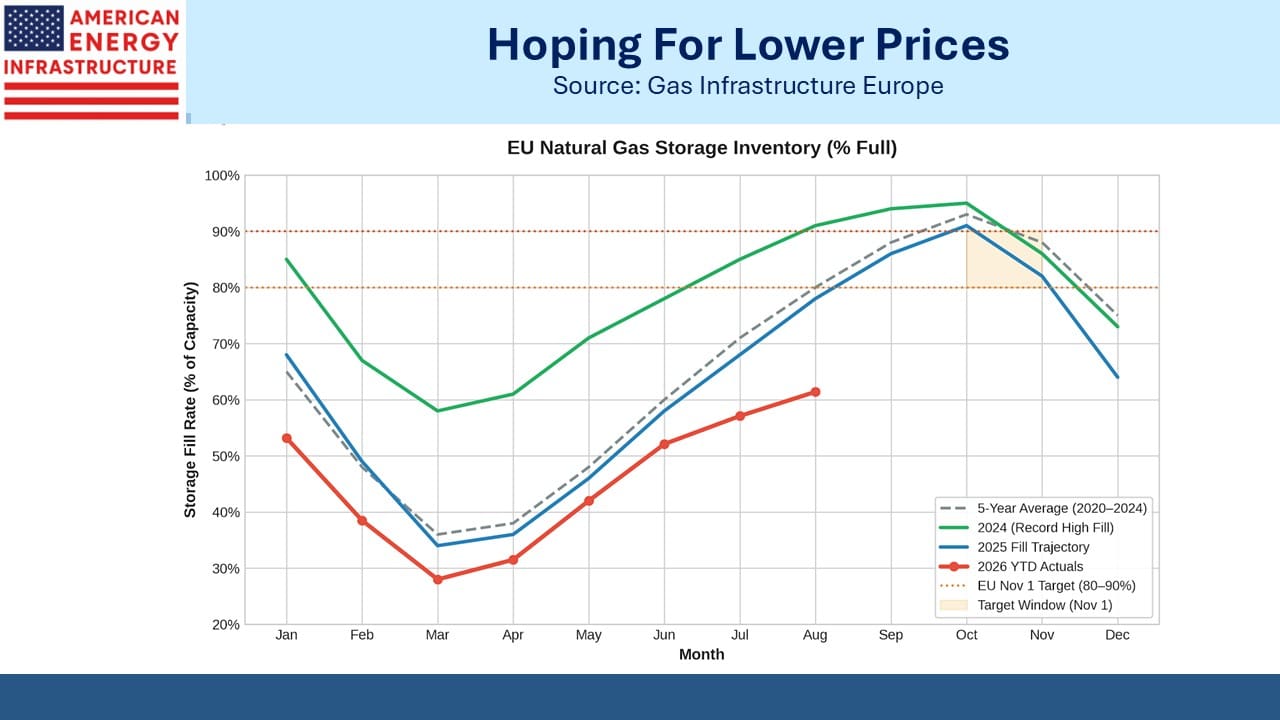
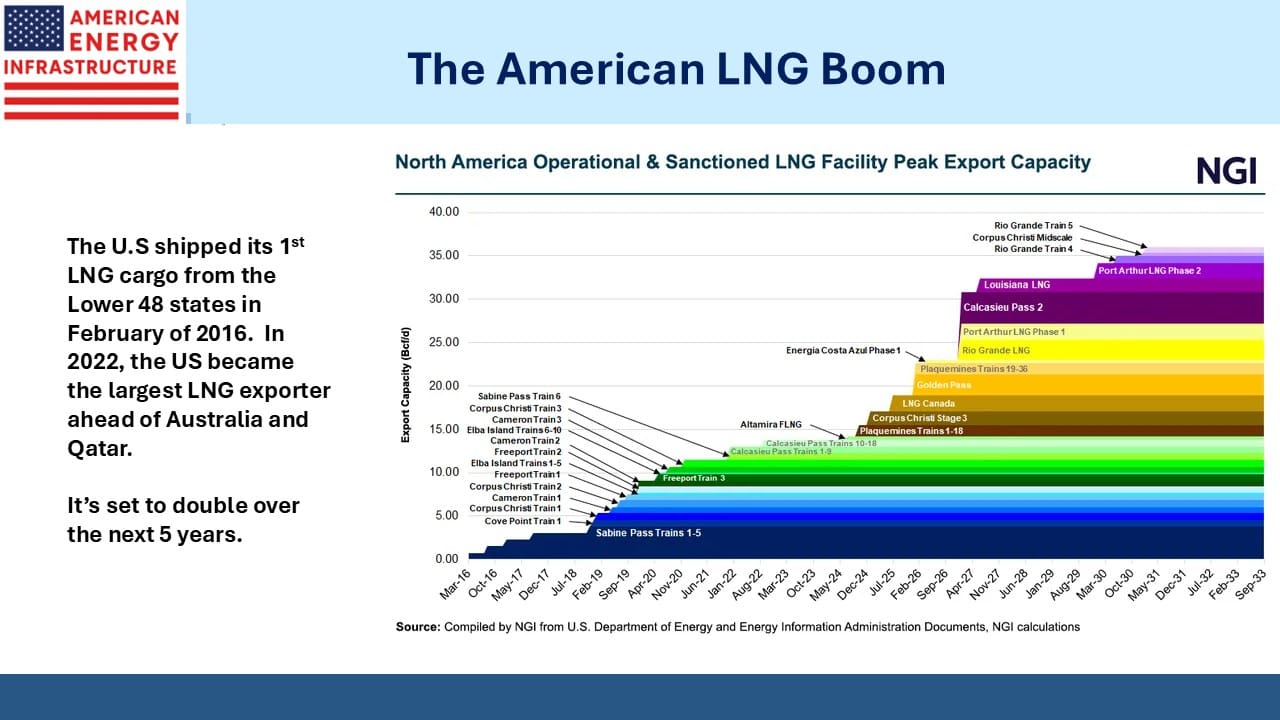
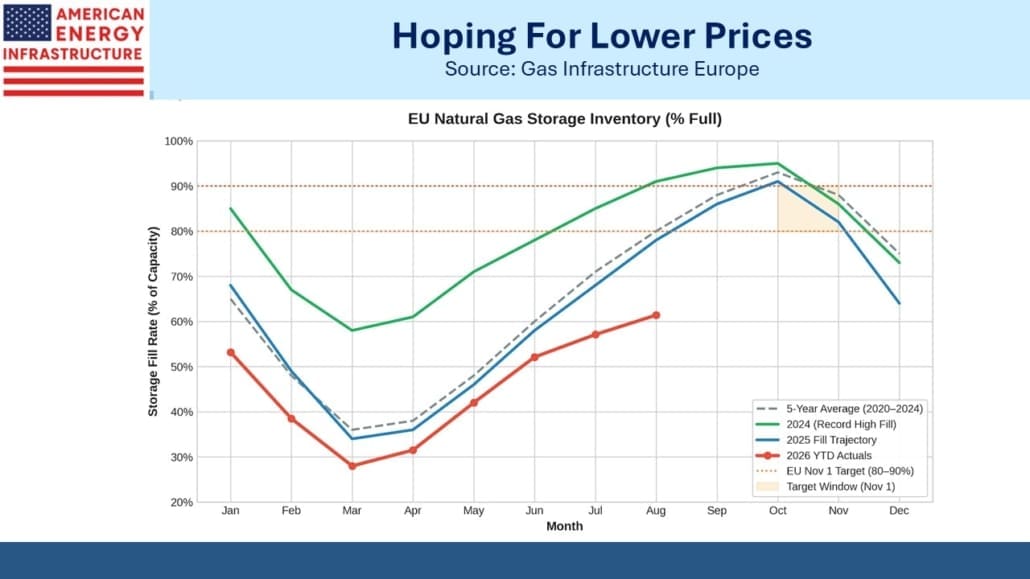
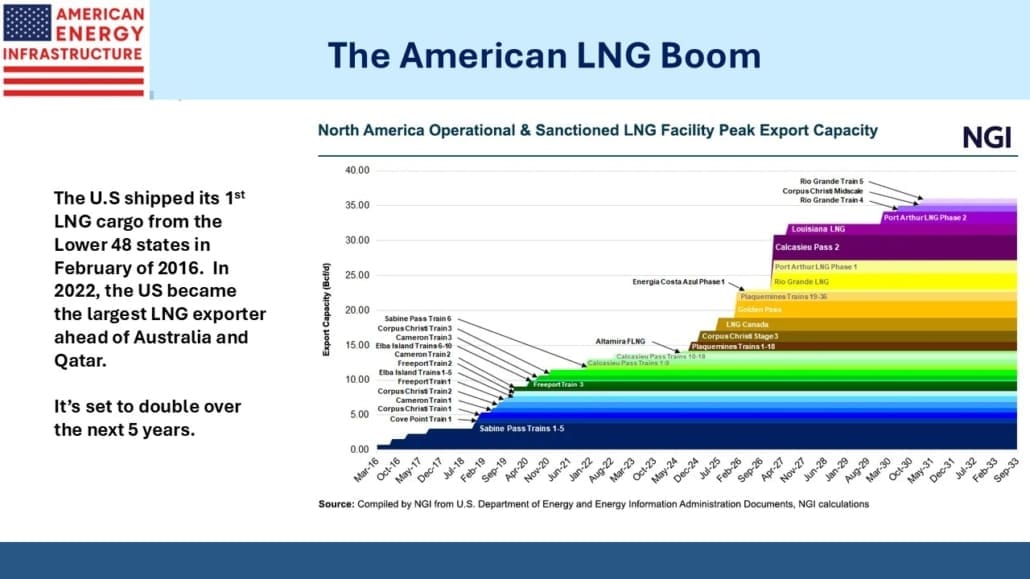
Natural gas exports are also growing as additional liquefaction capacity becomes available. The US became India’s biggest LNG supplier in June, shipping 562,000 metric tonnes of LNG (almost 1 Billion Cubic Feet per Day, or 0.9% of US output). This replaced canceled shipments from Qatar. European buyers have been holding out for lower prices, causing Asian buyers to snap up extra cargoes. Europe’s storage inventories of gas are at seasonally low levels at a time when they’d normally be building up in preparation for the winter.
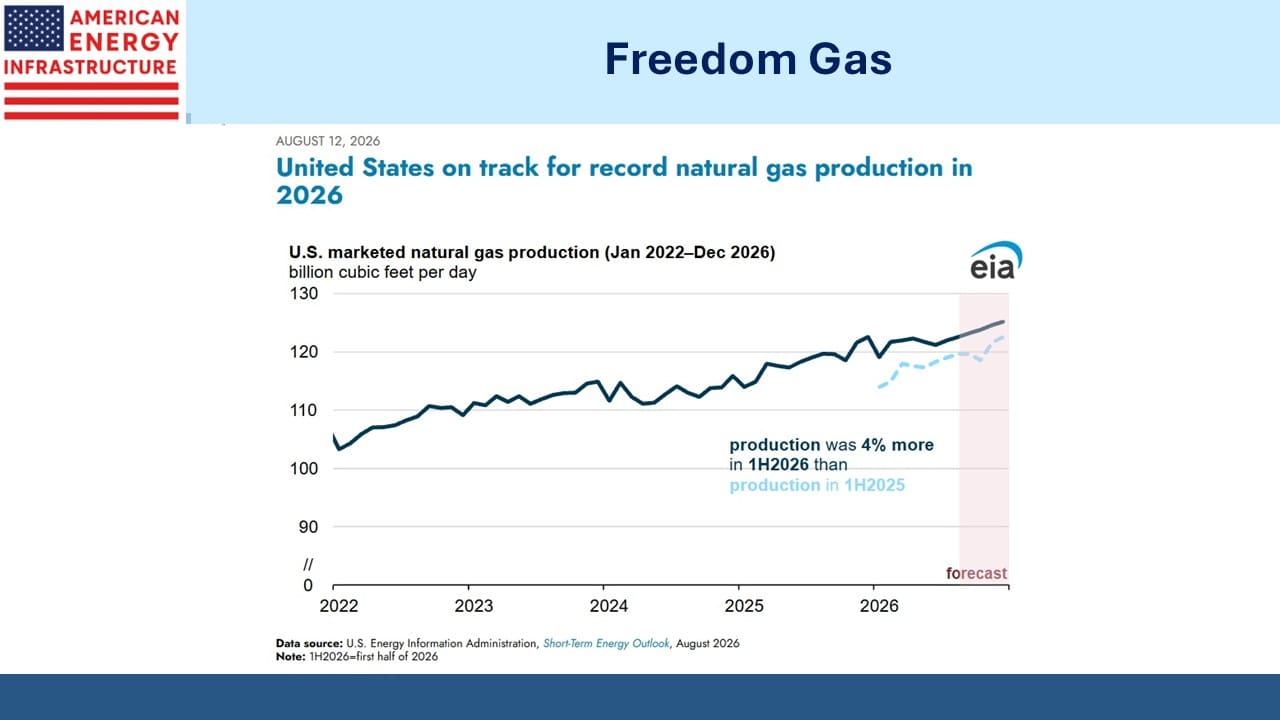
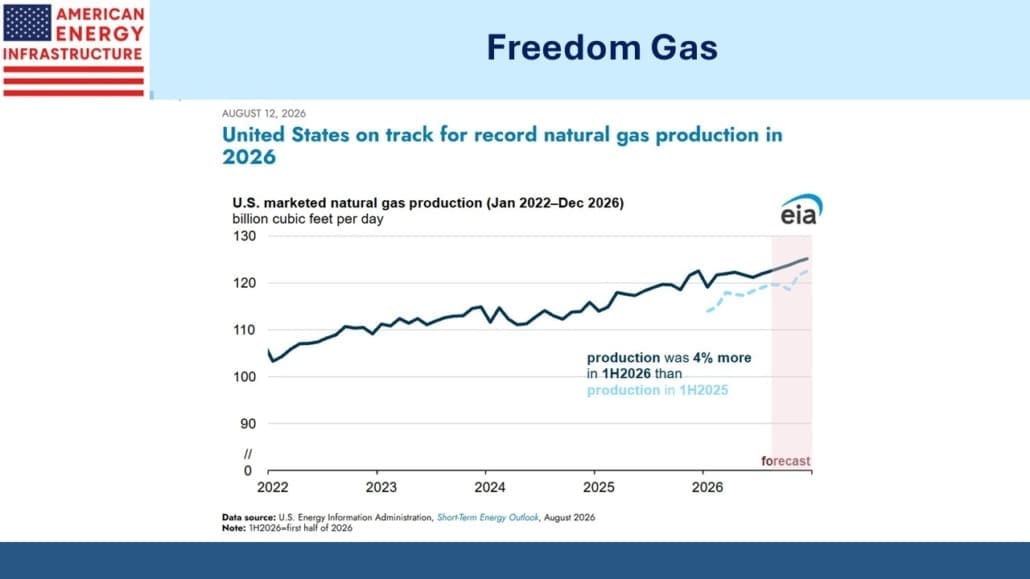
US natural gas production is growing to meet increased demand for domestic power generation and LNG exports. The Iran War hasn’t made a material impact because LNG liquefaction capacity is the limiting factor. Production is growing steadily as new export terminals come online.
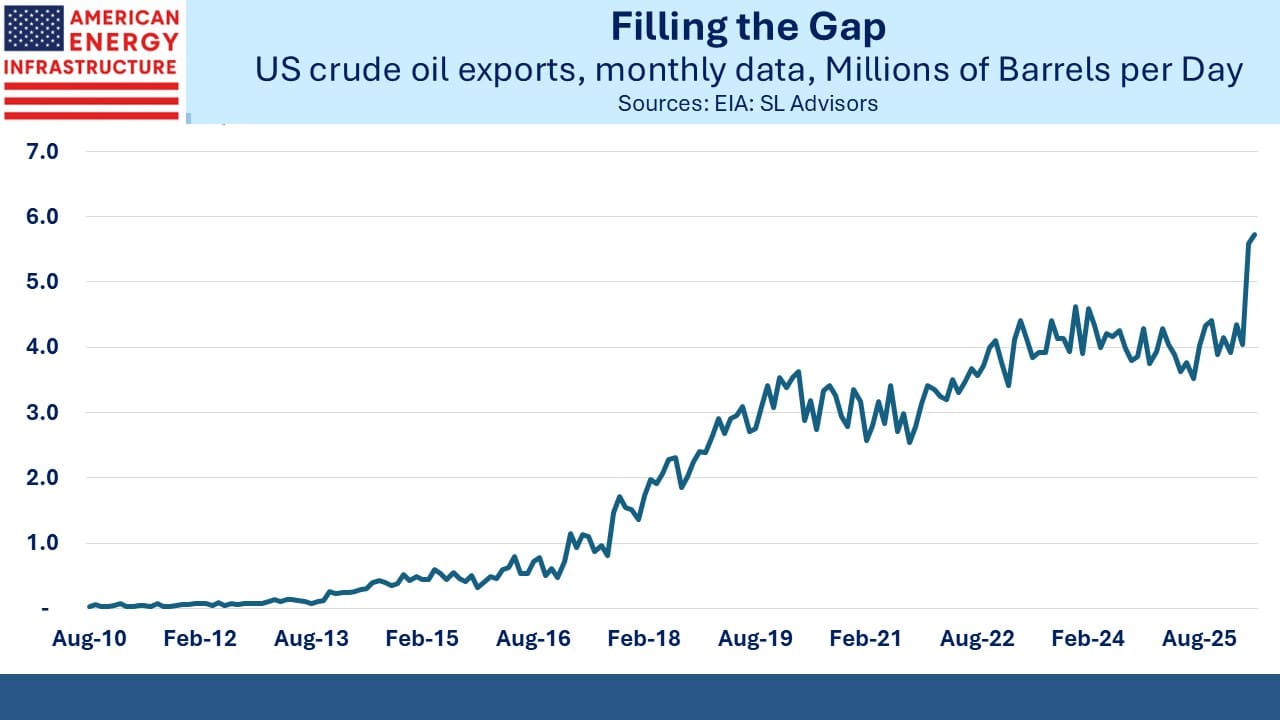
US crude exports have also jumped in response to limited flows from the Persian Gulf.
Targa Resources (TRGP) rose 7% on Tuesday following their announcement of a twenty year agreement to provide midstream services to Exxon Mobil in the Permian basin. That’s quite a move for a company with $60BN in market cap. +59% YTD; even by the standards of midstream it’s outperforming.

It’s also interesting though unsurprising to note the growing opposition to data centers. Pennsylvania is the most recent state to impose restrictions on new construction. Politicians from both parties are finding data centers an easy target. They do little for local employment, might boost your electricity prices and then put you out of work.
On the positive side, local opposition, which is increasingly common, does strengthen the appeal of behind-the-meter solutions which deliver natural gas directly to a dedicated power plant, thus bypassing the grid. This suits Williams Companies and Energy Transfer, both of whom are offering this solution to hyperscalers building data centers.
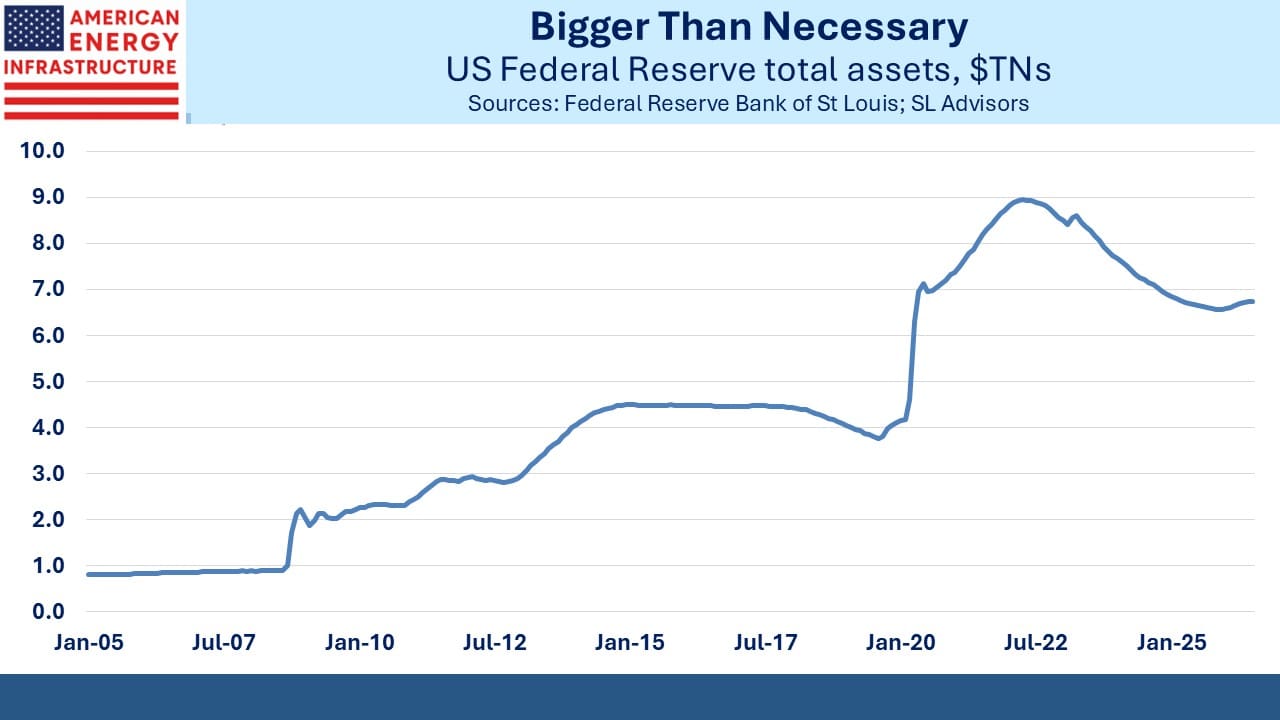
Last week the US Treasury intervened in the bond market, causing yields to briefly drop ten basis points by repurchasing $2BN of bonds. Low rates suit the indebted, including the Federal government. It’s not that they have extra cash lying around, like a corporation recycling profits into buying back stock. Purchases are funded with increased borrowing at shorter maturities. At the margin it helps home buyers by depressing mortgage rates.
But easier credit won’t trim inflation. It’s further evidence that the Trump administration does not have a hard money ethos and will always favor lower rates now at the risk of higher inflation later. Since voters have for decades rejected policies that would rein in our fiscal profligacy, manipulating interest rates to limit the consequences seems logical.
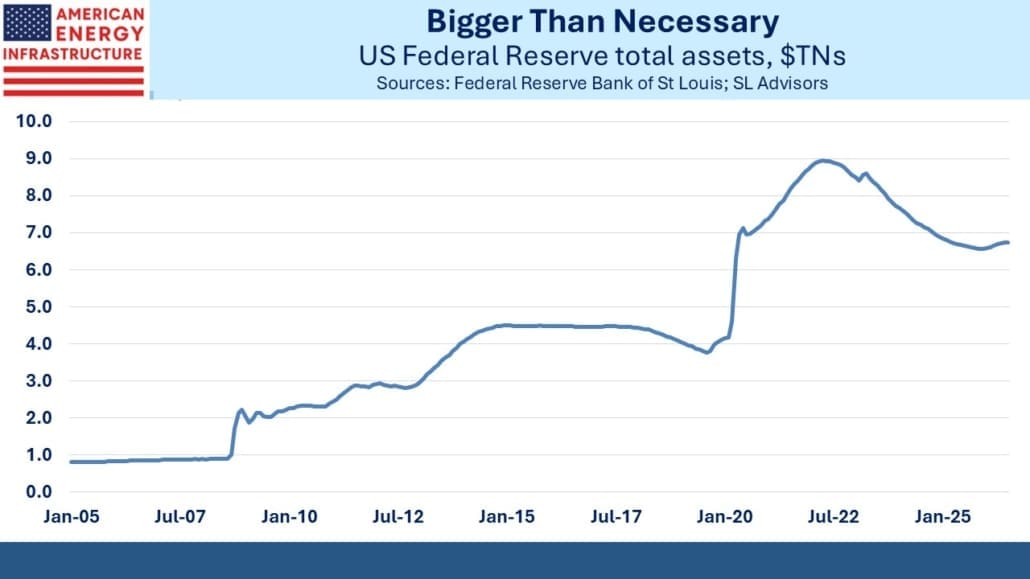
Fed Chair Kevin Warsh has been critical of the Fed’s bloated balance sheet, enduring evidence of our partial debt monetization. Should he try to reverse this trend that began during the Great Financial Crisis, it will be his most consequential policy change. Ending Quantitative Easing will enable the full transmission of our fiscal outlook to be reflected in higher bond yields.
It may not go well and may not happen at all.
The challenge in reducing debt monetization is another reason why we believe owning assets that have embedded protection, such as pipelines with their PPI-linked price escalators on the fees they charge, is prudent (see Inflation Protection From Pipelines).
—
Originally Posted 8/23/26 – Strategic Patience
Please go to following link for important legal disclosures: https://sl-advisors.com/legal-disclosure
SL Advisors is invested in all the components of the American Energy Independence Index via the ETF that seeks to track its performance.
Information posted on IBKR Campus that is provided by third-parties does NOT constitute a recommendation that you should contract for the services of that third party. Third-party participants who contribute to IBKR Campus are independent of Interactive Brokers and Interactive Brokers does not make any representations or warranties concerning the services offered, their past or future performance, or the accuracy of the information provided by the third party. Past performance is no guarantee of future results.
This material is from SL Advisors and is being posted with its permission. The views expressed in this material are solely those of the author and/or SL Advisors and Interactive Brokers is not endorsing or recommending any investment or trading discussed in the material. This material is not and should not be construed as an offer to buy or sell any security. It should not be construed as research or investment advice or a recommendation to buy, sell or hold any security or commodity. This material does not and is not intended to take into account the particular financial conditions, investment objectives or requirements of individual customers. Before acting on this material, you should consider whether it is suitable for your particular circumstances and, as necessary, seek professional advice.
Futures are not suitable for all investors. The amount you may lose may be greater than your initial investment. Before trading futures, please read the CFTC Risk Disclosure. A copy and additional information are available at ibkr.com.
Related Articles



















Join The Conversation
For specific platform feedback and suggestions, please submit it directly to our team using these instructions.
If you have an account-specific question or concern, please reach out to Client Services.
We encourage you to look through our FAQs before posting. Your question may already be covered!