
- Solve real problems with our hands-on interface
- Progress from basic puts and calls to advanced strategies
Interactive Options Course
Posted June 15, 2026 at 11:00 am
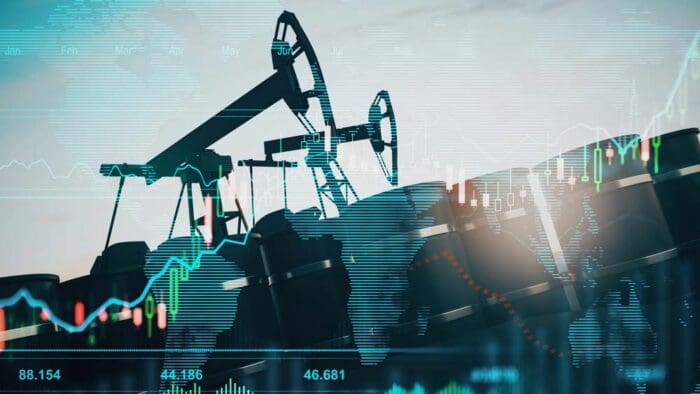
Crude oil has surrendered roughly a third of its value since the Strait of Hormuz conflict pushed it toward $120 a barrel, yet the price Americans pay at the pump has only barely dropped.
West Texas Intermediate fell almost 5% on Monday to about $80 a barrel, a two-month low, after President Donald Trump said the United States and Iran had reached a deal to end their war and reopen the strait.
The national average for regular gasoline sat at $4.07 a gallon on Saturday, according to AAA, down about 15% from its springtime peak.
Why does the pump take so long to follow crude down? It is one of the most studied puzzles in energy economics.
Trump announced the agreement Sunday on Truth Social, authorizing the reopening of the waterway and the removal of the United States naval blockade.
“The Deal with the Islamic Republic of Iran is now complete. … I hereby fully authorize the toll free opening of the Strait of Hormuz, and … the immediate removal of the United States Naval blockade. Ships of the World, start your engines. Let the oil flow!”
The strait carries about a fifth of the world’s oil. Its closure since late February had loaded a war premium into every barrel.
The deal, set to be signed Friday in Switzerland, drains it.
“With the opening of the Strait upon the signing of the Deal on Friday, for purposes of mine removal, oil will flow on both ends again for the Region, and the World!”
A gallon has fallen about 46 cents over the past month, from $4.53 to $4.07. Oil has dropped more than twice as much in percentage terms.
Economists have a name for this phenomenon and it’s called the “Rocket and Feather” theory.
Gasoline prices tend to rise like a rocket when crude climbs, then fall like a feather when crude drops.
The Federal Reserve Bank of St. Louis has documented the pattern for years. Crude makes up close to 70% of the pump price, so the two should move together. They do on the way up.
The simplest reason is inventory.
The gasoline in a station’s tanks today was refined from crude bought weeks ago, when oil was more expensive. Retailers price off the cost of their next delivery when crude is rising, and off the fuel already paid for when crude is falling.
There is a behavioral layer too. When prices spike, drivers shop around, and competition forces stations to pass savings through fast. When prices ease, the hunt stops, and retailers keep a little more of the gap.
The White House has promised quick relief. Trump said the end of the war would bring prices down fast, and his press secretary said drivers could soon see gasoline cheaper than before the conflict began.
The data is sending a more patient signal. History says the pump takes weeks, not days, to catch down to crude.
For households, a slower drop at the pump means inflation cools more gradually than the oil chart suggests, keeping energy in the Federal Reserve’s line of sight even as the war premium disappears.
Crude has already made its move. The only question left is how long the feather takes to land.
—
Originally Posted June 15, 2026 – Oil Tumbles To $80 On Trump’s Iran Peace Deal: Will The Pump Now Follow?
© 2022 Benzinga.com. Benzinga does not provide investment advice. All rights reserved.
Information posted on IBKR Campus that is provided by third-parties does NOT constitute a recommendation that you should contract for the services of that third party. Third-party participants who contribute to IBKR Campus are independent of Interactive Brokers and Interactive Brokers does not make any representations or warranties concerning the services offered, their past or future performance, or the accuracy of the information provided by the third party. Past performance is no guarantee of future results.
This material is from Benzinga and is being posted with its permission. The views expressed in this material are solely those of the author and/or Benzinga and Interactive Brokers is not endorsing or recommending any investment or trading discussed in the material. This material is not and should not be construed as an offer to buy or sell any security. It should not be construed as research or investment advice or a recommendation to buy, sell or hold any security or commodity. This material does not and is not intended to take into account the particular financial conditions, investment objectives or requirements of individual customers. Before acting on this material, you should consider whether it is suitable for your particular circumstances and, as necessary, seek professional advice.
Futures are not suitable for all investors. The amount you may lose may be greater than your initial investment. Before trading futures, please read the CFTC Risk Disclosure. A copy and additional information are available at ibkr.com.
Related Articles


















Join The Conversation
For specific platform feedback and suggestions, please submit it directly to our team using these instructions.
If you have an account-specific question or concern, please reach out to Client Services.
We encourage you to look through our FAQs before posting. Your question may already be covered!