
- Solve real problems with our hands-on interface
- Progress from basic puts and calls to advanced strategies
Interactive Options Course
Posted January 5, 2026 at 3:57 pm
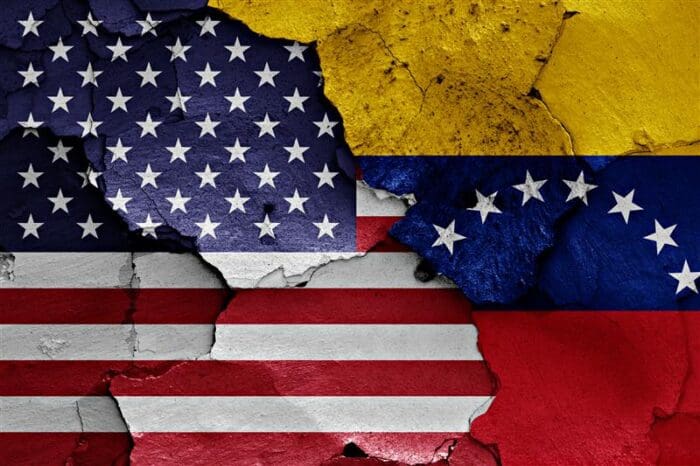
The US air strikes on Venezuela and the capture of President Nicolás Maduro mark a dramatic shift in a country that sits on the world’s largest proven oil reserves. Markets have stayed calm, but the political and economic consequences will be far-reaching.
Washington has already said American companies will move in to rebuild Venezuela’s ailing oil infrastructure, with the US somehow overseeing the country until a transition of power is in place.
To understand what events in Venezuela means for global markets, it helps to start with the oil itself because the type of crude the country produces is central to the story.
Thanks to the shale boom, the US has been the world’s largest oil producer since 2018. On paper, it doesn’t need Venezuelan barrels. But crude oil isn’t a single product. It’s a spectrum.
At one end sits light, sweet crude — thin like olive oil and low in sulfur, easy to refine into gasoline and jet fuel. At the other end is Venezuela’s specialty: heavy, sour crude, thick like molasses and loaded with sulfur. It’s harder and more expensive to process, but with the right equipment it yields large volumes of diesel, jet fuel and asphalt — the materials that keep global shipping, trucking, and construction moving.
Crude types can also be blended to match what individual refineries are built to handle. And that brings us to the second part of the story: the US refinery system.
The US is both a major importer and exporter of crude. It has been a net exporter since 2020, yet it still buys huge volumes of foreign oil. The reason is a hardware legacy that predates shale.
In the 1990s and 2000s, before anyone imagined the shale boom, US refiners feared running out of light crude. They spent billions upgrading plants to run the thickest, highest‑sulfur oil on the market. Those investments still dictate today’s strategy:
No major new refinery has been built in the US since 1977, and getting permits for one is difficult. Oil companies are also wary of committing capital to long‑lived assets in a world shifting toward electric vehicles and cleaner energy. In practice, the US is locked into a system that needs heavy crude, and Venezuela has it.

Venezuela holds around 17% of the world’s known oil reserves, yet output had collapsed to about one million barrels a day already before the US export embargo and the capture of Maduro. This is just 1 percent of the global supply, down from three million barrels in the early 2000s. Years of mismanagement, sanctions, and equipment decay have hollowed out the industry.
Before the recent events, most of what remained was used domestically or shipped to China under credit‑for‑oil deals.
Rebuilding production will take years and billions of dollars.
Before any of that, the US must convince companies that their capital will be safe — a difficult pitch in a country emerging from forced regime change. Chevron is the only American major still operating there under a Treasury licence. Others have long memories of legal disputes and nationalization of the oil assets.
Even with better governance, meaningful volumes will take time.
Because heavy sour crude is harder to process, it usually sells at a discount to light sweet crude. That gap — the sour differential — could widen if Venezuelan output rises, putting pressure on other heavy‑crude exporters like Russia and Canada.
Refiners, meanwhile, watch the crack spread: the profit margin from turning crude into end products like gasoline, diesel, and jet fuel. The US wants this spread wide — buy cheap heavy crude and sell refined products at full global prices. If Venezuela’s operations are successfully upgraded, the first signs will show up in these spreads.
Venezuela’s shift also feeds into a global currency story. For five decades, the global oil trade has run on the petrodollar system, with crude priced and sold in US dollars. That forces countries to hold dollar reserves and reinforces the dollar’s role as the world’s reserve currency.
China has been trying to chip away at this with its own model — the petroyuan — offering sanctioned producers a way to sell oil outside the dollar system. Venezuela, along with Iran and Russia, has been central to that effort.
By toppling President Maduro and moving to control Venezuela’s oil path, the US has pulled a significant block of heavy crude back into the dollar system. China, which previously received Venezuelan oil partly in exchange for credit, is unlikely to see those debts repaid and may now have to compete for the same barrels at full market prices, in dollars.
The US actions in Venezuela may bring back memories of 2003, the invasion of Iraq. The comparison is tempting but misleading. In 2003, oil prices carried a war premium. When the invasion began, and the worst outage fears faded, oil prices fell. Later, insurgent attacks on oil infrastructure slowed Iraq’s recovery, and prices rose again.
Venezuela is the opposite. Years of decline and sanctions have already removed most of its barrels from the market. There is no outage premium to unwind. The risk now is how much heavy crude could return — and how quickly.
If Venezuelan volumes do rise, the impact will show up first in the undercurrents of the market: softer heavy‑crude prices and shifting refinery economics, rather than a dramatic move in Brent or WTI.
To learn more about how commodities impact global markets, check out the Commodities course on IBKR Investmentor.


Learn more about InvestMentor
Information posted on IBKR Campus that is provided by third-parties does NOT constitute a recommendation that you should contract for the services of that third party. Third-party participants who contribute to IBKR Campus are independent of Interactive Brokers and Interactive Brokers does not make any representations or warranties concerning the services offered, their past or future performance, or the accuracy of the information provided by the third party. Past performance is no guarantee of future results.
This material is from IBKR InvestMentor, an affiliate of Interactive Brokers LLC, and is being posted with its permission. The views expressed in this material are solely those of the author and/or IBKR InvestMentor and Interactive Brokers is not endorsing or recommending any investment or trading discussed in the material. This material is not and should not be construed as an offer to buy or sell any security. It should not be construed as research or investment advice or a recommendation to buy, sell or hold any security or commodity. This material does not and is not intended to take into account the particular financial conditions, investment objectives or requirements of individual customers. Before acting on this material, you should consider whether it is suitable for your particular circumstances and, as necessary, seek professional advice.
Futures are not suitable for all investors. The amount you may lose may be greater than your initial investment. Before trading futures, please read the CFTC Risk Disclosure. A copy and additional information are available at ibkr.com.
For specific platform feedback and suggestions, please submit it directly to our team using these instructions.
If you have an account-specific question or concern, please reach out to Client Services.
We encourage you to look through our FAQs before posting. Your question may already be covered!
Related Articles














excellent article. thank you
We appreciate your positive feedback!
Nicely written. Reality: “Hi, we’re here to invade and take your oil. This is Iraq, right?”
“The US actions in Venezuela may bring back memories of 2003, the invasion of Iraq. The comparison is tempting but misleading.” “History doesn’t repeat itself but it often rhymes” — Mark Twain New name suggestion for Greenland: Greedland.
Apparently, we need more oil to fund overspending on AI until it returns an ROI either by selling generative AI (porn?) online (see ‘Middle Men’ and pay-to-play online) or making it inevitable that you must have the latest “AI phone” (think BlackBerry). Until then all bets are off. The future isn’t quite here yet
The US is not going to have boots on the ground in Venezuela. At least, not enough to directly control it. So, US will rely on the ability to use threats, even tighter sanctions, and possibly mass protests that the regime cannot control with the Army or its thugs, to move the regime to conduct elections and put a democratic, US-friendly regime in place. It is not clear how this will happen. Or if it will happen and how long it will take. Investment will start only after a friendly regime is in place, and output will rise a few years later.
It’s nice to see the USA abiding international law. We have no business running Venezuela.
Could be nice if IBKR can operate normally in Venezuela
Hello, thank you for reaching out. At this time, IBKR does not offer its services to residents of Venezuela. Thank you for your interest.
Cuando reactivaran las cuentas para Venezuela?
Hola, gracias por contactarnos. Lamentablemente, IBKR no ofrece sus servicios a residentes de Venezuela. Gracias por su interés.
Siempre puede consultar nuestros países disponibles en nuestra página web: https://spr.ly/AvailableCountriescampus
¡Esperamos que esto le sea útil!
Buenas tardes, Es posible que este año reactiven las cuentas con venezuela?