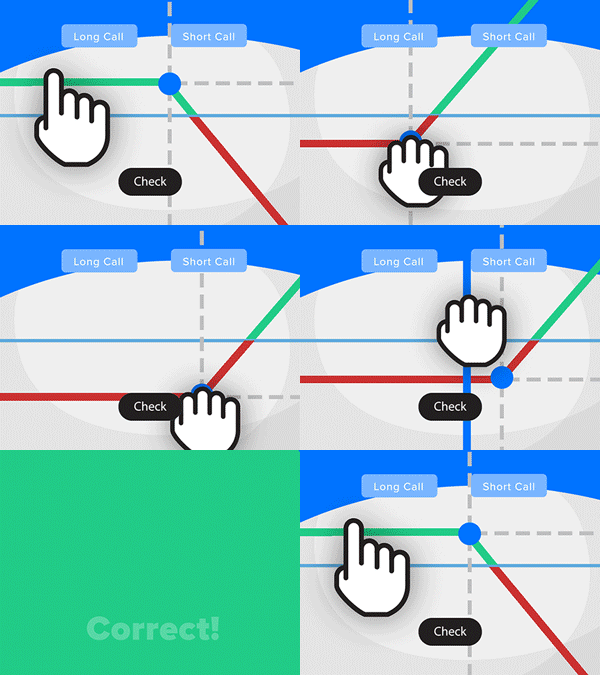
- Solve real problems with our hands-on interface
- Progress from basic puts and calls to advanced strategies
Interactive Options Course

Posted November 11, 2026 at 10:15 am
Democrats have won control of both chambers of Congress in the US midterm elections, and they have flipped several governorships too. Many see the result as a rebuke to President Trump. Politically, we could now see more gridlock between Congress and the administration, and some administration policies may get challenged.
We see two main implications for markets. First, the result could change the course of the Iran war. The war has been inflationary, and the vote was probably a rebuke of it, which could push the administration towards a resolution. Second, and this is the big one, Democrats taking Congress and some governorships can alter the path of the AI infrastructure buildout. Market reaction to the first has been mild so far. Reaction to the second has been sharp. In this blog, we look at what both could mean for different asset classes.
The initial reaction from markets was positive. The S&P 500 rose 1.6% on 4 November. The tech heavy Nasdaq 100 was up 0.9%. On 5 November, US stocks more than reversed the prior day gains and the S&P 500 fell 4.3%, with tech, and semiconductors in particular, leading the selloff. The NASDAQ 100 fell 6.4%.
Under the surface, this looks like a rotation into value. The S&P 500 Growth index fell sharply over 4 and 5 November while the S&P 500 Value index was relatively protected. The biggest losers inside the growth index are the AI infrastructure names that have been the biggest winners this year. Sandisk, which makes flash memory and storage, Micron, a leading maker of the memory chips that sit alongside AI processors, and Bloom Energy, whose fuel cells provide on-site power for data centres, have all been hit hard. This shows how worried markets have become about AI capex. More on this later.
Going forward, markets may find a way to recover, as they so often do. AMD CEO Lisa Su said in a CNBC interview on 4 November that the election is a chance for the tech industry to make the case for data centres to the local communities that host them. She still sees an intense need for compute, and AMD’s latest results support that. If she is right, this may just be a blip. More on this later.
Treasuries rallied after the result, and the 10-year yield, which hit 5.3% in October, was back around 4.8% on 5 November. For now, the One Big Beautiful Bill Act stays the fiscal law of the land, and a Democratic Congress may block further fiscal stimulus or further tax cuts. That helps the long end.
The bigger driver is the Iran war. Both the President and the Vice President have acknowledged that it weighed on the result. A president who has just lost the midterms, facing a Congress that controls the purse, has less room to escalate, and Trump has talked about peace in recent days. Oil has fallen as traders start to price in the end game. Oil is the biggest source of inflation pressure right now, so lower prices could mean fewer rate hikes as the second-round impacts of inflation are cushioned.
Markets are not pricing in a change in Fed policy yet. The probability of a 25bps hike in December has come down from 79.9% a week ago to 70.9% on 5 November, but it is still high. The probability of another hike in March 2027 has barely moved, at 44.6% against 46.7%, which is close to a coin flip. So, rate expectations explain only part of the Treasury rally. The shift into defensive assets looks like the bigger reason yields are lower, and the same logic explains why the dollar is largely holding its ground. It also explains why gold is up but modestly.
For yields to fall meaningfully, expectations for Fed policy need to change. The election result alone cannot do that. Markets need to see a resolution of the Iran conflict. Until then, oil can swing on headlines, and nothing is certain until peace is meaningfully secured.
This is the topic being discussed most since the result. Democrats flipped the governorships of Texas, Georgia, Ohio and Iowa, with candidates in both parties running against data centres because of rising power bills. A recent University of Houston poll found 79% of Texans back limits on construction while 99% say proposed data centres should cover the cost of expanding the electric grid to provide the power they need.
SemiAnalysis published a note on 4 November flagging around 5.8 GW of capacity due in 2027 and the first half of 2028 where a key permit is missing or suspended. About 90% of it is in Texas. Their headline is that the AI trade is down but not out, because a slower buildout lengthens the cycle. They favour large cloud providers, neoclouds with live or permitted capacity and custom chips. They are negative on anything tied to new US builds, including Nvidia, memory, commodity optics and chip equipment makers.
Markets were already worried about AI capex and debt, so some check on spending may be welcome. Trump still holds the veto, so Congress cannot easily force a slowdown, and gridlock is the likelier outcome. That creates uncertainty, which markets dislike. It does not necessarily mean an outright slowdown in the buildout. Semiconductors also go through cycles, and we do not yet know whether the buildout will slow, or by how much.
If data centres have to generate or secure their own power, it should speed up a trend we are already seeing, with hyperscalers striking long-term nuclear deals. Small modular reactors will find favour too, but nuclear buildouts take time, so existing plants should benefit first. Nuclear also has support from both parties.
The initial reaction in AI, AI infrastructure and cybersecurity themes has been negative, with cybersecurity pulling back alongside the wider tech move. Space also fell, as SpaceX has big Texas exposure and investors may be taking out the premium for being close to Trump and Musk. The pullback may prove overdone, and if yields ease and earnings stay robust, tech could regain strength.
Renewable energy has shown some positive initial signs. A Democratic Congress removes the risk of further federal hostility, including more rollbacks of Inflation Reduction Act support. Tax credits are unlikely to return while Trump holds the veto, so for now the gain is less downside risk. If renewables win support in Congress, markets could see real upside. Lower yields help too, as the sector is capital heavy.
Two variables will drive markets from here, AI policy and Iran policy. Markets believe the election result will directly affect AI policy and may also influence Iran policy.
The AI impact will take longer to show. Much of the action moves to the states, where permits and power rules will decide how fast data centres get built. In the meantime, markets may keep guessing, and we could see swings in either direction.
On Iran, we may see a direction of travel sooner. If peace talks resume, oil, inflation and the Fed outlook could shift, and that is what yields need to fall in a lasting way. Gridlock in Washington should mean fewer big surprises elsewhere. We will be watching oil, yields and data centre permits closely.
—
Originally Posted November 11, 2026 – What’s hot: The market implications of the US midterm elections
This material is prepared by WisdomTree and its affiliates and is not intended to be relied upon as a forecast, research or investment advice, and is not a recommendation, offer or solicitation to buy or sell any securities or to adopt any investment strategy. The opinions expressed are as of the date of production and may change as subsequent conditions vary. The information and opinions contained in this material are derived from proprietary and non-proprietary sources. As such, no warranty of accuracy or reliability is given and no responsibility arising in any other way for errors and omissions (including responsibility to any person by reason of negligence) is accepted by WisdomTree, nor any affiliate, nor any of their officers, employees or agents. Reliance upon information in this material is at the sole discretion of the reader. Past performance is not a reliable indicator of future performance.
Please click here for our full disclaimer.
Jurisdictions in the European Economic Area (“EEA”): This content has been provided by WisdomTree Ireland Limited, which is authorised and regulated by the Central Bank of Ireland.
Jurisdictions outside of the EEA: This content has been provided by WisdomTree UK Limited, which is authorised and regulated by the United Kingdom Financial Conduct Authority.
Information posted on IBKR Campus that is provided by third-parties does NOT constitute a recommendation that you should contract for the services of that third party. Third-party participants who contribute to IBKR Campus are independent of Interactive Brokers and Interactive Brokers does not make any representations or warranties concerning the services offered, their past or future performance, or the accuracy of the information provided by the third party. Past performance is no guarantee of future results.
This material is from WisdomTree Europe and is being posted with its permission. The views expressed in this material are solely those of the author and/or WisdomTree Europe and Interactive Brokers is not endorsing or recommending any investment or trading discussed in the material. This material is not and should not be construed as an offer to buy or sell any security. It should not be construed as research or investment advice or a recommendation to buy, sell or hold any security or commodity. This material does not and is not intended to take into account the particular financial conditions, investment objectives or requirements of individual customers. Before acting on this material, you should consider whether it is suitable for your particular circumstances and, as necessary, seek professional advice.
Futures are not suitable for all investors. The amount you may lose may be greater than your initial investment. Before trading futures, please read the CFTC Risk Disclosure. A copy and additional information are available at ibkr.com.
Investments in certain commodities (precious metals) may be subject to significant price volatility and often involve risks related to market fluctuations, liquidity constraints, geopolitical events, and changes in global economic conditions that could adversely affect their value.
U.S. Spot Gold trading through IB LLC accounts is only available to legal residents of the United States that do not reside in Arizona, Montana, New Hampshire, and Rhode Island.
Related Articles
















Join The Conversation
For specific platform feedback and suggestions, please submit it directly to our team using these instructions.
If you have an account-specific question or concern, please reach out to Client Services.
We encourage you to look through our FAQs before posting. Your question may already be covered!