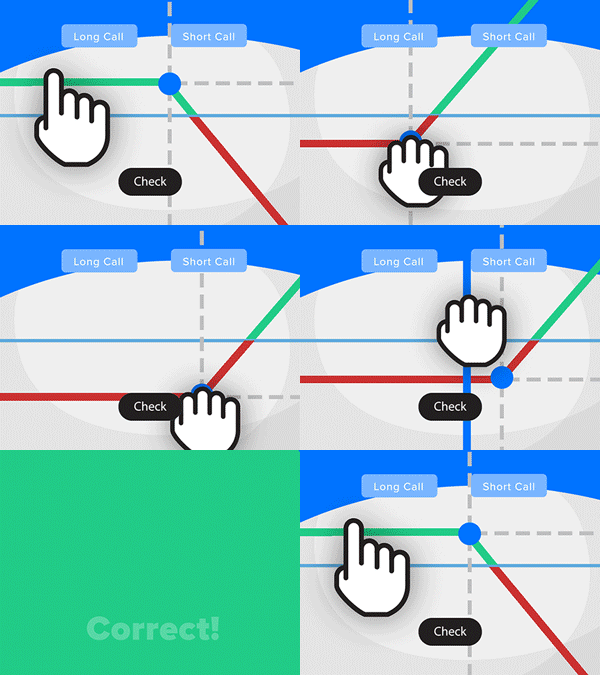
- Solve real problems with our hands-on interface
- Progress from basic puts and calls to advanced strategies
Interactive Options Course

Posted November 10, 2026 at 1:06 pm
Markets are dropping after Fed Governor Christopher Waller signaled a potential 50-bp hike in December just a few hours before the October CPI came in hotter than expected. The hawkish combination has stocks paring some of yesterday’s monster gains while yields soar by double digits across the curve. The interest rate jump is occurring even after WTI crude traded as low as $83.88 per barrel this morning, its lowest level since Aug. 28, on the back of President Trump reiterating little appetite to restart military attacks against Iran. The broad yield climb is dominated by the monetary policy sensitive short end, as the odds of a half-point raise stands at 11%. The fixed income losses are also being sparked by strengthening evidence that energy cost pressures are extending to overall goods and services, as both the headline and core CPI results exceeded projections. An acceleration in hiring depicted in ADP’s weekly update additionally weighed on credit assets, albeit to a lesser extent. In equities, the four major domestic benchmarks are sinking with tech providing the heaviest drag amidst 6 of the 11 principal sectors declining. The tighter financial conditions are benefiting the greenback while hurting commodities and cryptocurrencies. Investor demand for downside hedges is modestly higher, as volatility protection instruments see a slight increase in premiums.
Today’s hotter-than-anticipated Consumer Price Index (CPI) lacked annualized figures, since the prolonged government shutdown of 2025 disrupted data collection and analysis. Still, October headline and core costs rose 0.4% and 0.3%, respectively, month over month (m/m), against the backdrop of broadening inflationary pressures. The results compare to September’s 0.6% and 0.3%. The following categories experienced the stated price gains:
The heating services and used cars/trucks segments were the only major areas offering relief, with charges down 0.8% and 1.2%. The sweeping increases are emblematic of businesses attempting to preserve margins in an environment of costlier inputs.
Small firm optimism was generally unchanged in October as softness in certain areas offset strength in others. The National Federation of Independent Business’s headline sentiment number of 97.8 was a whisker below the 97.9 reported in September. While earnings trends, expected credit conditions, inventory growth plans and capital expenditure prospects weakened at the margins, they were countered by improvements in hiring intentions, confidence in the economic outlook, job openings and whether it’s a good time to expand operations. Overall, entrepreneurs were positive about consumer spending momentum, while they remained worried about heavy costs, labor shortages and policy risks. Indeed, the quality and availability of workers was the single most important problem widely cited by survey respondents at 25%, while taxes and inflation came in at 21% and 17%.
Hiring momentum accelerated towards the end of last month, according to ADP’s weekly employment update. Payroll increases rose to a four-week moving average of 19.75k in the seven-day period that ended Oct. 24, greater than the 19.5k and the 16.75k registered in the previous two intervals. The results underscore that labor conditions have improved as the third quarter progressed.
With fuel charges sinking sharply in response to cooling US-Iran tensions, Waller’s comment that an aggressive half-point rate hike, double the size of the quintessential quarter, is possible, was totally unnecessary. Raising the benchmark during a supply shock is already a risky endeavor that could derail the economic expansion, warranting careful adjustments, especially in light of the upcoming January meeting that offers the Fed an additional opportunity to lift if policymakers deem that the December increase wasn’t enough. I agree that gasoline costs appear to be spreading more materially throughout goods and services, as seen in this morning’s CPI, but the central bank is currently at a relatively high midpoint of 3.875%, and larger than normal raises are simply not justified at this juncture. November inflation, moreover, is poised to decline if West Texas Intermediate (WTI) crude can remain in the 80s, and President Trump looks recommitted to subdued energy costs that would please the constituency following the brutal midterm election losses for the GOP. Meanwhile, the geopolitical premium is still elevated, and a sustained move to the 70s, would return us to a 2-handle on inflation by March, making Treasuries attractive buys across the curve, particularly at the 2- to 5-year maturities as the fixed-income complex is just far too hawkish.
China’s monthly trade surplus fell slightly in October, but the country is still on pace to set another annual record high for the value of exports relative to imports. China global trade prowess continues to benefit from higher energy costs resulting from the US-Iran war. As oil and gas prices have climbed, more countries have increased their purchases of China’s renewable energy technology while consumers have been turning the country’s electric vehicles. In one example, Geely Automobile EVs jumped 500% year over year (y/y) as reported by the Wall Street Journal. Demand for the country’s AI products and robotics has also been strong. More broadly, cheap labor, high levels of factory automation and government subsidies have been powerful tailwinds. Despite this trend, the country’s monthly trade surplus sank from $133.5 billion in September to $105.2 billion last month and missed the economist consensus estimate of $126.5 billion, according to the General Administration of Customs. In October, the government limited the amount of energy products shipped to foreign countries to conserve oil and natural gas reserves in light of ongoing uncertainties about the Middle East, including the Strait of Hormuz. After climbing 36.3% y/y in September, exports grew only 35.2% but still exceeded the economist consensus estimate for a 33.5% jump. The surplus was also trimmed by high prices of black gold increasing the value of products that entered the country. October imports were up 41.6% y/y compared to September’s 31% ascent. Economists anticipated a 32% y/y expansion. From a longer-term perspective, China’s trade surplus hit $1 trillion for the year-to-date period that ended last month. At the current rate, China is on track to exceed last year’s all-time high annual surplus of $1.19 trillion.
New to Interactive Brokers?
Open AccountInformation posted on IBKR Campus that is provided by third-parties does NOT constitute a recommendation that you should contract for the services of that third party. Third-party participants who contribute to IBKR Campus are independent of Interactive Brokers and Interactive Brokers does not make any representations or warranties concerning the services offered, their past or future performance, or the accuracy of the information provided by the third party. Past performance is no guarantee of future results.
This material is from IBKR Macroeconomics, an affiliate of Interactive Brokers LLC, and is being posted with its permission. The views expressed in this material are solely those of the author and/or IBKR Macroeconomics and Interactive Brokers is not endorsing or recommending any investment or trading discussed in the material. This material is not and should not be construed as an offer to buy or sell any security. It should not be construed as research or investment advice or a recommendation to buy, sell or hold any security or commodity. This material does not and is not intended to take into account the particular financial conditions, investment objectives or requirements of individual customers. Before acting on this material, you should consider whether it is suitable for your particular circumstances and, as necessary, seek professional advice.
Futures, event contracts, and forecast contracts are not suitable for all investors. Before trading these products, please read the CFTC Risk Disclosure. For a copy, visit our Warnings and Disclosures Page.
Trading in digital assets, including cryptocurrencies, is especially risky and is only for individuals with a high risk tolerance and the financial ability to sustain losses. Eligibility to trade in digital asset products may vary based on jurisdiction.
Related Articles


















Join The Conversation
For specific platform feedback and suggestions, please submit it directly to our team using these instructions.
If you have an account-specific question or concern, please reach out to Client Services.
We encourage you to look through our FAQs before posting. Your question may already be covered!