
- Solve real problems with our hands-on interface
- Progress from basic puts and calls to advanced strategies
Interactive Options Course

Posted February 18, 2026 at 10:30 am
This insight examines the early-February 2026 volatility in US tech and equities broadly to highlight the expected long-run effects of AI on the economy, specifically areas that the market views as likely to be disrupted by AI.
Early in February the AI narrative took yet another turn. The Russell 1000 index was down almost 2% and the Tech industry was down more than 5% by the fourth trading day of the month (Exhibit 1). However, the market aggregates did not tell the full story. What was more interesting was the individual stock names flashing up on the screen with particularly large price drops. With markets largely recovering by the fifth trading day, the week’s wobbles may be quickly forgotten, but market performance during this brief period may give insights into the expected long-run effects of AI on the economy.
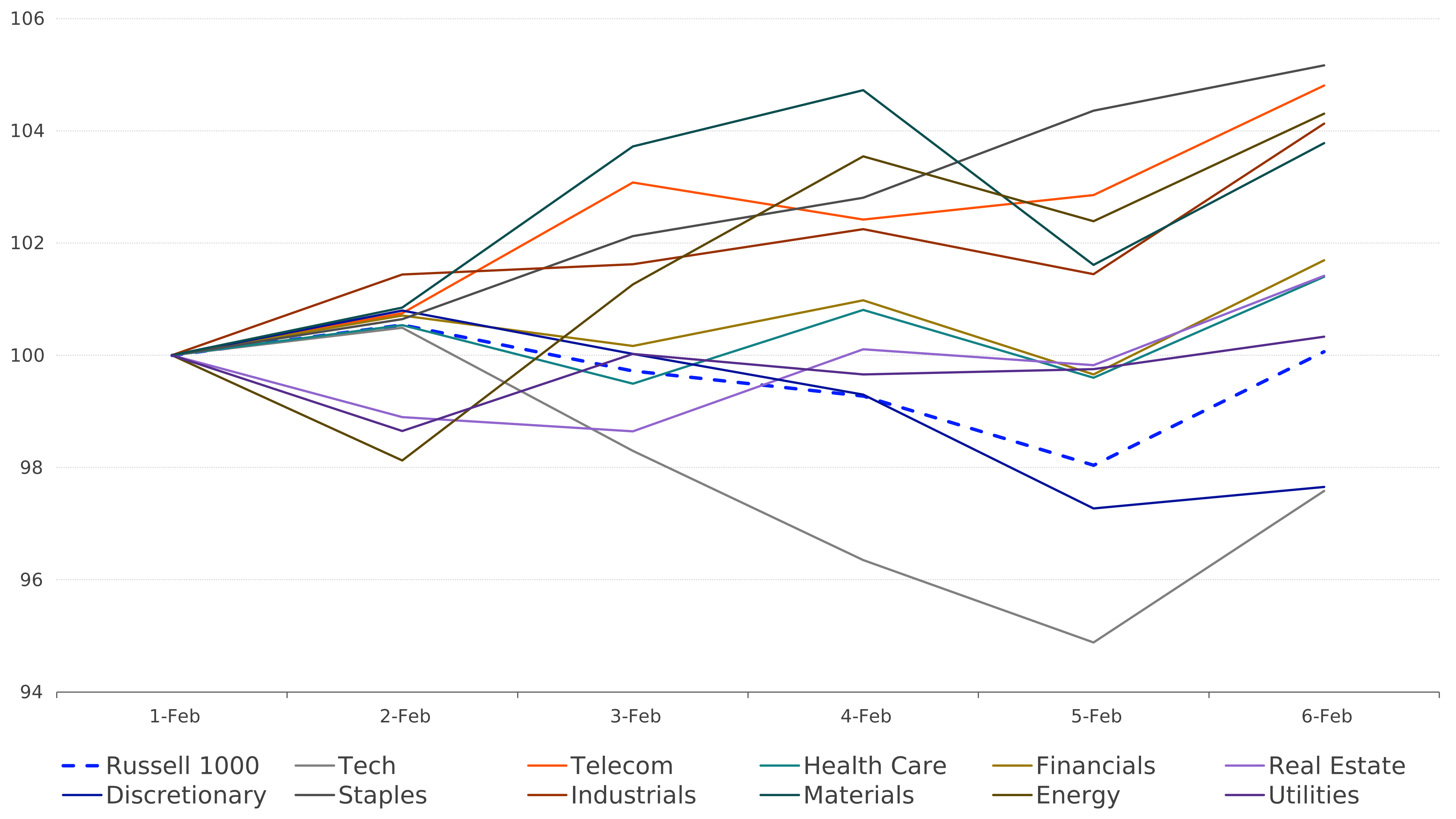
As AI companies of various flavors have poured billions of dollars into building out resources needed for developing Large Language Models or Generative AI (GenAI), it has created a divide between AI-related companies that are being paid today—the picks and shovels businesses of the AI build-out—and those that will see a payoff in some vaguely described future scenario. However, there is another distinction that has important implications for the cross-section of equity returns: companies that will be disruptors and companies that are likely to be disrupted.
For the most part, AI disruption scenarios have been fairly speculative, with disruption optimists outlining rosy outcomes of AI adoption, and disruption pessimists, frequently in the target sector, enumerating reasons for why humans cannot be replaced by AI. In early February, investors weighed in. The immediate trigger for the market moves seems to have been the release of AI tools from Anthropic that would facilitate knowledge-based activity in various fields including legal, finance, sales, and marketing. It generated cascading market reactions that the new tools would disrupt the business models of existing firms.
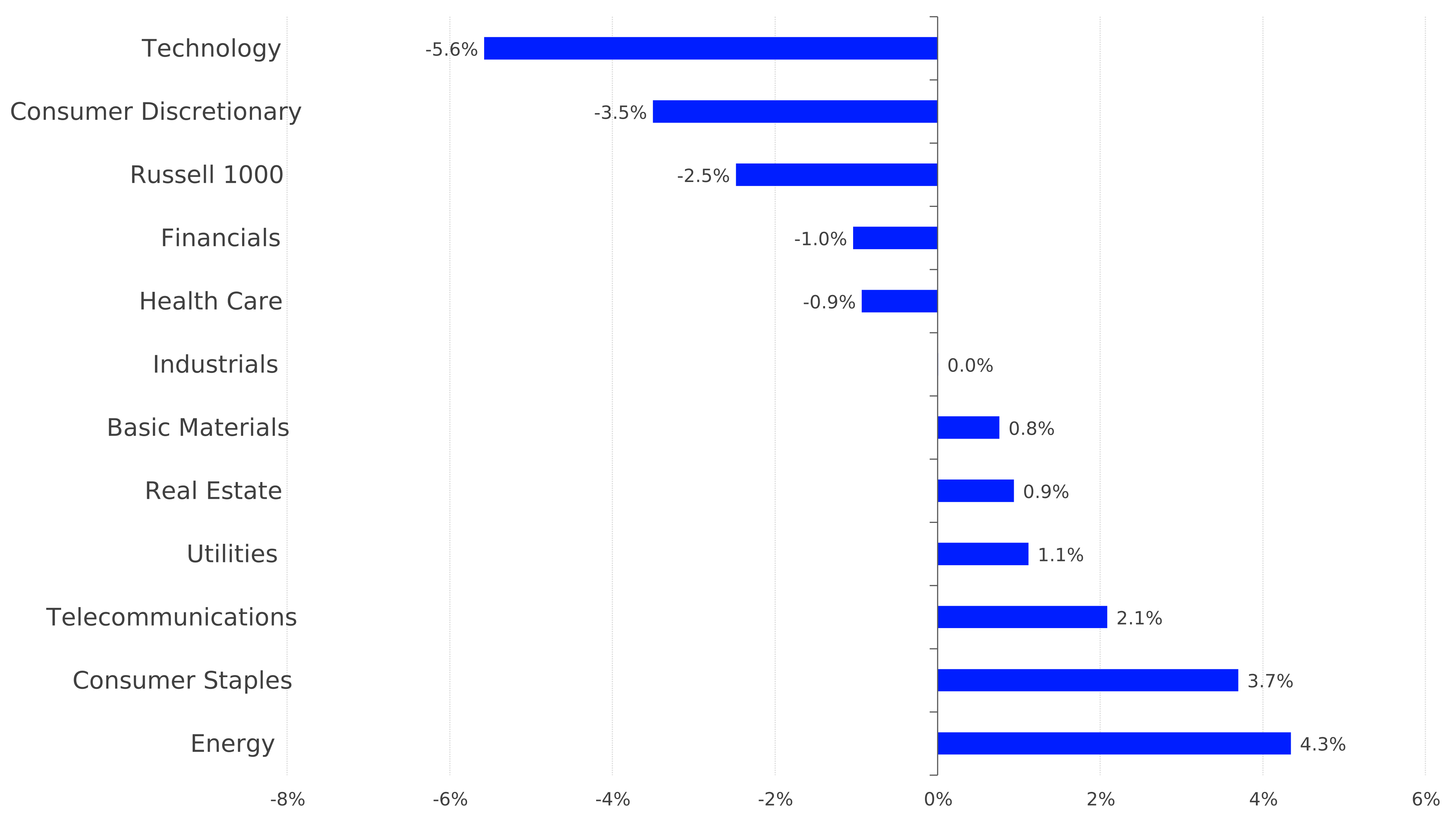
February equity volatility gave a glimpse of how the market views the possibility of AI disruption in different industries, sectors and sub-sectors. [note1] It is preliminary and certainly not conclusive, and there were other idiosyncratic factors during the period such as earnings releases that impacted market performance; however, the broad pattern of returns is informative. Exhibit 2 shows the 3-day return for Russell 1000 and its 11 industries. While the index was down only 2.5%, it was dragged down by steeper losses in the Technology and Consumer Discretionary industries. These industry-level returns still mask nuances related to the impact within industries.
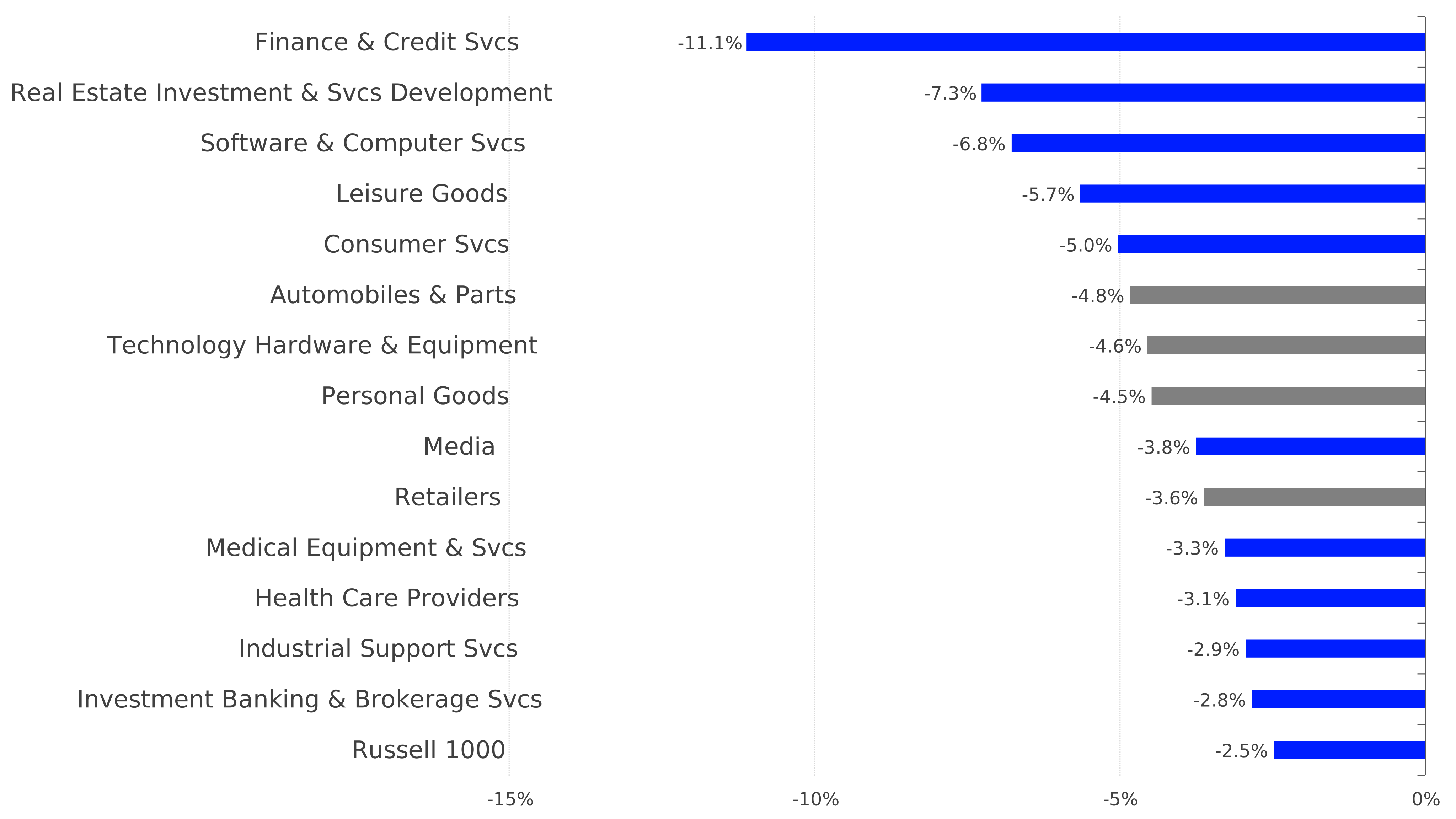
Looking at the more granular 43 sectors in the Russell 1000 adds detail. Exhibit 3 shows the worst 15 sector returns for the 3-day period and is packed with service sectors related to knowledge-based fields including finance, real estate, media and medical services, besides software.
Very roughly, GenAI synthesizes all the “thinking” on a topic that exists in the training data. If a person can gain skills from reading all the text in the training data, then the skill can be learned by GenAI and disrupted. One such early use of GenAI is for coding, which has allowed coders to generate relatively good code very quickly requiring fewer human hours. So, ironically, Software was perhaps the first sector that both disrupted and was disrupted by GenAI.
Financial services related to data analytics, providing wealth and tax planning are another example of a sector ripe for disruption by GenAI given the structured, sometimes formulaic, skills involved.
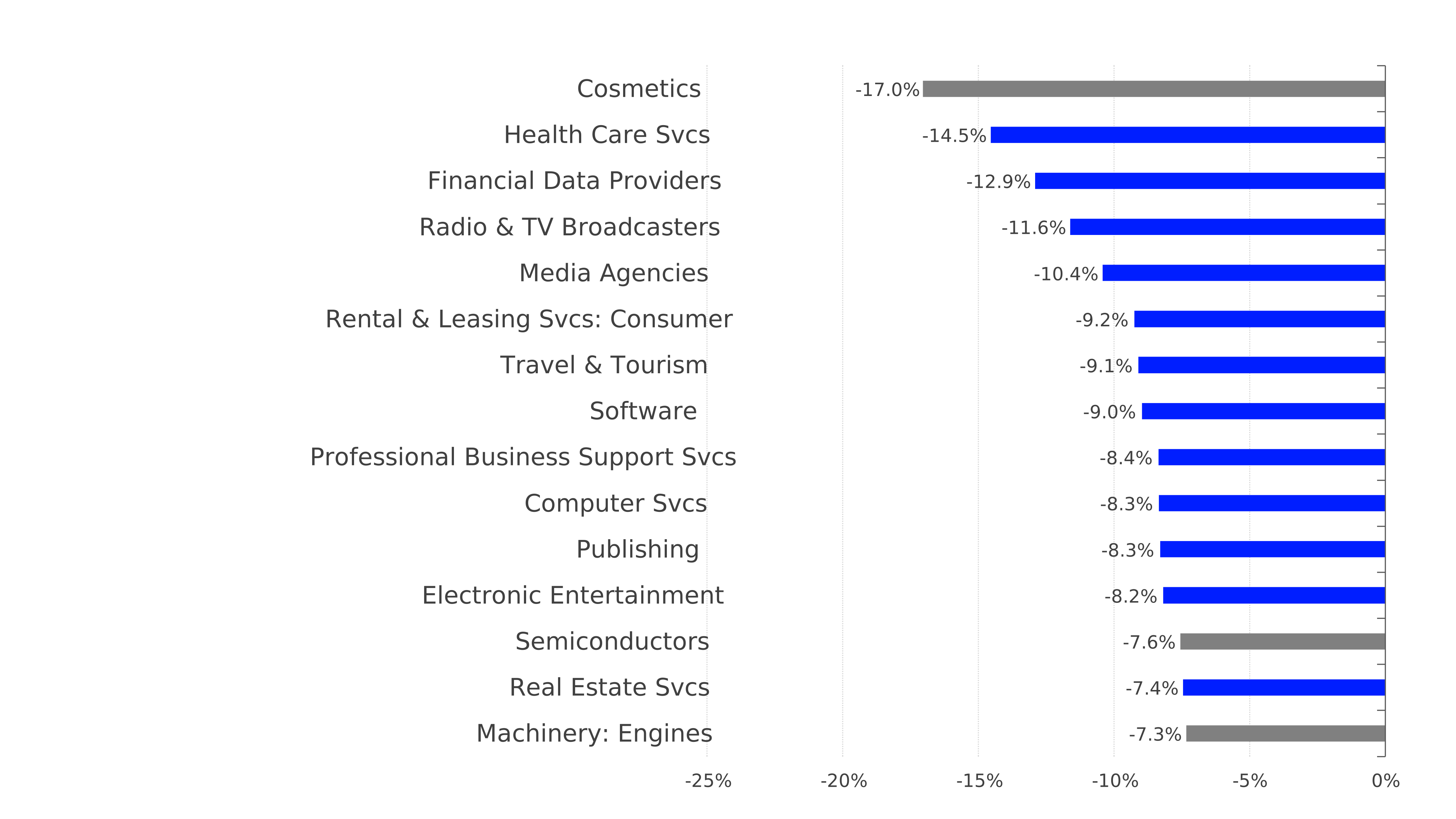
Finally, the most granular sub-sector level (Exhibit 4) shows these same general patterns. Radio and TV Broadcasters, Media Agencies, and Publishing (which includes advertising) within the Media Sector face potential competition from software that can automate and make more efficient scores of tasks. Electronic Entertainment (within Leisure Goods) that includes providers of gaming software was another sub-sector in the crosshairs.
Previous waves of technology have disrupted the structure of the economy usually by replacing physical labor (think steam engines, cotton gins, factory automation, etc.) and making production more efficient. Generative AI disruption will be different because it will disrupt knowledge-based skills, and the market is beginning to distinguish between the winners—those who adopt and adapt—and the losers. The AI tide, still rising, may no longer lift all boats. Crucially, the impact of AI disruption is diffused across industries and sectors. The resulting return dispersion is likely to provide differentiated opportunities for investors within the AI theme.
—
Originally Posted February 17, 2026 – The US market’s take on AI disruption
[1] Three of the ICB’s granular levels of economic classification. | Back to Note 1
Interactive Advisors, a division of Interactive Brokers Group, offers FTSE Russell Index Tracker portfolios on its online investing marketplace. Learn more about the Diversified Portfolios.
This material is not intended as investment advice. Interactive Advisors or portfolio managers on its marketplace may hold long or short positions in the companies mentioned through stocks, options or other securities.
© 2023 London Stock Exchange Group plc and its applicable group undertakings (the “LSE Group”). The LSE Group includes (1) FTSE International Limited (“FTSE”), (2) Frank Russell Company (“Russell”), (3) FTSE Global Debt Capital Markets Inc. and FTSE Global Debt Capital Markets Limited (together, “FTSE Canada”), (4) MTSNext Limited (“MTSNext”), (5) Mergent, Inc. (“Mergent”), (6) FTSE Fixed Income LLC (“FTSE FI”), (7) The Yield Book Inc (“YB”) and (8) Beyond Ratings S.A.S. (“BR”). All rights reserved.
FTSE Russell® is a trading name of FTSE, Russell, FTSE Canada, MTSNext, Mergent, FTSE FI, YB and BR. “FTSE®”, “Russell®”, “FTSE Russell®”, “MTS®”, “FTSE4Good®”, “ICB®”, “Mergent®”, “The Yield Book®”, “Beyond Ratings®“ and all other trademarks and service marks used herein (whether registered or unregistered) are trademarks and/or service marks owned or licensed by the applicable member of the LSE Group or their respective licensors and are owned, or used under licence, by FTSE, Russell, MTSNext, FTSE Canada, Mergent, FTSE FI, YB or BR. FTSE International Limited is authorised and regulated by the Financial Conduct Authority as a benchmark administrator.
All information is provided for information purposes only. All information and data contained in this publication is obtained by the LSE Group, from sources believed by it to be accurate and reliable. Because of the possibility of human and mechanical error as well as other factors, however, such information and data is provided “as is” without warranty of any kind. No member of the LSE Group nor their respective directors, officers, employees, partners or licensors make any claim, prediction, warranty or representation whatsoever, expressly or impliedly, either as to the accuracy, timeliness, completeness, merchantability of any information or of results to be obtained from the use of the FTSE Russell products, including but not limited to indexes, data and analytics or the fitness or suitability of the FTSE Russell products for any particular purpose to which they might be put. Any representation of historical data accessible through FTSE Russell products is provided for information purposes only and is not a reliable indicator of future performance.
No responsibility or liability can be accepted by any member of the LSE Group nor their respective directors, officers, employees, partners or licensors for (a) any loss or damage in whole or in part caused by, resulting from, or relating to any error (negligent or otherwise) or other circumstance involved in procuring, collecting, compiling, interpreting, analysing, editing, transcribing, transmitting, communicating or delivering any such information or data or from use of this document or links to this document or (b) any direct, indirect, special, consequential or incidental damages whatsoever, even if any member of the LSE Group is advised in advance of the possibility of such damages, resulting from the use of, or inability to use, such information.
No member of the LSE Group nor their respective directors, officers, employees, partners or licensors provide investment advice and nothing contained herein or accessible through FTSE Russell products, including statistical data and industry reports, should be taken as constituting financial or investment advice or a financial promotion.
Past performance is no guarantee of future results. Charts and graphs are provided for illustrative purposes only. Index returns shown may not represent the results of the actual trading of investable assets. Certain returns shown may reflect back-tested performance. All performance presented prior to the index inception date is back-tested performance. Back-tested performance is not actual performance, but is hypothetical. The back-test calculations are based on the same methodology that was in effect when the index was officially launched. However, back- tested data may reflect the application of the index methodology with the benefit of hindsight, and the historic calculations of an index may change from month to month based on revisions to the underlying economic data used in the calculation of the index.
This document may contain forward-looking assessments. These are based upon a number of assumptions concerning future conditions that ultimately may prove to be inaccurate. Such forward-looking assessments are subject to risks and uncertainties and may be affected by various factors that may cause actual results to differ materially. No member of the LSE Group nor their licensors assume any duty to and do not undertake to update forward-looking assessments.
No part of this information may be reproduced, stored in a retrieval system or transmitted in any form or by any means, electronic, mechanical, photocopying, recording or otherwise, without prior written permission of the applicable member of the LSE Group. Use and distribution of the LSE Group data requires a licence from FTSE, Russell, FTSE Canada, MTSNext, Mergent, FTSE FI, YB, BR and/or their respective licensors.
Information posted on IBKR Campus that is provided by third-parties does NOT constitute a recommendation that you should contract for the services of that third party. Third-party participants who contribute to IBKR Campus are independent of Interactive Brokers and Interactive Brokers does not make any representations or warranties concerning the services offered, their past or future performance, or the accuracy of the information provided by the third party. Past performance is no guarantee of future results.
This material is from FTSE Russell and is being posted with its permission. The views expressed in this material are solely those of the author and/or FTSE Russell and Interactive Brokers is not endorsing or recommending any investment or trading discussed in the material. This material is not and should not be construed as an offer to buy or sell any security. It should not be construed as research or investment advice or a recommendation to buy, sell or hold any security or commodity. This material does not and is not intended to take into account the particular financial conditions, investment objectives or requirements of individual customers. Before acting on this material, you should consider whether it is suitable for your particular circumstances and, as necessary, seek professional advice.
Related Articles

















Join The Conversation
For specific platform feedback and suggestions, please submit it directly to our team using these instructions.
If you have an account-specific question or concern, please reach out to Client Services.
We encourage you to look through our FAQs before posting. Your question may already be covered!