
- Solve real problems with our hands-on interface
- Progress from basic puts and calls to advanced strategies
Interactive Options Course
Posted February 17, 2026 at 1:02 pm
Trading is never easy, but it is notably less difficult when stocks or markets are locked into solid trends. If a trend has been rising, something we’ve seen somewhat reliably over the past several years, traders can maintain a long bias, adding to their positions when their favorite stocks fall to the lower end of their uptrend, and lightening up when they reach the higher end. Buy low, sell high; rinse, repeat. Those who are comfortable trading from the short side can do the opposite during a downtrend. Problems arise, however, when trends conclude or reverse.
Generally speaking, an uptrend is defined by a rising moving average accompanied by higher highs and higher lows. A downtrend, of course, shows a falling moving average accompanied by lower highs and lower lows. Most investors prefer uptrends, of course. The vast majority of investors tend to be long stocks over time, and many active traders feel more comfortable trading from the long side. It feels more natural. It’s a bit like playing basketball. Average players can make layups or dribble with their dominant hand; skillful ones practice until they can use either hand with ease.
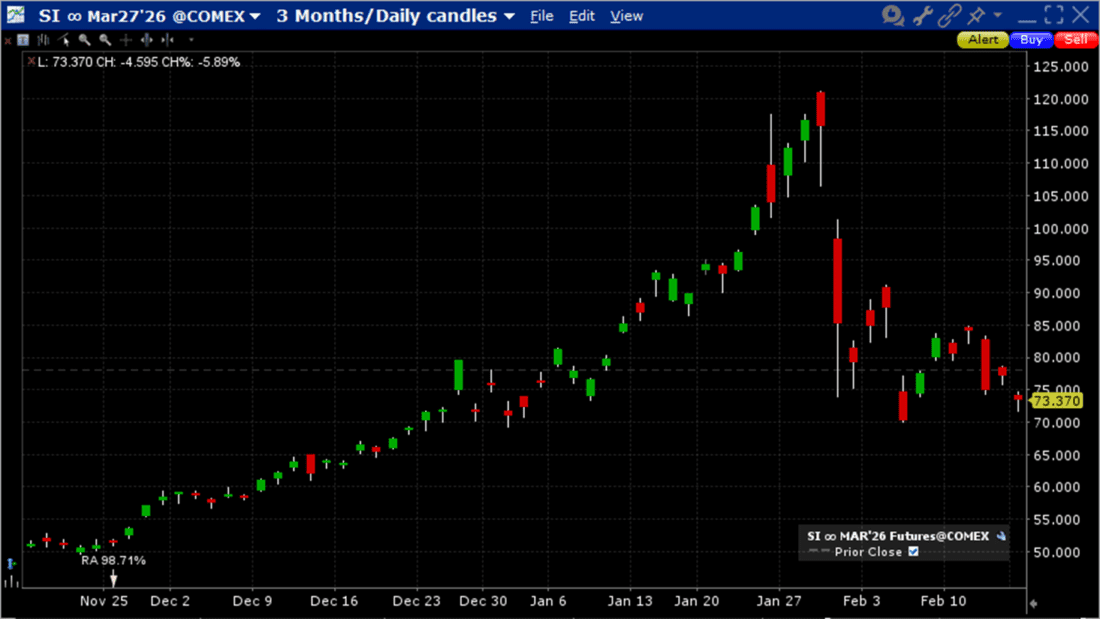
Trading is rarely as easy as sinking a layup, but it gets considerably harder when trends unravel. While we all remember the times that trends reverse abruptly, they tend to occur either when a trend becomes particularly extended or when an event abruptly changes market psychology. We can recall the startling turnarounds in downtrends when massive fiscal and monetary stimuli turned stocks around after Covid in 2020, or more recently, when the President reversed course on the most egregious “Liberation Day” tariffs 14 months ago. Just last month we saw precious metals crash after their uptrends turned parabolic and unsustainable, particularly in silver.
Source: Interactive Brokers
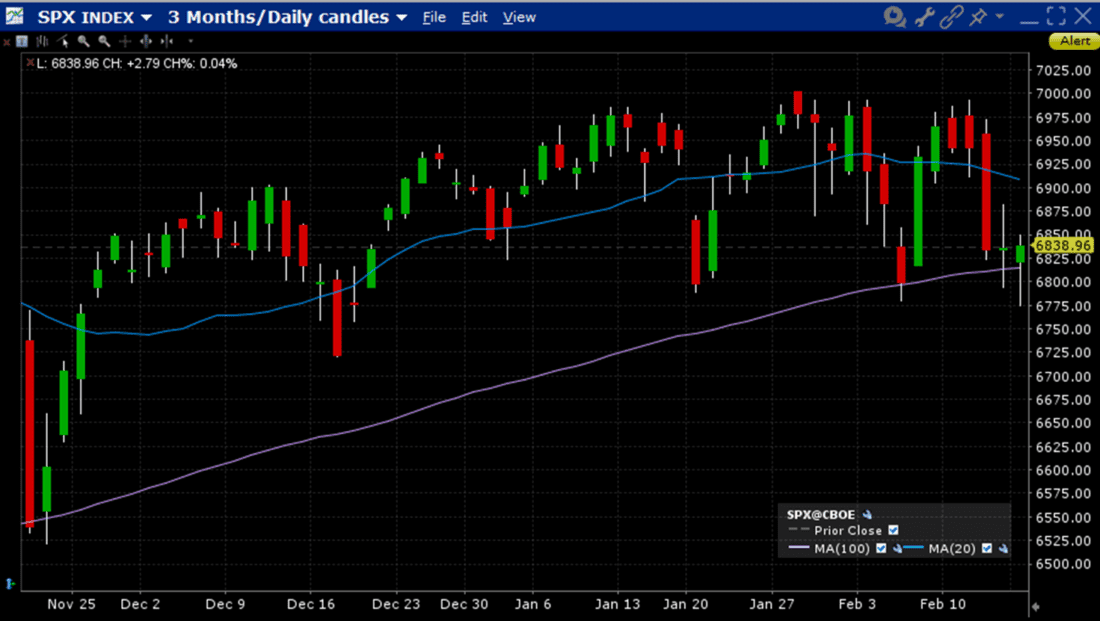
More often than not, however, trends tend to peter out, rather than reverse abruptly. This seems to be occurring, at least on a short-term basis, in the S&P 500 (SPX). Since the start of 2026, the index has moved generally sideways. It closed at an all-time high on January 27th and briefly crossed the 7000 level on the following day, but we have subsequently oscillated between 6800 and 7000. The 20-day moving average has turned downward, if only slightly, but the 100-day continues its upward slope. That longer moving average has generally provided support to SPX since it was tested in November (the prior test was in May), though it has been pierced on an intraday basis three times this month – including this morning.
Source: Interactive Brokers
It can be difficult to apply tactics that worked in a trending market to a sideways market. In the latter case, buy low / sell high still works, though with a more neutral bias. Problems arise, however, when traders continue to utilize tactics that were ingrained during the uptrend. When stocks were steadily and reliably rising, it made perfect sense to buy dips; some opted to buy more when it became clear that their long position was headed higher. Others who felt like they were missing the dip or believed that momentum was moving in their favor opted to chase a short-term bounce once it was established. “Buy and chase” became a popular tactic.
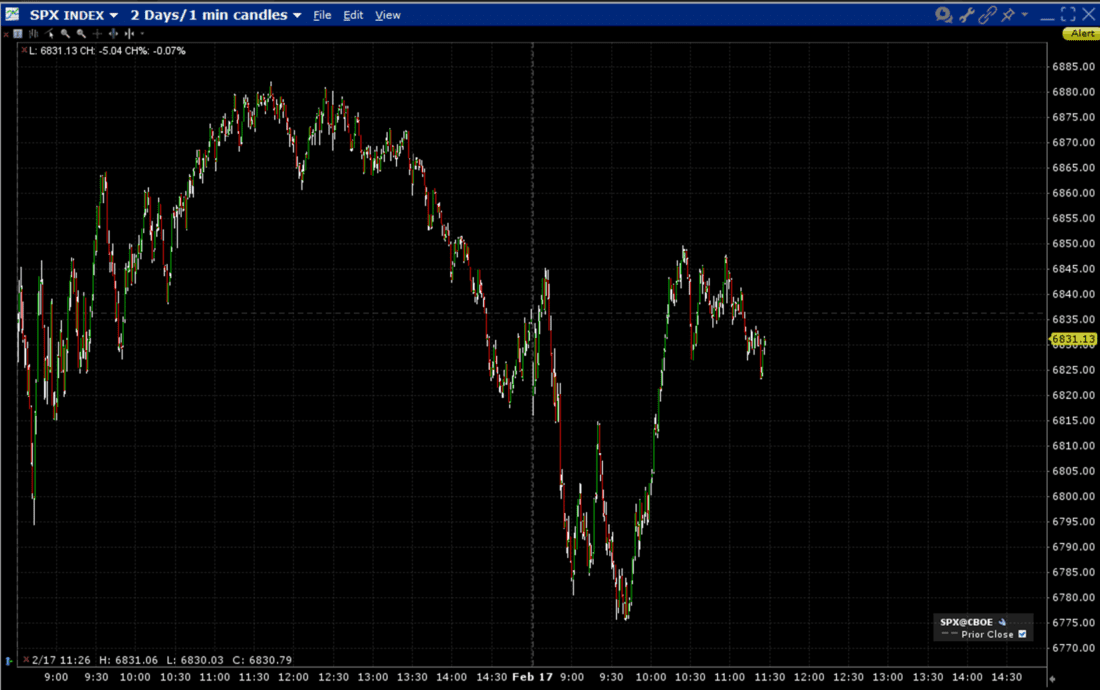
We saw it in action once again this morning, though so far without success for the chasers. Pre-market futures pointed lower this morning, but then we got a bounce on the official open. Shortly afterward, the selling resumed and accelerated quickly when the initial bounce proved to be fleeting. Dip buyers emerged around the 6775 level that offered support earlier this month. That was quite sensible. But it remains to be seen whether the sharp rally that followed will prove successful. The speed of today’s drop implied that nervousness has crept into investors’ psyches; the speed of the ensuing rally implies that FOMO remains a key motivator for traders. Hopefully, over the next few sessions, we will learn which motivation wins out.
Source: Interactive Brokers
For specific platform feedback and suggestions, please submit it directly to our team using these instructions.
If you have an account-specific question or concern, please reach out to Client Services.
We encourage you to look through our FAQs before posting. Your question may already be covered!
The analysis in this material is provided for information only and is not and should not be construed as an offer to sell or the solicitation of an offer to buy any security. To the extent that this material discusses general market activity, industry or sector trends or other broad-based economic or political conditions, it should not be construed as research or investment advice. To the extent that it includes references to specific securities, commodities, currencies, or other instruments, those references do not constitute a recommendation by IBKR to buy, sell or hold such investments. This material does not and is not intended to take into account the particular financial conditions, investment objectives or requirements of individual customers. Before acting on this material, you should consider whether it is suitable for your particular circumstances and, as necessary, seek professional advice.
The views and opinions expressed herein are those of the author and do not necessarily reflect the views of Interactive Brokers, its affiliates, or its employees.
Futures are not suitable for all investors. The amount you may lose may be greater than your initial investment. Before trading futures, please read the CFTC Risk Disclosure. A copy and additional information are available at ibkr.com.
Investments in certain commodities (precious metals) may be subject to significant price volatility and often involve risks related to market fluctuations, liquidity constraints, geopolitical events, and changes in global economic conditions that could adversely affect their value.
Short selling is an advanced trading strategy involving potentially unlimited risks and must be done in a margin account.
Trading on margin is only for experienced investors with high risk tolerance. You may lose more than your initial investment. For additional information regarding margin loan rates, see ibkr.com/interest
Related Articles















Sell Rallies.
Thoughtful summary & I greatly appreciate your excellent insights, thanks!
We appreciate your positive feedback, Phillip!