
- Solve real problems with our hands-on interface
- Progress from basic puts and calls to advanced strategies
Interactive Options Course
Posted November 20, 2025 at 12:34 pm
The September employment report and subsequent Federal Reserve rate decision mark a pivotal moment in the economic cycle. With job growth decelerating, unemployment rising modestly, and inflation remaining well above target, policymakers face the delicate task of supporting employment without reigniting price pressures. Markets have responded by taming expectations, now pricing in a more cautious approach to further easing.

After a six-week delay due to the government shutdown, September’s employment report showed nonfarm payrolls rose by 119,000, a modest gain confirming the hiring slowdown prior to the shutdown. The unemployment rate increased to 4.4% from 4.3%, now higher than the 4.1% recorded a year ago, pointing to gradual loosening. Sector performance was mixed:
Wage growth remains steady but subdued. Average hourly earnings rose 0.2% in September and 3.8% year-over-year, while the average workweek held at 34.2 hours. The data collectively depicts a labor market in transition, cooling gradually but maintaining stability. With the shutdown preventing October data collection, September’s report carries added weight for policymakers and markets until November for figures to arrive, making this release particularly consequential for near-term policy decisions.
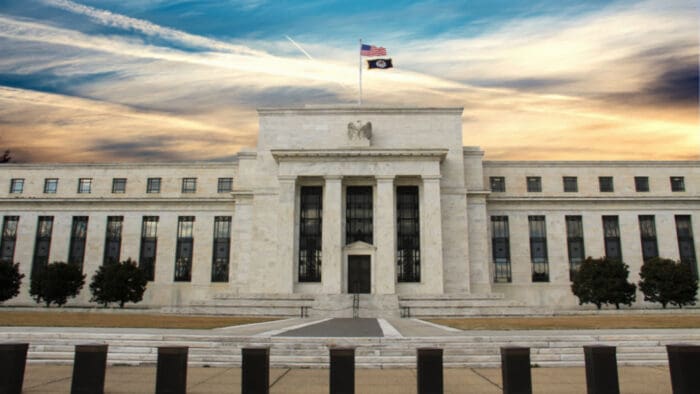
The Federal Open Market Committee (FOMC) meeting minutes are out, and they were as expected. The Federal Reserve (the fed) cut interest rates by a quarter-point at its October 29 meeting, bringing the benchmark range down to 3.75%–4.00%. Citing concerns that the job market is slowing, and inflation, while still elevated, isn’t falling fast enough.
While the economy continues to grow moderately, hiring has cooled and the unemployment rate has edged up. Inflation ticked higher earlier this year and remains “stubbornly” above the Fed’s 2% target. Faced with this tricky balance, the Fed chose to ease policy slightly while signaling a cautious approach going forward. The Fed will keep watching the data and may adjust rates again, but only if needed. Starting December 1, it will also stop shrinking its balance sheet, a sign that it wants to be less restrictive.

Markets are already pricing in the next Fed move for the December 2025 meeting, and most market participants think the Fed will pause.
This marks a notable shift in market sentiment since October 29th ,when only 12% of participants expected the Fed to keep rates steady. While there is still considerable open interest in rate-cut contracts, the majority of traders now see the Fed holding rates unchanged, unless economic conditions weaken further.
Beyond the headline unemployment rate lies a more complete picture of labor market health. The gap between the standard and broader measures of unemployment reveals the extent of underemployment and workforce detachment that headline figures can obscure details that matter significantly for assessing the economy’s true capacity and the pressures facing workers.
The official unemployment rate (U-3) stood at 4.4% in September, measuring those without jobs who are available and actively seeking work. However, the U-6 figure came in at 8.0% providing a broader perspective on labor underutilization by including:
Key distinction: U-3 captures clear unemployment; U-6 reveals hidden slack, workers sidelined or underemployed. A rising U-3 signals increasing joblessness. An elevated U-6, even with moderate U-3, indicates many workers may be trapped in part-time roles or discouraged from searching, potentially weighing incomes and demand.
September’s jobs report and the Fed’s quarter-point cut paint a picture of an economy easing off the boil rather than falling off a cliff. Job growth has basically stalled since April, unemployment has drifted up from 4.1% to 4.4% over the past year, and the wider U-6 measure at 8.0% shows there’s more slack and underemployment than the headline suggests. Wage growth is cooling and hours are steady, which tells me the labor market isn’t as tight as it was.
The Fed’s move to cut rates slightly and stop shrinking its balance sheet feels like a controlled shift toward looser policy without trying to juice the economy. With markets now leaning toward a December pause and any further cuts tied to incoming data, the big open question in my view is whether this is a healthy normalization, or the early stage of something weaker.
To learn more about the impacts of Monetary Policy and the Unemployment Rate download IBKR InvestMentor
IBKR InvestMentor (dba “InvestMentor”) is a service of Interactive Academy LLC, an affiliate of IB LLC and majority-owned by IBG LLC. All content provided by InvestMentor is for informational and educational purposes only and should not be interpreted as implying any sponsorship, partnership, endorsement, recommendation, or approval by IB LLC or its affiliates.
Information posted on IBKR Campus that is provided by third-parties does NOT constitute a recommendation that you should contract for the services of that third party. Third-party participants who contribute to IBKR Campus are independent of Interactive Brokers and Interactive Brokers does not make any representations or warranties concerning the services offered, their past or future performance, or the accuracy of the information provided by the third party. Past performance is no guarantee of future results.
This material is from InvestMentor, an affiliate of Interactive Brokers LLC, and is being posted with its permission. The views expressed in this material are solely those of the author and/or InvestMentor and Interactive Brokers is not endorsing or recommending any investment or trading discussed in the material. This material is not and should not be construed as an offer to buy or sell any security. It should not be construed as research or investment advice or a recommendation to buy, sell or hold any security or commodity. This material does not and is not intended to take into account the particular financial conditions, investment objectives or requirements of individual customers. Before acting on this material, you should consider whether it is suitable for your particular circumstances and, as necessary, seek professional advice.
Related Articles



















Join The Conversation
For specific platform feedback and suggestions, please submit it directly to our team using these instructions.
If you have an account-specific question or concern, please reach out to Client Services.
We encourage you to look through our FAQs before posting. Your question may already be covered!