
- Solve real problems with our hands-on interface
- Progress from basic puts and calls to advanced strategies
Interactive Options Course
Posted March 10, 2026 at 11:00 am
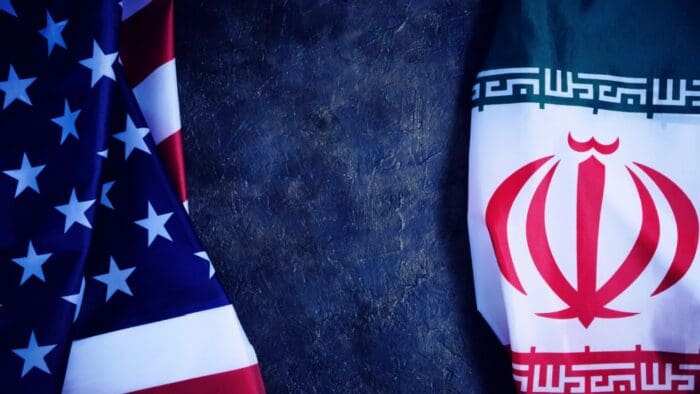
When geopolitical conflicts emerge, the first step is to step back and consider history to establish context.
Today, the US economy remains in a relative position of strength, according to recent leading indicators.
Exposure to oil and other commodities may help hedge the risks of a prolonged closure of the Strait of Hormuz.
Never talk to a pitcher during a no-hitter. I’m not one to believe in jinxes, but this is a superstition that I follow. I made a similar comment a week ago as our team was reaffirming the views we’d laid out in our 2026 outlook, which we began composing in the fall. At the time, the global economy had solid momentum,1 inflation appeared contained,2 and the Federal Reserve (Fed) looked poised to lower interest rates after most of the rest of the world had already begun to ease. The conclusions we came to in our outlook appeared straightforward. We favored cyclical sectors, mid- and small-cap stocks, and non-US dollar assets. Two months don’t make a year, but as of February 27, our calls were on point,3 confidence was building, and the proverbial no-hitter was underway. But on February 28, the conflict involving Iran began and threw a curveball.
When geopolitical conflicts emerge, the first step is to step back and consider history to establish context. Often, stock markets have delivered positive returns in the year following major conflicts.4 The 1991 Gulf War and the 2003 war between the US and Iraq are often-cited examples.
Investors sometimes point to the Yom Kippur War in 1973 or the start of the Russia-Ukraine war in 2022 as cases where markets were lower a year later. In both of those instances, however, the economy was entering the conflict from a position of weakness. In each case, US inflation was above 7% at the outset.5 Policy tightening has tended to end business cycles. Geopolitical shocks usually don’t.
Today, we believe the US economy remains in a relative position of strength. Leading indicators released this week, including the ISM Purchasing Managers Manufacturing and Services indexes, showed services continuing to lead and manufacturing recovering toward expansionary territory.6 Prices paid within manufacturing were elevated, as expected in an environment shaped by tariffs,7 but broader inflation expectations remained contained.8 That containment likely gives the Fed room to lower interest rates.
Hiring data for February was weak, influenced by winter storms and disruptions in the health care sector, but the more important signal was the absence of rising layoffs.9 A labor market that is weakening but not collapsing keeps monetary policy in play. Taken together, the data likely continue to support risk assets in our view.
As we worked through the implications, one scenario stood out as particularly concerning and not implausible. It involved a prolonged closure of the Strait of Hormuz, a widening conflict that materially disrupted energy production across Gulf states, including Saudi Arabia and Qatar, and a sustained increase in oil and natural gas prices. We’d expect such an outcome to undermine economic activity and push inflation higher. The keywords are prolonged and sustained. No one knows how long the current situation will last. At the same time, most investors operate with a time horizon that’s likely to extend well beyond any temporary disruption in energy markets.
There are also clear and established ways to help hedge these risks. Exposure to oil and natural gas may help offset higher energy prices. Other commodities transported through the Strait of Hormuz, including aluminum and grains, may play a similar role. Gold may potentially serve as a hedge against geopolitical risk, and the US dollar may strengthen in periods of global stress. It’s entirely reasonable for investors to manage and hedge these risks within their portfolios.
And yet, we still don’t see the typical signals that mark the end of a business cycle. For example, credit spreads remain tight.10 The outlook may not feel as comfortable as it did a week ago, and we are looking closely for signs of strain in our preferred indicators.
The outlook for the year ahead may not feel as comfortable as it did a week ago, and we’re looking closely for signs of strain in our preferred indicators. For now, we hedge risks where appropriate, stay disciplined, and remind ourselves that long-term investing requires sticking with a plan even when the crowd gets nervous.
| Date | Region | Event | Why it matters |
|---|---|---|---|
| March 9 | China | Consumer Price Index (CPI) release | Key inflation data affecting global markets |
| Japan | Gross domestic product (GDP) figures | Economic growth indicator | |
| March 10 | US | Existing home sales (Feb.) | Housing market indicator |
| March 11 | Germany | CPI release | Inflation gauge |
| UK | Bank of England inflation report hearings | Monetary policy insights | |
| US | CPI (Feb.) | Key inflation data | |
| March 12 | UK | Bank of England Governor speech | Policy signals |
| US | Producer Price Index (PPI) | Producer inflation | |
| March 13 | Canada | Labor market data (Feb.) | Employment conditions |
| US | GDP Q4 secondary estimate | Economic growth view | |
| US | Core Personal Consumption Expenditures (PCE) | Inflation measure | |
| US | Michigan Consumer Sentiment Index | Consumer outlook |
—
Originally Posted on March 9, 2026
Keeping long-term perspective as the Iran conflict continues by Invesco US
This does not constitute a recommendation of any investment strategy or product for a particular investor. Investors should consult a financial advisor/financial consultant before making any investment decisions. Invesco does not provide tax advice. The tax information contained herein is general and is not exhaustive by nature. Federal and state tax laws are complex and constantly changing. Investors should always consult their own legal or tax professional for information concerning their individual situation. The opinions expressed are those of the authors, are based on current market conditions and are subject to change without notice. These opinions may differ from those of other Invesco investment professionals.
NOT FDIC INSURED
MAY LOSE VALUE
NO BANK GUARANTEE
All data provided by Invesco unless otherwise noted.
Invesco Distributors, Inc. is the US distributor for Invesco Ltd.’s Retail Products and Collective Trust Funds. Institutional Separate Accounts and Separately Managed Accounts are offered by affiliated investment advisers, which provide investment advisory services and do not sell securities. These firms, like Invesco Distributors, Inc., are indirect, wholly owned subsidiaries of Invesco Ltd.
©2024 Invesco Ltd. All rights reserved.
Information posted on IBKR Campus that is provided by third-parties does NOT constitute a recommendation that you should contract for the services of that third party. Third-party participants who contribute to IBKR Campus are independent of Interactive Brokers and Interactive Brokers does not make any representations or warranties concerning the services offered, their past or future performance, or the accuracy of the information provided by the third party. Past performance is no guarantee of future results.
This material is from Invesco US and is being posted with its permission. The views expressed in this material are solely those of the author and/or Invesco US and Interactive Brokers is not endorsing or recommending any investment or trading discussed in the material. This material is not and should not be construed as an offer to buy or sell any security. It should not be construed as research or investment advice or a recommendation to buy, sell or hold any security or commodity. This material does not and is not intended to take into account the particular financial conditions, investment objectives or requirements of individual customers. Before acting on this material, you should consider whether it is suitable for your particular circumstances and, as necessary, seek professional advice.
Futures are not suitable for all investors. The amount you may lose may be greater than your initial investment. Before trading futures, please read the CFTC Risk Disclosure. A copy and additional information are available at ibkr.com.
Related Articles












Join The Conversation
For specific platform feedback and suggestions, please submit it directly to our team using these instructions.
If you have an account-specific question or concern, please reach out to Client Services.
We encourage you to look through our FAQs before posting. Your question may already be covered!