
- Solve real problems with our hands-on interface
- Progress from basic puts and calls to advanced strategies
Interactive Options Course
Posted June 23, 2026 at 10:00 am
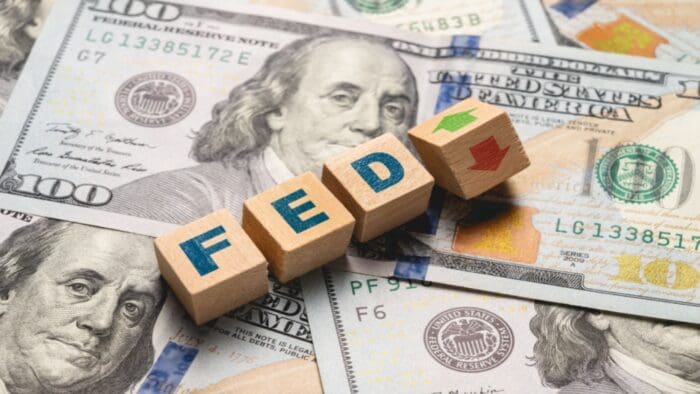
I’m often asked when I would finally turn negative on financial markets. My answer rarely changes. It’s when the Fed raises interest rates and ends the cycle. Except for the brief and anomalous 2020 COVID-19 recession, monetary policy tightening has often occurred in the later stages of market cycles. That’s why I watch inflation expectations as closely as I do. They tell you how the Fed is performing on its price‑stability mandate, recognizing that it must also pursue maximum employment.
That’s what made last week so puzzling. Reports that the Fed is split on whether to raise rates caught my attention. Not because the debate is inherently surprising, but because it feels disconnected from the world we’re living in today. It made me wonder whether policymakers still believe it’s March 2026, or whether they’ve noticed that three months have passed.
Back in March, following the outbreak of the war with Iran, the inflation story was obvious. Oil prices surged.1 The 3‑year Treasury inflation breakeven pushed toward a 3% peak on March 18.2 The 5‑year breakeven climbed to 2.74% on the same date.3 I took some comfort in the fact that the 5‑year never breached 3.0% the way it did in 2022 during the supply‑chain crunch and Russia’s invasion of Ukraine. But still, the direction was clear. Inflation expectations were rising, and the Fed had reason to sound vigilant.
But that was March. Today’s environment is fundamentally different. Oil prices have dropped dramatically.4 Inflation breakevens have followed.5 The 1‑year breakeven is now below 2%, a level that hardly suggests “overheating.”6 If anything, it may be the opposite. Inflation pressures have been fading, not accelerating.
So why exactly would the Fed be raising rates? It’s not as if the economy is running hot. Job growth has been relatively soft, despite the recent three‑month stretch of better‑than‑expected gains.7 Wage growth has been moderating.8 That’s why last Thursday’s Fed‑induced market selloff and the flattening of the yield curve left me scratching my head. The market seemed to react to a Fed that’s still fighting the war‑driven inflation scare of early spring rather than the reality of mid‑June. The stance feels backward‑looking, as if policymakers were anchored to the moment oil spiked rather than when it dropped dramatically.
In my view, the Fed remains on hold, and the next move (whenever it comes) may more likely be an easing than a hike. The current shape of the yield curve suggests policy may be restrictive. If the Fed were to tighten into this backdrop, it could risk contributing to a downturn it’s trying to avoid.
The upshot is that the cycle has continued. Peaks in oil, interest rates, and inflation expectations9 have often coincided with turning points that can support broader markets, not undermine them. Unless the data shifts meaningfully — and right now it has still shifted in the opposite direction of what a rate hike would require — the Fed’s most prudent course to me is patience.
| Date | Region | Event | Why it matters |
|---|---|---|---|
| June 22 | China | Loan Prime Rate decision | Signals whether policy support is shifting |
| China | Foreign direct investment (May) | Shows whether capital inflows are stabilizing | |
| Europe | European Central Bank (ECB) President Lagarde speech | May frame the next leg of policy expectations | |
| June 23 | Europe | Germany and Eurozone Purchasing Managers’ Index (PMI) (flash, June) | Early read on growth momentum and pricing pressure |
| US | S&P Global Purchasing Managers’ Index (PMI) (flash, June) | Timely check on the economy’s speed limit | |
| June 24 | US | New home sales (May) | Shows how rates are flowing through housing |
| June 25 | US | Gross domestic product (GDP) (third estimate, Q1) | Confirms how much growth cooled to start the year |
| US | Durable goods orders (May) | Read-through on business investment appetite | |
| US | Initial jobless claims | High-frequency check on labor market cracks | |
| Japan | Consumer Price Index (CPI) (June) | Key test of whether inflation is sticking | |
| June 26 | US | Personal income and outlays, including Personal Consumption Expenditures (PCE) inflation (May) | Fed’s preferred inflation gauge |
| US | University of Michigan consumer sentiment (final, June) | Shows whether consumers are feeling better or worse | |
| China | Industrial profits (May) | Tests whether factory margins are improving |
—
Originally Posted on June 22, 2026
Why the Fed may need to stay patient – by Invesco US
This does not constitute a recommendation of any investment strategy or product for a particular investor. Investors should consult a financial advisor/financial consultant before making any investment decisions. Invesco does not provide tax advice. The tax information contained herein is general and is not exhaustive by nature. Federal and state tax laws are complex and constantly changing. Investors should always consult their own legal or tax professional for information concerning their individual situation. The opinions expressed are those of the authors, are based on current market conditions and are subject to change without notice. These opinions may differ from those of other Invesco investment professionals.
NOT FDIC INSURED
MAY LOSE VALUE
NO BANK GUARANTEE
All data provided by Invesco unless otherwise noted.
Invesco Distributors, Inc. is the US distributor for Invesco Ltd.’s Retail Products and Collective Trust Funds. Institutional Separate Accounts and Separately Managed Accounts are offered by affiliated investment advisers, which provide investment advisory services and do not sell securities. These firms, like Invesco Distributors, Inc., are indirect, wholly owned subsidiaries of Invesco Ltd.
©2024 Invesco Ltd. All rights reserved.
Information posted on IBKR Campus that is provided by third-parties does NOT constitute a recommendation that you should contract for the services of that third party. Third-party participants who contribute to IBKR Campus are independent of Interactive Brokers and Interactive Brokers does not make any representations or warranties concerning the services offered, their past or future performance, or the accuracy of the information provided by the third party. Past performance is no guarantee of future results.
This material is from Invesco US and is being posted with its permission. The views expressed in this material are solely those of the author and/or Invesco US and Interactive Brokers is not endorsing or recommending any investment or trading discussed in the material. This material is not and should not be construed as an offer to buy or sell any security. It should not be construed as research or investment advice or a recommendation to buy, sell or hold any security or commodity. This material does not and is not intended to take into account the particular financial conditions, investment objectives or requirements of individual customers. Before acting on this material, you should consider whether it is suitable for your particular circumstances and, as necessary, seek professional advice.
Related Articles













Join The Conversation
For specific platform feedback and suggestions, please submit it directly to our team using these instructions.
If you have an account-specific question or concern, please reach out to Client Services.
We encourage you to look through our FAQs before posting. Your question may already be covered!