
- Solve real problems with our hands-on interface
- Progress from basic puts and calls to advanced strategies
Interactive Options Course
Posted July 21, 2026 at 10:33 am
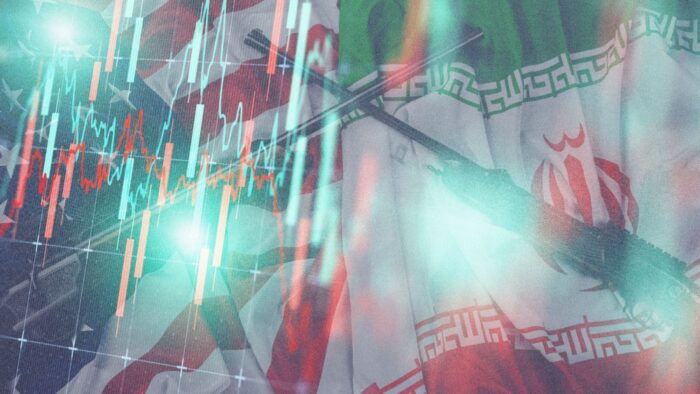
With the ceasefire between the U.S. and Iran having fallen apart, at what point should investors start to reckon with the consequences of a potentially prolonged conflict?
The ceasefire between the United States and Iran has fallen apart, with military strikes between the two countries intensifying and the Strait of Hormuz effectively closed once again.1 It is time for investors to start grappling with the possibility of a prolonged conflict and what that would mean for supply chains and oil prices? Our view is that if the conflict still hasn’t been resolved by the time the U.S. midterm elections roll around, then a more cautious stance would be warranted, because then the timeline of the conflict could really stretch out. For now, the U.S. administration remains motivated to get a deal done, because if they do not, then oil prices could become a major ballot box issue in November. Because of this ticking clock, Iran’s leverage is currently the highest that it is likely to be at any point. If the elections come and go without a deal, then President Trump would be unbounded, as changes in public sentiment wouldn’t have any immediate consequences. Given this dynamic, we do think there is room for oil prices to go higher from here, especially since we haven’t yet seen them spike back up to pre-ceasefire levels. Looking further ahead, another important consideration is that the Iranian regime doesn’t always operate like other governments; it may not evaluate the conflict solely in terms of its economic impact, rather viewing it as a broader attack on the country itself. That could precipitate longer-lasting issues between the two nations, as well as American allies in the region. In our view, these risks should be priced in by markets, even if they are not our base case scenarios. Even if another memorandum of understanding is signed soon, markets are not likely to have much confidence in it given that the previous agreement began to unravel almost immediately.
Bottom line: November’s U.S. midterm elections are the ticking clock, and if the conflict still hasn’t been resolved by then, then investors should get worried.
Amid this geopolitical uncertainty, the Bank of Canada (BoC) opted to hold interest rates steady at 2.25% at its meeting last week.2 We think this was the right move. At some point, we would love to see a rate cut in order to provide Canadian consumers with a bit of relief and induce some additional spending; right now, some people are bracing for potential rate hikes, and are therefore not spending as much as they would otherwise. There is also the impact of higher oil prices (albeit offset somewhat by tax cuts at the pump) and the fact that a boost from any new United States-Mexico-Canada Agreement (USMCA) is not likely to materialize any time soon. While a rate cut to get things moving would be nice, for now we’re content that the BoC is talking down the possibility of rate hikes. In our view, that is at least one step in the right direction.
Bottom line: While we would like to see rate cuts from the BoC at some point, they do not appear to be in the cards in the near term.
The major U.S. banks have released their quarterly earnings reports, and overall, the results looked good. Not every stock did exactly what one might expect based on the strength of the numbers—of the “big four” U.S. banks, Wells Fargo and Citigroup were down while J.P. Morgan and Bank of America were up. Generally, however, the underlying numbers looked encouraging and appear to be supportive of strength going forward. The results also highlight that the U.S. consumer is continuing to hold up a bit better than many were expecting; we did not see any major warning signs in terms of consumer health or the overall health of the U.S. economy. Our expectation is that we will continue to see good results from U.S. Financials going forward, which aligns with a potential mid-year rotation to sectors that have lagged behind. The banks’ attractive yields are another reason why some investors may be interested in that kind of trade.
Bottom line: We view an allocation to U.S. banks as a good way to look ahead to a potential rotation, and the latest earnings justify staying in that position.
For a detailed breakdown of our portfolio positioning, check out the latest BMO GAM House View Report, titled Risk-on, radar up: a constructive setup, but still cautious outlook
—
Originally Posted July 20, 2026 – The U.S.-Iran ceasefire has fallen apart. Now what?
1John Gambrell, “US strikes bridges in Iran, which targets a water desalination plant in Kuwait,” The Associated Press, July 17, 2026.
2Judy Trinh, « Bank of Canada holds key rate steady at 2.25%, predicts economic rebound », BNN Bloomberg, 15 juillet 2026.
Commissions, management fees and expenses all may be associated with investments in exchange traded funds. Please read the ETF Facts or prospectus of the BMO ETFs before investing. Exchange traded funds are not guaranteed, their values change frequently and past performance may not be repeated.
For a summary of the risks of an investment in the BMO ETFs, please see the specific risks set out in the BMO ETF’s prospectus. BMO ETFs trade like stocks, fluctuate in market value and may trade at a discount to their net asset value, which may increase the risk of loss. Distributions are not guaranteed and are subject to change and/or elimination.
BMO ETFs are managed by BMO Asset Management Inc., which is an investment fund manager and a portfolio manager, and a separate legal entity from Bank of Montreal.
®/™Registered trade-marks/trade-mark of Bank of Montreal, used under licence.
Information posted on IBKR Campus that is provided by third-parties does NOT constitute a recommendation that you should contract for the services of that third party. Third-party participants who contribute to IBKR Campus are independent of Interactive Brokers and Interactive Brokers does not make any representations or warranties concerning the services offered, their past or future performance, or the accuracy of the information provided by the third party. Past performance is no guarantee of future results.
This material is from BMO Exchange Traded Funds and is being posted with its permission. The views expressed in this material are solely those of the author and/or BMO Exchange Traded Funds and Interactive Brokers is not endorsing or recommending any investment or trading discussed in the material. This material is not and should not be construed as an offer to buy or sell any security. It should not be construed as research or investment advice or a recommendation to buy, sell or hold any security or commodity. This material does not and is not intended to take into account the particular financial conditions, investment objectives or requirements of individual customers. Before acting on this material, you should consider whether it is suitable for your particular circumstances and, as necessary, seek professional advice.
Related Articles















Join The Conversation
For specific platform feedback and suggestions, please submit it directly to our team using these instructions.
If you have an account-specific question or concern, please reach out to Client Services.
We encourage you to look through our FAQs before posting. Your question may already be covered!