
- Solve real problems with our hands-on interface
- Progress from basic puts and calls to advanced strategies
Interactive Options Course
Posted May 26, 2026 at 10:20 am
What are the key takeaways from Nvidia’s earnings announcement—and markets’ reaction to it? How have the Big Six Canadian banks performed, and what is driving those results?
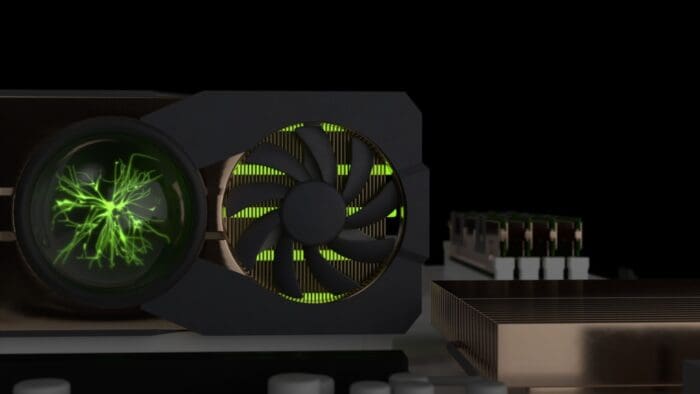
Last week, Nvidia’s announcement of Q1 results marked the unofficial end of Big Tech’s earnings season, and while the company did beat analysts’ forecasts on both revenue and earnings per share, it was not enough to move the stock higher.1 Despite markets’ muted response, we still take the story as a positive; Nvidia’s stock had already moved up quite a bit heading into the announcement, and the company’s record profits are a bullish sign for the artificial intelligence (AI) theme. At the beginning of the year, sky-high high expectations had led to some negative investor sentiment around AI, with average earnings reports being perceived as misses, and above-average reports being viewed as middling. Only massive beats were good enough to move the stock price. In that light, Nvidia’s stock price being only slightly down is actually good news. Beyond markets’ reaction, there wasn’t anything in the company’s forward guidance that we would interpret as a cause for concern; if there had been any supply issues or shifts in demand, they would have been mentioned. If anything, it was more of a continuation of the status quo—which, for a company that has done as well as Nvidia, is a good result. If there is one aspect of Nvidia’s demand situation that we’ll continue to monitor, it is the fact that the company owns portions of some of the other Tech firms that buy its products. This potentially creates a circular cycle of artificial demand that may not be sustainable. Broadly, however, the company appears to be on strong footing. The company also increased its dividend and announced a massive $80 billion share buyback. While we have gradually taken down our weight in Nvidia over the past few months to capitalize on other opportunities in Tech, our position is still significant—it is just not an overweight position anymore.
Bottom line: Nvidia’s earnings show that there is still optimism around the AI theme and Tech more broadly—even if the company’s stock price didn’t move much.
Speaking of earnings: Canada’s Big Six banks are set to report their latest results this week, and broadly speaking, we expect profits to be strong. This would be especially impressive given that all six banks outperformed expectations last quarter.2 Within Canada we still think the three big sectors—Energy, Materials, and Financials—are where you want to invest. It is this trio that have been dominating flows lately. The most likely headwind for Canadian banks is the health of the consumer, which could be affected by inflation. The upcoming United States-Mexico-Canada agreement (USMCA) renegotiation will also have an outsized impact on the Canadian economy, including businesses with which the banks have significant ongoing relationships. The banks’ loan loss provisions, while not completely gone, are now declining. And it is worth monitoring consumer credit card debt, which is trending higher and could be further exacerbated if interest rate hikes occur. Overall, though, the banks appear to be in good shape, with healthy dividends but valuations that may be a bit stretched for the sector.
Bottom line: Despite some potential headwinds, we expect this to be a strong earnings season for Canadian banks—but it is the forward guidance that will be the key.
As the apparent stalemate in the Strait of Hormuz drags on, the U.S. has decided to extend its waiver of sanctions on Russian oil—a potential sign that the impacts of the Iran conflict are spilling over into other areas of U.S. foreign policy.3 Our view is that geopolitical risks could start to decrease from here—provided, of course, that the Strait of Hormuz is eventually re-opened. The United States’ operation in Venezuela, while controversial, was over quickly and considered by the Trump administration to be an easy ‘win.’ While the early days of the Iran conflict saw similarly impactful military action, the rest of the operation has not been as much of a clear-cut success. The longer the stalemate persists, the more it appears that the full ramifications of the conflict may not have been thought out. Given the upcoming U.S. midterm elections in November, we wouldn’t expect the conflict to heat up too much or the administration would risk further turning off voters. After that, much will depend on how Trump envisions his legacy—keeping in mind that he is likely to have fewer allies in the Senate and House of Representations after the midterms if polls are to be believed. If and when the Strait of Hormuz is opened, not only will geopolitical risks likely decline, but it should help to ease volatility as well. That should support a continuation of strong corporate earnings as long as no other unexpected market shocks occur. There is also the counterintuitive possibly, floated by Amazon founder Jeff Bezos in a recent interview, that AI’s productivity benefits could lead to more jobs rather than fewer.4 If true, that could provide some longer-term support for consumers—and, in turn, company profits.
Bottom line: Once the Strait of Hormuz is open, we’d expect geopolitical risks to diminish. For now, though, it is still unclear how the conflict will be resolved.
For a detailed breakdown of our portfolio positioning, check out the latest BMO GAM House View Report, titled A tale of two markets: U.S. optimism meets Canadian caution .
—
Originally Posted May 25, 2026 – For Nvidia, no earnings bump is no problem
Commissions, management fees and expenses all may be associated with investments in exchange traded funds. Please read the ETF Facts or prospectus of the BMO ETFs before investing. Exchange traded funds are not guaranteed, their values change frequently and past performance may not be repeated.
For a summary of the risks of an investment in the BMO ETFs, please see the specific risks set out in the BMO ETF’s prospectus. BMO ETFs trade like stocks, fluctuate in market value and may trade at a discount to their net asset value, which may increase the risk of loss. Distributions are not guaranteed and are subject to change and/or elimination.
BMO ETFs are managed by BMO Asset Management Inc., which is an investment fund manager and a portfolio manager, and a separate legal entity from Bank of Montreal.
®/™Registered trade-marks/trade-mark of Bank of Montreal, used under licence.
Information posted on IBKR Campus that is provided by third-parties does NOT constitute a recommendation that you should contract for the services of that third party. Third-party participants who contribute to IBKR Campus are independent of Interactive Brokers and Interactive Brokers does not make any representations or warranties concerning the services offered, their past or future performance, or the accuracy of the information provided by the third party. Past performance is no guarantee of future results.
This material is from BMO Exchange Traded Funds and is being posted with its permission. The views expressed in this material are solely those of the author and/or BMO Exchange Traded Funds and Interactive Brokers is not endorsing or recommending any investment or trading discussed in the material. This material is not and should not be construed as an offer to buy or sell any security. It should not be construed as research or investment advice or a recommendation to buy, sell or hold any security or commodity. This material does not and is not intended to take into account the particular financial conditions, investment objectives or requirements of individual customers. Before acting on this material, you should consider whether it is suitable for your particular circumstances and, as necessary, seek professional advice.
IPO investments carry substantial risks including extreme price volatility, limited operating history, lack of liquidity, potential for significant losses, and uncertainty regarding future performance.
Trading on margin is only for experienced investors with high risk tolerance. You may lose more than your initial investment. For additional information regarding margin loan rates, see ibkr.com/interest
IPO Subscriptions are only available for IBKR LLC, IBKR Hong Kong andIBKR Singapore entities.
Related Articles
















Join The Conversation
For specific platform feedback and suggestions, please submit it directly to our team using these instructions.
If you have an account-specific question or concern, please reach out to Client Services.
We encourage you to look through our FAQs before posting. Your question may already be covered!