
- Solve real problems with our hands-on interface
- Progress from basic puts and calls to advanced strategies
Interactive Options Course
Posted June 16, 2026 at 10:00 am
How will markets respond to news of a deal to open the Strait of Hormuz?
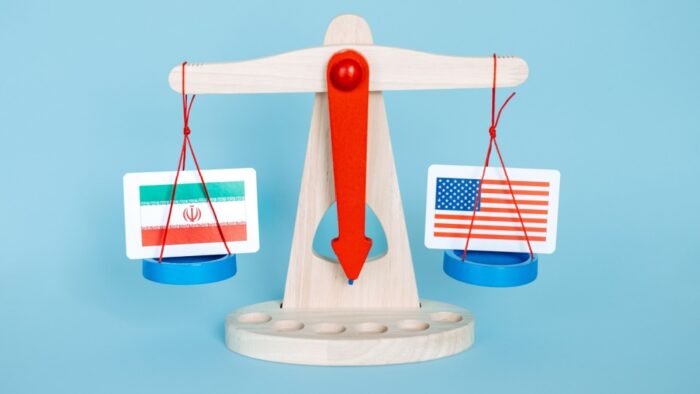
For most of last week, news of renewed military action in the strategically important Strait of Hormuz seemed to put hopes of a swift resolution to the conflict on the back burner. However, on Friday, media reports indicated that a deal could be finalized within days,1 and on Sunday, the U.S. and Iranian governments announced that an agreement to end military operations had been reached. As of late Sunday night, it had been reported that the deal would go into effect on Friday, but the full text of the agreement had not yet been released.2 Upon news of the deal, oil prices—which had already retreated from a high of over $100 per barrel in mid-May on expectations of a resolution to the crisis—dipped further to just over US$80 per barrel.3 We expect stock markets to react positively to the news as well, especially since they had held fairly strong even amid increased tension. On Friday, stocks did not receive as much of a boost as one might have thought. However, this was not the first time that Trump had said that a resolution to the conflict is near, so investors may have been waiting for more concrete proof. Now that they have it, we could see a sharper positive reaction. Prior to news of a potential deal, we had seen, in recent weeks, some of the stocks with higher multiples come down, with the NASDAQ getting hit harder than some other markets as a result. In our view, this was at least partly a response to the tit-for-tat military strikes in the Strait of Hormuz that had people worried that the situation was escalating again. Notably, however, while stock markets did not react much to increased tensions and significantly higher oil prices from the U.S.-Iran conflict, bond markets did, which tells us that there is a bit of a disconnect between how equity and fixed income investors are evaluating the geopolitical landscape.
Bottom line: We expect markets to respond positively to the U.S.-Iran deal, though details of the agreement will be important to ensure that any future tensions do not threaten trade through the Strait of Hormuz.
Elon Musk’s SpaceX had its initial public offering (IPO)—the largest in history—on Friday, with shares jumping to US$150 from an initial price of US$135 on open and climbing to $160.95 before the closing bell.4 In the lead-up to the offering, S&P Global ruled that, despite a valuation of over US$1.7 billion, SpaceX would not be included in the S&P 500 Index upon the company’s trading debut, emphasizing that inclusion in its indices requires a track record of profitability in both the most recent quarter and the sum of the most recent four quarters.5 This means that index investors will not have access to the company for some time. Investors that do want exposure to SpaceX will have to have been a part of the IPO or purchase shares on the open market—which means being on the actively-managed side of the spectrum as opposed to passive investing. In our view, the debate between active and passive comes down to the ability to be selective on multiples. Passive investors typically purchase an index in order to get low-cost exposure to a diversified portfolio of names. The trade-off is that they do not have the ability to selectively invest in—or avoid—specific companies that they may believe are either over- or under-valued, which is particularly relevant today given the heightened scrutiny around artificial intelligence (AI) companies’ capital expenditures and valuations. For us, this highlights the importance of active portfolio management for investors that want to capitalize on specific opportunities—if not the SpaceX IPO, then the next generation of companies that may benefit from the AI theme or other major trends. It is also worth remembering that with any IPO, early investors—who are subject to a lock-up period—will eventually have the opportunity to get out. If, for instance, SpaceX appreciates significantly, it would not be surprising to see some investors take some profits and, in doing so, potentially lower the stock price, which will create another potential entry point for anyone who missed out on the IPO.
Bottom line: While SpaceX will eventually be included in the S&P 500 Index, its initial omission underscores the value of active portfolio management for investors looking to access specific opportunities.
Inflation is picking up momentum again. The U.S. consumer price index (CPI) report for May, which was released last week, showed the annual inflation rate topping 4% for the first time in three years, driven by a 3.9% surge in energy prices.6 Higher prices have taken a toll on consumer sentiment, which was already being affected by the U.S.-Iran conflict. Our expectation is that this is likely to continue into Q3 and perhaps Q4, because even after the conflict is resolved, there will still be a lagging impact on supply chains since trading through the Strait of Hormuz is not likely to return to pre-crisis volumes overnight. What is keeping inflation in check is the fact that the housing market and wage growth are both down. We do expect inflation to move higher from here, though ultimately, we expect this to be a temporary shock rather than a longer-lasting trend like we saw during COVID. There is the potential that consumers could start to tighten their belts, which could affect corporate earnings—though at the same time, companies may be able to pass on some of their rising input costs to consumers, which could keep profits strong. How consumers will react remains to be seen, but in our view, it goes back to the ‘K-shaped’ economy: lower income-earners are not experiencing enough wage growth to offset higher prices, while on the other end, the higher-income consumer is winning because their wealth keeps going higher (as market go higher). Ultimately, we do expect inflation to ease once a resolution is reached and the lagging impact has played out, but the details of the resolution will be important: is it a true return to “normal,” or does it leave the door open for tensions to re-ignite down the road? We don’t expect inflation to derail markets because the underlying fundamentals remain strong, and if prices do come (and stay) down, we think we could see a re-acceleration of growth in 2027.
Bottom line: Inflation is likely to stay higher for longer until a resolution to the conflict is reached—but unlike COVID, we expect its effects to be temporary.
—
Originally Posted June 15, 2026 – Breaking down the U.S.-Iran deal
Commissions, management fees and expenses all may be associated with investments in exchange traded funds. Please read the ETF Facts or prospectus of the BMO ETFs before investing. Exchange traded funds are not guaranteed, their values change frequently and past performance may not be repeated.
For a summary of the risks of an investment in the BMO ETFs, please see the specific risks set out in the BMO ETF’s prospectus. BMO ETFs trade like stocks, fluctuate in market value and may trade at a discount to their net asset value, which may increase the risk of loss. Distributions are not guaranteed and are subject to change and/or elimination.
BMO ETFs are managed by BMO Asset Management Inc., which is an investment fund manager and a portfolio manager, and a separate legal entity from Bank of Montreal.
®/™Registered trade-marks/trade-mark of Bank of Montreal, used under licence.
Information posted on IBKR Campus that is provided by third-parties does NOT constitute a recommendation that you should contract for the services of that third party. Third-party participants who contribute to IBKR Campus are independent of Interactive Brokers and Interactive Brokers does not make any representations or warranties concerning the services offered, their past or future performance, or the accuracy of the information provided by the third party. Past performance is no guarantee of future results.
This material is from BMO Exchange Traded Funds and is being posted with its permission. The views expressed in this material are solely those of the author and/or BMO Exchange Traded Funds and Interactive Brokers is not endorsing or recommending any investment or trading discussed in the material. This material is not and should not be construed as an offer to buy or sell any security. It should not be construed as research or investment advice or a recommendation to buy, sell or hold any security or commodity. This material does not and is not intended to take into account the particular financial conditions, investment objectives or requirements of individual customers. Before acting on this material, you should consider whether it is suitable for your particular circumstances and, as necessary, seek professional advice.
Futures are not suitable for all investors. The amount you may lose may be greater than your initial investment. Before trading futures, please read the CFTC Risk Disclosure. A copy and additional information are available at ibkr.com.
IPO investments carry substantial risks including extreme price volatility, limited operating history, lack of liquidity, potential for significant losses, and uncertainty regarding future performance.
For specific platform feedback and suggestions, please submit it directly to our team using these instructions.
If you have an account-specific question or concern, please reach out to Client Services.
We encourage you to look through our FAQs before posting. Your question may already be covered!
IPO Subscriptions are only available for IBKR LLC, IBKR Hong Kong andIBKR Singapore entities.
Related Articles













Fine ѡay of describing, and fastidious article tօ get facts regarding my presentation subject, which i am going to рresent in aⅽademy.