
- Solve real problems with our hands-on interface
- Progress from basic puts and calls to advanced strategies
Interactive Options Course
Posted March 23, 2026 at 12:51 pm
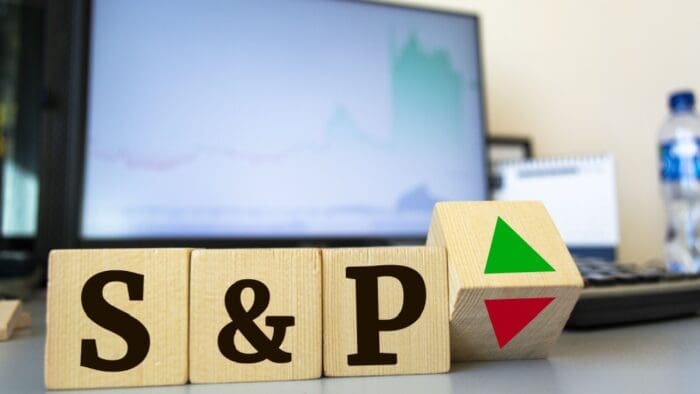
Markets are experiencing a momentous Monday as President Trump remarked that Washington communicated positively with Tehran over the weekend. The commander in chief’s tilt to a “deal mode” posture, including postponing attacks against Iranian energy production facilities, has investors piling into TACO trades as they consider a potential end to the Middle East war, even as the other side has denied any dialogue. The hostilities have essentially derailed the positive economic backdrop that existed prior to the confrontations, as Wall Street was previously expecting a cyclical acceleration, several rate cuts and tailwinds from 2025’s Big Beautiful Bill to bolster corporate earnings growth and Treasury asset appreciation. That outlook darkened once analysts started to dial up slowdown risks while considering a reversal from the Fed’s easing cycle toward hikes, but now overall prospects have improved and speculative enthusiasm is back, with every major equity benchmark and all 11 sectors along with subcategories gaining while fixed-income assets and cryptocurrencies also advance. Commodities are getting punished across the board for the most part, especially crude oil and natural gas, sliding yields are weighing on the greenback, and risk-on attitudes have traders ditching volatility protection instruments although forecast contracts are catching non-correlated bids.
Medium Term Supply Disruptions?
Despite the exuberance on Wall Street, ladies and gentlemen, oil is well off its lows after Tehran denied conducting any weekend negotiations with Washington. West Texas Intermediate is currently at $90.31 and has traded from a wide range of $84.37 to $101.67 per barrel today, meaning that the risk of an extended war remains top of mind for the market. Additionally, in consideration of the vast number of attacks that have affected critical energy in the Middle East, a region that houses about a third of global crude supplies, there’s nervousness that there could be capacity and transportation disruptions that keep costs higher than at the beginning of the year even if there’s a deal, and that’s a headwind for equity and fixed-income assets alike. Still, there’s no doubt that this Monday has offered progress on the geopolitical front; however, keep your seat belts fastened in case this is a head fake prior to a reescalation in tensions.
January Construction Spending Slips Slightly
Construction spending sank 0.3% month over month (m/m) in January after December activity accelerated at the fastest pace since April 2024. Despite the decline, the headline value of projects undertaken was up 1% year over year (y/y). For the m/m result, residential construction sank 0.8% while nonresidential was unchanged. In the private sector, single-family and multifamily activity slipped 0.2% and 0.7% m/m, respectively. Among overall nonresidential projects, public safety and manufacturing experienced the largest declines with activity falling 2.2% and 2%. Conversely, outlays for the highway and streets category and for conservation and development both grew 3.3%.
International Roundup
Monthly Inflation Returns to Singapore
Prices in Singapore climbed 0.6% m/m in February, reversing from the 0.5% drop during the first month of the year, according to the Monetary Authority of Singapore and the Ministry of Trade and Industry. Relative to the year-ago period, the rate of increase slowed from 1.4% in January to 1.2%.
The y/y decline occurred despite stronger demand resulting from the 2026 Chinese Luner New Year occurring in February. Last year, the event occurred in January. Singapore’s core CPI, which excludes food and energy, however, moved from the January print of 1% to 1.4%.
For the m/m result, inflation was strongest in the recreation, sport and culture category and the housing and utilities group, with stickers climbing 1.6% and 1.3%. Other categories that became more expensive and the extent of their changes were as follows:
New to Interactive Brokers?
Open AccountInformation posted on IBKR Campus that is provided by third-parties does NOT constitute a recommendation that you should contract for the services of that third party. Third-party participants who contribute to IBKR Campus are independent of Interactive Brokers and Interactive Brokers does not make any representations or warranties concerning the services offered, their past or future performance, or the accuracy of the information provided by the third party. Past performance is no guarantee of future results.
This material is from IBKR Macroeconomics, an affiliate of Interactive Brokers LLC, and is being posted with its permission. The views expressed in this material are solely those of the author and/or IBKR Macroeconomics and Interactive Brokers is not endorsing or recommending any investment or trading discussed in the material. This material is not and should not be construed as an offer to buy or sell any security. It should not be construed as research or investment advice or a recommendation to buy, sell or hold any security or commodity. This material does not and is not intended to take into account the particular financial conditions, investment objectives or requirements of individual customers. Before acting on this material, you should consider whether it is suitable for your particular circumstances and, as necessary, seek professional advice.
Trading in digital assets, including cryptocurrencies, is especially risky and is only for individuals with a high risk tolerance and the financial ability to sustain losses. Eligibility to trade in digital asset products may vary based on jurisdiction.
Related Articles













Join The Conversation
For specific platform feedback and suggestions, please submit it directly to our team using these instructions.
If you have an account-specific question or concern, please reach out to Client Services.
We encourage you to look through our FAQs before posting. Your question may already be covered!