
- Solve real problems with our hands-on interface
- Progress from basic puts and calls to advanced strategies
Interactive Options Course
Posted July 2, 2026 at 11:17 am
In this IBKR podcast episode, Roli Saxena shares her unconventional journey from engineering to fund management, highlighting how reinvention, confidence and conviction shaped her career. She discusses lessons from building a global career and why backing yourself matters more than fitting expectations.
The following is a summary of a live audio recording and may contain errors in spelling or grammar. Although IBKR has edited for clarity no material changes have been made.
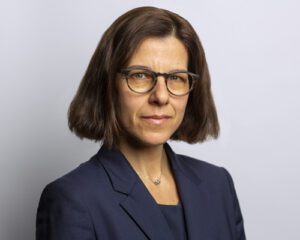
Welcome to another episode of IBKR Podcast. I’m Maria Dieguez, working in the Institutional Sales team at IBKR, based in our London office. Our guest today is Roli Saxena, chief investment advisor of Drona Capital, a firm she founded. Prior to this, she built extensive international business experience across various sectors, including oil and gas, technology, IT sourcing, BPO operations, and education. She also made history as the first woman, and only woman, to lead country operations for Compact in Bahrain. She graduated with a gold medal and first class honors degree in engineer from Punjab Engineering College.
Roli, it’s a pleasure to have you with us.
Hey, Maria. Thank you so much for that warm introduction, and it’s so good to see you. And I really appreciate what you’re doing as well. It’s really nice to see you and talk about. Yes.
Thank you. I imagine being a woman engineer in the ’90s wasn’t easy. Can you tell us a little bit more about your beginnings, your career?
Yes, of course. I grew up in India, and being a woman first of all, and then being an engineer itself is not easy, and on top of it. I really want to talk about a role which I still remember. Even today I remember my first job, how I got it, and why I got it, and I feel so amazed that the way I managed it and did it. So probably that’ll be a great thing to talk about. So basically it was an operations role. So there you had a campus interview, and you had to go for an interview. And it was an oil and gas company which had put out that there’s a role. And it was a very stringent process of interviewing. I had to go through a lot of group discussions and meetings, and I was one of the few people who were selected in the end. And I went for the interview, and the HR manager there, I was very excited to go and then do the interview. And the HR manager started talking about not the technical knowledge required for the job or what I really do as a civil engineer, but he started talking about me being a woman and how difficult it will be for me to do that role.
Which was kind of true, because he said that you have to go through various different places in India, and 32 years back, there were not places a woman could go and live. And you have to be remotely present. You have to be in these LPG plants where there’ll be hardly any other woman. You’ll have to go to these petrol truck drivers and talk to them. And I listened to him for a while, and I was really disappointed, and I didn’t know how to show my disappointment. So I simply said to him that, “Look, if you think this role was not suitable for woman, why did you not simply say in our campus board that woman should not apply for this role?
And since I’m here and I’ve applied for this role, why don’t you interview me with some technical questions?” That was my question. “And then see if I’m capable to do this role, and then decide. And then let me decide if this role is good enough for me to do.” And to give him credit, he did that, and I ended up getting that job.
So—
Oh, wow.
That’s how I got my first job.
I think you were very brave because I guess as a first, I mean, just graduated, the first job interview, to be able to kind of challenge, in a way, the person that was interviewing you, it was very brave from your side.
Yeah, I don’t see it as brave. I just wanted to have the equal opportunity like anybody else. And I think because for the first job, I did not realize that I could be treated differently, so that came to me as a shock. Not being treated similar to everybody else who was applying. Like, they wouldn’t have told that kind of questions to men. And obviously, I faced challenges. I had to, after that, go and stand on top of a truck and take the dips. I had to go to places where I was the only woman and had to travel to different parts, probably unsafe. But you know what? I ended up doing that job, and I ended up doing it very well, and that is what is important. So I think my takeaway is just, if you believe in yourself, don’t let other people’s judgment of you kind of guide you towards like, “Oh, this is not good for me” or “this is good for me.” If you really think, of course, you need to be safe, you need to be okay, you need to be capable of what you’re doing. But if you think that you’re right for whatever you’re doing, just go for it. And really try to avoid everybody else’s judgment because that’s what a lot of women face, that others are judging and then you’re therefore doing it based on what they are telling you to do.
So you did face challenge, were very sure that you were good at what you were doing and you liked the job, you went through all those challenge and you were successful in the role.
And look, I wanted the money the other guys were getting. You want to be paid. You’re getting paid. You’re getting this role. I was the first woman in the campus to get a job. So great, you know, I really wanted a job, so that was the whole idea.
It didn’t matter to me anything else. Yes.
Good, good for you. Was there any other moment in your career where you felt that being a woman influenced your progression?
There are several incidents all through the career. I’ve had a long career. There are several times where you’re the only woman, and you know, what you’re doing, are you doing the right thing? But there’s one particular thing I want to talk about. Again, it was not very conducive for women. I was in Gulf. I lived in Dubai for a long time, and I was in this company called Compaq Computers, which was then the largest PC manufacturer in the world. It was eventually bought over by HP. I was there for literally a couple of years, and it was taken over. There was an M&A with Digital, another company. And there was a restructuring. And I was not at a very senior role because I was quite young. But basically I was doing the entire order management sales for a country called Bahrain because it was Middle East. In the Middle East, the different countries were being managed by different managers. And my manager was a Bahraini male who was much older, but I basically did the entire job for him. So I used to talk to the customers, I used to talk to the dealers, I used to do the sales. And then the new CEO wanted to do restructuring. And I was like, “I can do this job. I know everybody in the job, and he doesn’t do much. I do most of the job. So why don’t I go and apply for this?” Which was again not heard of. One, not just because I was a woman. I was not Bahraini, and I was very young. So then it was very difficult. But then I went and I put my case forward to the CEO, and I said, “Look, I deserve it. I can do this job and these are the reasons why I can do it. I’m capable of doing it.”
And to his credit, again, I ended up getting the job. So that was, again, as you said in your introduction, I became the youngest and the only woman to run a country, the entire country. I did several deals for them in the end. So the manager did look at the capability of the person rather than look beyond my age, my gender or my status as an immigrant or whatever to give me that role, and I just absolutely loved it. So again, yeah.
Hmm. But again, you were brave enough to ask for it because you knew you were good at it, you liked it, and you stepped forward and you asked for it.
Yeah. So then again, more than brave, I would say that as a woman, because we are talking about women in this thing, I sometimes feel, at least that’s my experience, it can be a general thing, but it’s not always true, that sometimes women are not confident enough to put themselves forward even though they think that they are really capable of doing that work. For some reason, there is something which pulls them back unless they almost think that they’re perfect. While some of the men, they’re not even good enough and they will be put… I’m sorry, I’m just being generalist, but that’s my experience. So what I would suggest or say is, you need to have confidence. If you think that you can do something, go for it. That is a quality women need to develop in themselves more than anything else. It’s a big differentiator to build that confidence in yourself to go out there and say, “Look, if I’m capable, let me just do it.” And I don’t blame people. It’s the society, the people around you and in the financial industry as well. You look at there’s characteristic required sometimes. Maybe I was a little more outgoing. It’s not negative, but aggressive or whatever. You need to be a little pushy, so you need all those characters, which sometimes don’t come inherently, so I do not blame them. But that is something which we can build on, I guess.
And what you said about men and women, we face this being capable in a very different way, and this is… I heard this several times when people apply for jobs, we want to tick all the boxes before applying. This is not… Yeah, yeah. So it’s something and it’s what you say, it’s not good or bad. I think it’s something that we should start leaning a little bit more and be more proactive and believe more that we are able to do it.
Yeah, we just want to be so perfect before we really go. It’s all about the confidence. You just don’t want to do it unless you’re really… Even if you have the job, like, “Oh, am I good at it? Do I have to prove this just because I’m a woman?”
So that confidence has to come, like, “Yeah, I deserve it,” that sort of a thing. That’s what it is.
Yeah, it is true. And after several diverse roles across different industries, how did you become a fund manager and launch your own fund?
Okay. That is the most exciting part I want to talk about actually. So look, I have always loved maths. I have been a weird kid since I was young. I used to teach my class maths. I absolutely love numbers, absolutely love maths, and that’s why I ended up doing engineering. Moved to London after being across the world, and I have three kids as well. Again, a lot of women face this, that you have children, you have to balance your life. At the same time, I really didn’t know what to do. I didn’t want to do a very high-profile sales job because I was very high up. So I was just trying to figure out what to do and I wanted to also be intellectually very stimulated and learn. I still want to always learn. So that is me. Not particularly any woman, that’s just me I’m talking about, and my journey why I got here. And then I have a family member who said that you’re one of the smartest person in the family. Why don’t you try to get into fund managing? Because that’s something you can do. You love maths and you’re analytical, you’ve done some business roles in the past. So I actually went to London Business School and did a corporate finance course in the evening because I have younger kids. And that journey, I still remember the first day in the class, and I opened the balance sheet and the income statement and I’m like, “Wow, these numbers really talk. What am I looking at?” And I’m like, “My God, I want to do this for the rest of my life.” I looked at a 10-K statement, I’m like, “Yes, I want to read them. I need to.” So let me tell you a little bit about what my fund does. Drona Capital is not just investing in any company. We’re looking to invest in high-quality companies. I may say companies like you, for example, your company, for example, which have got very strong competitive strengths for a very long period of time. They’ve been doing similar stuff. Now we have companies which are just fast-moving technology. We don’t invest in that sort of business. We would like to invest in companies which have been doing similar stuff, stable, long-term, have built up competitive strength for a long period of time, and therefore you need to read the financial statements.
You need to read, do a lot of intense research in figuring out how those companies have reached where they are. There have been some in our portfolio which have been there for about a century. So how do they do what they do? You need to read. When you read the balance sheet, you see how the capital allocation is, for example, for the management.
If you look at the income statement and you look at the operating margins, you say, “Oh wow, they have consistent operating margin. Does it say that they have a great pricing power?” And then you go and dig into that. So I love doing that. I love figuring out all that stuff in a business. And so that’s how I got into it really. Not just for, yes, of course I wanted to be financially independent and do my stuff, but the real thing which got me into it is, to be truthful to myself. I get so excited when I do this. I can do this for the rest of my life. Literally, till it’s analytically possible for me to do it, I will do it. So it is very exciting for me to get up every morning. It just gives me so much joy to figure out, have we really found a great business to invest in? And I talk to my team, and those are the best moments for me.
So I think the important thing is to be truthful to yourself. I think in your journey, in your process, it’s not about a man or a woman. Are you really identifying yourself with what you really want to do? It’s like if I say that, “Oh, I’m a woman, and I’m older. I did it when I was much older.” So it’s different from when I was younger. Do you really want to change career at the age of, say, 35 or whatever? Do you really think you can do that? But it was just kind of a calling and saying that, “Yes, you can. This is your purpose.” And then go for it.
That is how I got into it, and I’ve grown the fund 10 times since I started it. I was fortunate enough to get a lot of support. You again need a lot of support from the family, and you’ve got a lot of people around you. The other thing I would say, the challenge, of course, is when you go and try and raise money. First time you’re going, there’s always a barrier there. I think I still face that barrier. That, oh—
That barrier is gender neutral, right? It’s difficult.
This barrier is there. But the good thing is, once you’ve crossed the initial barrier and you start talking about what you do, you start talking about your track record, you talk about your philosophy, how consistently you have given these returns, how consistent you are, how much integrity you have, and then you can build that trust with that investor. I have had investors who have given me money within meeting me in an hour. But to get the initial meeting, of course, is always sometimes difficult. So I have to figure out how to do that. So that challenge a lot of women face and will continue to face. But all in all, it’s been a great journey for me, and I hope to continue to do it for a long time still.
So from our conversation, I would say that a key takeaway is don’t allow your gender or social conventions to define or limit you.
Stay true to yourself and have the courage to pursue your calling and passion.
Yes, absolutely. I totally agree. I mean, don’t allow your age, your gender, your immigration status, anything to come as a hindrance or a barrier. Just do what you really think you’re capable of doing and just go for it.
Yeah. Roli, thanks for sharing your journey with us. It’s been both insightful and really inspiring.
Thank you so much. Thanks for having me. Really appreciate it. Thank you.
Thanks. And thank you to everyone listening. We hope you enjoy this episode of IBKR Podcast. See you next time.
The analysis in this material is provided for information only and is not and should not be construed as an offer to sell or the solicitation of an offer to buy any security. To the extent that this material discusses general market activity, industry or sector trends or other broad-based economic or political conditions, it should not be construed as research or investment advice. To the extent that it includes references to specific securities, commodities, currencies, or other instruments, those references do not constitute a recommendation by IBKR to buy, sell or hold such investments. This material does not and is not intended to take into account the particular financial conditions, investment objectives or requirements of individual customers. Before acting on this material, you should consider whether it is suitable for your particular circumstances and, as necessary, seek professional advice.
The views and opinions expressed herein are those of the author and do not necessarily reflect the views of Interactive Brokers, its affiliates, or its employees.










Join The Conversation
For specific platform feedback and suggestions, please submit it directly to our team using these instructions.
If you have an account-specific question or concern, please reach out to Client Services.
We encourage you to look through our FAQs before posting. Your question may already be covered!