
- Solve real problems with our hands-on interface
- Progress from basic puts and calls to advanced strategies
Interactive Options Course
Posted June 30, 2026 at 10:00 am
What can Micron’s blow-away earnings tell us about the AI theme?
On Thursday, memory maker Micron’s blow-away earnings report caused its stock to soar 15%, with the news seemingly reviving the artificial intelligence (AI) trade after a slump earlier in the week.1 However, that momentum faded on Friday. We see two major takeaways from this story. For one, it highlights that, despite some misgivings about mega-cap valuations, the AI theme is still strong. Earnings remain relatively good across the board, with many companies beating expectations, and that fuels momentum for AI-related stocks to move higher, as Micron and others did before coming back down to earth a bit on Friday.2 Crucially, this momentum is not being driven by multiple expansion—rather, it is being driven by higher earnings multiples, which means that to keep the same price-to-earnings (P/E) ratio, the stock price has to move higher. This is an important distinction, because it should be supportive of markets moving up even more. Secondly, Micron’s earnings underscore that investors don’t need to be in on the big initial public offerings (IPOs) or chase the Magnificent 7’s (Alphabet, Amazon, Apple, Meta, Microsoft, Nvidia, and Tesla) higher multiples in order to access the AI theme; you can be in lower-visibility names and still potentially benefit. In addition to Micron, memory names like SanDisk, Western Digital, and Samsung have done well recently, and we’re currently overweight that segment of the market.
Bottom line: Micron’s earnings tell us that the AI theme still has momentum, and that it goes beyond just the biggest names in the space.
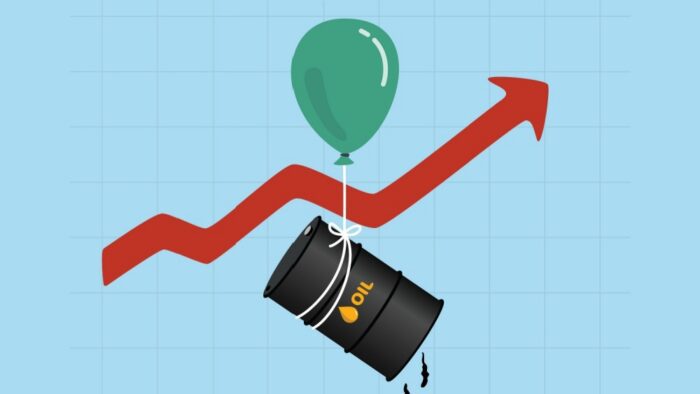
With the U.S. and Iran having reached a 60-day agreement and actively negotiating a more permanent deal, oil prices have started to ease, with West Texas Intermediate (WTI) Crude coming down from a high of over US$100 per barrel to the US$70 per barrel range—in line with pre-crisis levels.3 Our view, however, is that prices have come down too far, too fast. Though a temporary settlement has been reached, it will take some time for supply to fully come back online—and that is assuming that the ceasefire holds. It appears that oil markets have essentially jumped the gun to where things might stand in three to six months, when the flow of oil through the Strait of Hormuz is expected to have returned to normal. Prices in the US$60-70 range also do not seem to account for damage that may have been done to production facilities, though this appears to have affected natural gas production more than oil. In six months, we should be back to normal supply-demand dynamics (assuming no flare-ups), but there is also the possibility that oversupply could become an issue. With markets already pricing in a ‘return to normal,’ any snag in negotiations could cause prices to shoot back up, and there is little room for a positive surprise if negotiations do go well. Keep in mind that Iran still holds significant negotiating leverage: the U.S. midterm elections are around the corner, and the Trump administration likely wants to see oil prices stay down so that they do not become a major ballot box issue.
Bottom line: We think oil prices have come down too fast, with markets essentially jumping ahead to where the supply situation may be in three to six months’ time.
Gold prices have retreated to approximately US$4,000 per ounce—essentially erasing all of the gains they’ve made this year.4 What has caused this momentum to stall? We see four reasons. First, demand from retail investors has dropped off, perhaps in part due to interest in the SpaceX IPO or other AI-related names. That rotation appears to be affecting cryptocurrency as well. Second, some central banks slowed down or paused their gold buying due to higher oil prices. We would expect this trend to reverse now that oil prices have come down, assuming that supply does gradually return to normal. Third, as equity market momentum has picked up, we’ve seen something of a pivot from gold to energy. With energy prices now stabilizing, we expect to see some of that money return to gold. And finally, from a longer-term perspective, some investors are likely to get back to looking for a hedge against the U.S. dollar (USD). The USD has been strong lately, so there has been little reason for investors to seek refuge elsewhere. However, over the next five years, we do expect the USD to weaken somewhat, which will increase the need for an alternative store of value like gold. We recently moved to an overweight to the Canadian dollar (CAD) versus the USD.
Bottom line: Declining retail demand, higher oil prices, and USD strength have all contributed to a gold prices’ retreat this year.
Positioning
For a detailed breakdown of our portfolio positioning, check out the latest BMO GAM House View Report, titled Fundamentals are still in the driver’s seat, but keep your belt buckled .
—
Originally Posted June 29, 2026 – Are markets wrong on oil?
1Sawdah Bhaimiya, “Micron soars 15% after blockbuster earnings, lifting some chip stocks,” CNBC, June 25, 2026.
2Sawdah Bhaimiya, “Micron falls 5% as tech stocks struggle,” CNBC, June 26, 2026.
3OilPrice.com, as of June 26, 2026 .
4GoldPrice.org, as of June 26, 2026.
Commissions, management fees and expenses all may be associated with investments in exchange traded funds. Please read the ETF Facts or prospectus of the BMO ETFs before investing. Exchange traded funds are not guaranteed, their values change frequently and past performance may not be repeated.
For a summary of the risks of an investment in the BMO ETFs, please see the specific risks set out in the BMO ETF’s prospectus. BMO ETFs trade like stocks, fluctuate in market value and may trade at a discount to their net asset value, which may increase the risk of loss. Distributions are not guaranteed and are subject to change and/or elimination.
BMO ETFs are managed by BMO Asset Management Inc., which is an investment fund manager and a portfolio manager, and a separate legal entity from Bank of Montreal.
®/™Registered trade-marks/trade-mark of Bank of Montreal, used under licence.
Information posted on IBKR Campus that is provided by third-parties does NOT constitute a recommendation that you should contract for the services of that third party. Third-party participants who contribute to IBKR Campus are independent of Interactive Brokers and Interactive Brokers does not make any representations or warranties concerning the services offered, their past or future performance, or the accuracy of the information provided by the third party. Past performance is no guarantee of future results.
This material is from BMO Exchange Traded Funds and is being posted with its permission. The views expressed in this material are solely those of the author and/or BMO Exchange Traded Funds and Interactive Brokers is not endorsing or recommending any investment or trading discussed in the material. This material is not and should not be construed as an offer to buy or sell any security. It should not be construed as research or investment advice or a recommendation to buy, sell or hold any security or commodity. This material does not and is not intended to take into account the particular financial conditions, investment objectives or requirements of individual customers. Before acting on this material, you should consider whether it is suitable for your particular circumstances and, as necessary, seek professional advice.
Futures are not suitable for all investors. The amount you may lose may be greater than your initial investment. Before trading futures, please read the CFTC Risk Disclosure. A copy and additional information are available at ibkr.com.
U.S. Spot Gold trading through IB LLC accounts is only available to legal residents of the United States that do not reside in Arizona, Montana, New Hampshire, and Rhode Island.
Investments in certain commodities (precious metals) may be subject to significant price volatility and often involve risks related to market fluctuations, liquidity constraints, geopolitical events, and changes in global economic conditions that could adversely affect their value.
There is a substantial risk of loss in foreign exchange trading. The settlement date of foreign exchange trades can vary due to time zone differences and bank holidays. When trading across foreign exchange markets, this may necessitate borrowing funds to settle foreign exchange trades. The interest rate on borrowed funds must be considered when computing the cost of trades across multiple markets.
Trading in digital assets, including cryptocurrencies, is especially risky and is only for individuals with a high risk tolerance and the financial ability to sustain losses. Eligibility to trade in digital asset products may vary based on jurisdiction.
Spot currencies are not available at IBKR Singapore.
Related Articles

















Join The Conversation
For specific platform feedback and suggestions, please submit it directly to our team using these instructions.
If you have an account-specific question or concern, please reach out to Client Services.
We encourage you to look through our FAQs before posting. Your question may already be covered!