
- Solve real problems with our hands-on interface
- Progress from basic puts and calls to advanced strategies
Interactive Options Course
Posted July 14, 2026 at 10:30 am
How should equity investors evaluate the possibility of continued hostilities and oil supply chain disruptions?
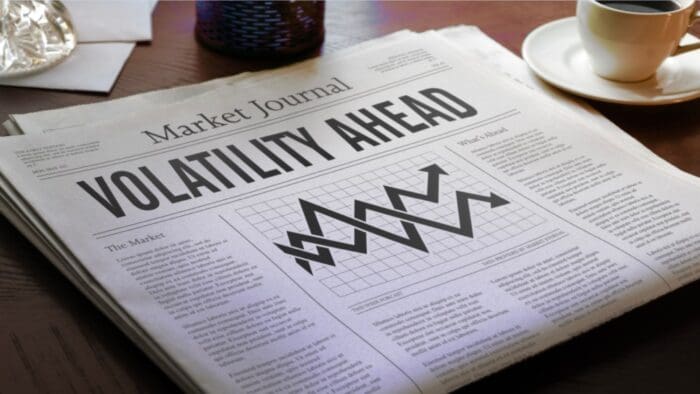
Despite the preliminary agreement reached by the United States and Iran several weeks ago, hostilities have continued, with new air strikes causing traffic through the Strait of Hormuz to decline steeply last week1 and U.S. President Donald Trump declaring the ceasefire “over.”2 Previously, I’ve mentioned that investors were being too optimistic about the truce—oil prices, for instance, left virtually no room for the conflict to flare up again, as all of the upside had already been baked in. This recent re-escalation serves as a reminder that a lasting agreement is far from a done deal. The simple truth is that the U.S. and Iranian governments do not trust one another, and it remains unclear whether negotiations are being conducted in good faith. The upcoming U.S. midterm election is also a ticking clock—the Trump administration likely wants this issue to go away before Americans go to the polls (though they are not likely to admit that publicly), and the Iranians know that. That gives Iran significant leverage at the negotiating table, and they have little reason to make major concessions from such a position of strength. For these reasons, we expect to see more volatility going forward. What is preventing oil prices from returning to US$100 per barrel is markets’ belief that the conflict will get resolved eventually. We agree with that assessment, but it’s the time frame that is the question. With oil prices likely to increase somewhat every time tensions increase, inflation becomes the concern: if it stays hotter for longer, consumer sentiment could drop, interest rate cuts could come off the table, and rate hikes could even re-enter the conversation. Company valuations could also be affected. In our view, investors need to recognize that a risk premium should be attached to prices given the ongoing uncertainty. In fact, even after the midterms, we think there should still be a risk premium, as the Trump administration may circle back to certain policy priorities, like trade, that have been put on the back burner due to the Iran conflict and the election.
Bottom line: With tensions between the U.S. and Iran persisting, uncertainty remains high and investors should expect more volatility.
While equity markets have largely shrugged off concerns about the U.S.-Iran conflict, yields on U.S. Treasury 10-year notes have shifted in response to lingering uncertainty. What does this mean for allocators? In general, bond markets tend to be more aligned with risks than equity markets; that negativity is part of the reason we’re underweight bonds. However, we still believe that bonds are an important hedge against equities, especially if we do eventually see a bigger pullback in stocks or if uncertainty persists for longer than investors expect. We likely wouldn’t take on risk in the fixed income market—in this environment, the risk-return trade-off is simply more attractive on the equity side that it would be with High Yield or Emerging Market debt, for example. But we do want to keep a bond allocation as a layer of safety. Speaking of protection, gold has also come back to a point where it is an attractive option to own as a hedge against volatility. While a significant escalation of the U.S.-Iran situation could upend things, we think gold is likely to hold up well in any environment short of that.
Bottom line: Bond markets tend to be more risk-aware than equity markets, and while we are underweight fixed income, we still like it—and gold—as a hedge.
The Momentum factor has taken a hit recently after outperforming for much of the year. For investors that may be questioning that trade, we would suggest approaching your portfolio with clear eyes, asking yourself: Where are your risks? And what are the things in your portfolio that are still working as expected? Some of your longer-term holds may not be in favour at the moment, but if you look six months out, the outlook is brighter. Our approach is to have holdings in place to offset your more volatile positions, such as the artificial intelligence (AI) trade. This could include bonds or gold, as I mentioned previously. Or, it could be a factor like Small Caps, with has held up relatively well, or Low Volatility, which enables investors to participate in the upside while potentially reducing some of the big swings. SpaceX is an excellent case study: it came in with an exceptionally high valuation but without the strong earnings we tend to see from the Magnificent 7 (Alphabet, Amazon, Apple, Meta, Microsoft, Nvidia, and Tesla). This raised renewed valuation questions that affected not only SpaceX, but also the other megacap Tech companies, as well as companies poised for their own initial public offerings (IPOs) like OpenAI and Anthropic. Those kinds of speedbumps are to be expected along the way, which is why we prefer to have hedges in place as an offset.
Bottom line: We think it is important to have measures in place to offset your more volatile positions, whether in the form of a factor exposure like Low Vol or Small Cap or more traditional exposures like bonds and gold.
For a detailed breakdown of our portfolio positioning, check out the latest BMO GAM House View Report, titled Risk-on, radar up: a constructive setup, but still cautious outlook .
—
Originally Posted July 13, 2026 – What to do when volatility won’t go away
Commissions, management fees and expenses all may be associated with investments in exchange traded funds. Please read the ETF Facts or prospectus of the BMO ETFs before investing. Exchange traded funds are not guaranteed, their values change frequently and past performance may not be repeated.
For a summary of the risks of an investment in the BMO ETFs, please see the specific risks set out in the BMO ETF’s prospectus. BMO ETFs trade like stocks, fluctuate in market value and may trade at a discount to their net asset value, which may increase the risk of loss. Distributions are not guaranteed and are subject to change and/or elimination.
BMO ETFs are managed by BMO Asset Management Inc., which is an investment fund manager and a portfolio manager, and a separate legal entity from Bank of Montreal.
®/™Registered trade-marks/trade-mark of Bank of Montreal, used under licence.
Information posted on IBKR Campus that is provided by third-parties does NOT constitute a recommendation that you should contract for the services of that third party. Third-party participants who contribute to IBKR Campus are independent of Interactive Brokers and Interactive Brokers does not make any representations or warranties concerning the services offered, their past or future performance, or the accuracy of the information provided by the third party. Past performance is no guarantee of future results.
This material is from BMO Exchange Traded Funds and is being posted with its permission. The views expressed in this material are solely those of the author and/or BMO Exchange Traded Funds and Interactive Brokers is not endorsing or recommending any investment or trading discussed in the material. This material is not and should not be construed as an offer to buy or sell any security. It should not be construed as research or investment advice or a recommendation to buy, sell or hold any security or commodity. This material does not and is not intended to take into account the particular financial conditions, investment objectives or requirements of individual customers. Before acting on this material, you should consider whether it is suitable for your particular circumstances and, as necessary, seek professional advice.
Futures are not suitable for all investors. The amount you may lose may be greater than your initial investment. Before trading futures, please read the CFTC Risk Disclosure. A copy and additional information are available at ibkr.com.
U.S. Spot Gold trading through IB LLC accounts is only available to legal residents of the United States that do not reside in Arizona, Montana, New Hampshire, and Rhode Island.
Investments in certain commodities (precious metals) may be subject to significant price volatility and often involve risks related to market fluctuations, liquidity constraints, geopolitical events, and changes in global economic conditions that could adversely affect their value.
IPO investments carry substantial risks including extreme price volatility, limited operating history, lack of liquidity, potential for significant losses, and uncertainty regarding future performance.
Municipal Bonds are only available from Interactive Brokers for IBKR LLC, IBKR Canada, IBKR Hong Kong, IBKR Australia and IBKR Singapore entities.
IPO Subscriptions are only available for IBKR LLC, IBKR Hong Kong andIBKR Singapore entities.
Related Articles













Join The Conversation
For specific platform feedback and suggestions, please submit it directly to our team using these instructions.
If you have an account-specific question or concern, please reach out to Client Services.
We encourage you to look through our FAQs before posting. Your question may already be covered!