
- Solve real problems with our hands-on interface
- Progress from basic puts and calls to advanced strategies
Interactive Options Course
Posted April 7, 2026 at 10:45 am
When your background is in macroeconomic and market strategy, there’s an unstated expectation that you can opine on everything. For example, I wasn’t a microbiologist in 2020 during the COVID-19 pandemic, although I often felt like I was struggling to play one on television. In much the same way, I’m not a military strategist today — nor an expert on the inner thinking of US President Trump, Israeli Prime Minister Netanyahu, or Iranian Ayatollah Mojtaba Khomeini. It’s probably for the best. When you convince yourself that you understand the motivations and goals of political and military leaders, markets would likely have a way of humbling you quickly.
This past week was a reminder. At various points, markets signaled that the war was intensifying, then nearing an end, and intensifying again.1 Trying to trade in reaction to each headline is a recipe for being whipsawed. In periods like this, we come back to what we do best. We focus on interpreting what markets themselves are telling us.
Let’s start with the business cycle. As we’ve been saying, our preferred cyclical indicators are trending in the wrong direction, but they aren’t pointing to disaster. Credit spreads have modestly widened,2 inflation expectations have trended higher,3 and the US dollar has modestly strengthened.4 The rise in inflation expectations has led investors to expect further rate increases from the European Central Bank, the Bank of England, and even the Bank of Japan.5
Taken together, this gradual — but not meaningful — deterioration in cycle indicators suggests that markets still appear to believe in an exit ramp and an eventual resumption of the expansion once near-term uncertainty fades.
Tactically, the picture has softened. Our short-lived global expansion signal has shifted toward a slowdown. Risk sentiment has been deteriorating,6 and while many leading indicators remained relatively stable,7 they may follow sentiment and confidence and deteriorate. We saw early evidence of that last week. Consumer sentiment weakened,8 and the Institute of Supply Management (ISM) services activity moderated.9 They weren’t recessionary readings, but momentum had faded.
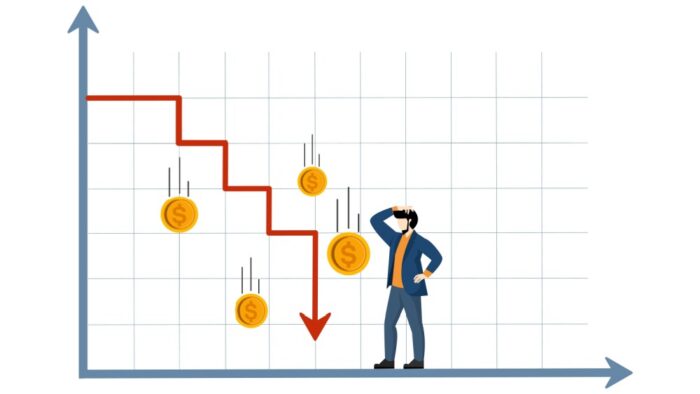
That brings us to the weeks ahead and the question that many investors are asking. The major stock indexes have already corrected. The Dow Jones Industrial Average has fallen roughly 10%.10 The S&P 500 Index isn’t far behind.11 The MSCI All Country World (ACWI) ex USA Index is down more than 11%.12 Has the market already found its bottom? Based on our preferred market bottom indicators, the answer for now is likely no.
Of course, none of that’ll matter if there’s a social media post today calling off the war. But again, who am I to know?
I may still occasionally find myself playing a military strategist on television, but in practice, I remain grounded in what the market itself is signaling. In the short term, markets may still have work to do before a durable bottom is formed. Tactically, I believe a slowdown environment argues for maintaining stock exposure, but with greater emphasis on quality and more defensive areas of the market. Longer term, we may want to take solace in markets indicating that the broader cycle hasn’t yet ended and that this too shall pass.
| Date | Region | Event | Why it matters |
|---|---|---|---|
| April 6 | Global | Easter Monday (selected markets closed) | Lower liquidity and reduced trading volumes can amplify volatility in open markets |
| April 7 | US | Durable goods orders (Feb.) | Signals business investment trends and manufacturing momentum |
| April 8 | US | Federal Open Market Committee (FOMC) meeting minutes (Mar.) | Provides insight into the Federal Reserve’s policy debate and future rate path |
| Eurozone | Retail sales (Feb.) | Key indicator of consumer demand and economic momentum | |
| April 9 | US | Personal income and spending/PCE inflation (Feb.) | Critical gauge of consumer strength and the Fed’s preferred inflation measure |
| US | Gross domestic product (GDP) (Q4, third estimate) | Confirms growth trends and revisions can affect macro outlook | |
| April 10 | US | Consumer Price Index (CPI) (Mar.) | Primary inflation indicator; major influence on interest rates and markets |
| Canada | Employment report (Mar.) | Assesses labor market strength and informs Bank of Canada policy expectations |
Originally Posted April 6, 2026
Indicators suggest the market likely hasn’t hit bottom yet by Invesco US
This does not constitute a recommendation of any investment strategy or product for a particular investor. Investors should consult a financial advisor/financial consultant before making any investment decisions. Invesco does not provide tax advice. The tax information contained herein is general and is not exhaustive by nature. Federal and state tax laws are complex and constantly changing. Investors should always consult their own legal or tax professional for information concerning their individual situation. The opinions expressed are those of the authors, are based on current market conditions and are subject to change without notice. These opinions may differ from those of other Invesco investment professionals.
NOT FDIC INSURED
MAY LOSE VALUE
NO BANK GUARANTEE
All data provided by Invesco unless otherwise noted.
Invesco Distributors, Inc. is the US distributor for Invesco Ltd.’s Retail Products and Collective Trust Funds. Institutional Separate Accounts and Separately Managed Accounts are offered by affiliated investment advisers, which provide investment advisory services and do not sell securities. These firms, like Invesco Distributors, Inc., are indirect, wholly owned subsidiaries of Invesco Ltd.
©2024 Invesco Ltd. All rights reserved.
Information posted on IBKR Campus that is provided by third-parties does NOT constitute a recommendation that you should contract for the services of that third party. Third-party participants who contribute to IBKR Campus are independent of Interactive Brokers and Interactive Brokers does not make any representations or warranties concerning the services offered, their past or future performance, or the accuracy of the information provided by the third party. Past performance is no guarantee of future results.
This material is from Invesco US and is being posted with its permission. The views expressed in this material are solely those of the author and/or Invesco US and Interactive Brokers is not endorsing or recommending any investment or trading discussed in the material. This material is not and should not be construed as an offer to buy or sell any security. It should not be construed as research or investment advice or a recommendation to buy, sell or hold any security or commodity. This material does not and is not intended to take into account the particular financial conditions, investment objectives or requirements of individual customers. Before acting on this material, you should consider whether it is suitable for your particular circumstances and, as necessary, seek professional advice.
Related Articles















Join The Conversation
For specific platform feedback and suggestions, please submit it directly to our team using these instructions.
If you have an account-specific question or concern, please reach out to Client Services.
We encourage you to look through our FAQs before posting. Your question may already be covered!