
- Solve real problems with our hands-on interface
- Progress from basic puts and calls to advanced strategies
Interactive Options Course
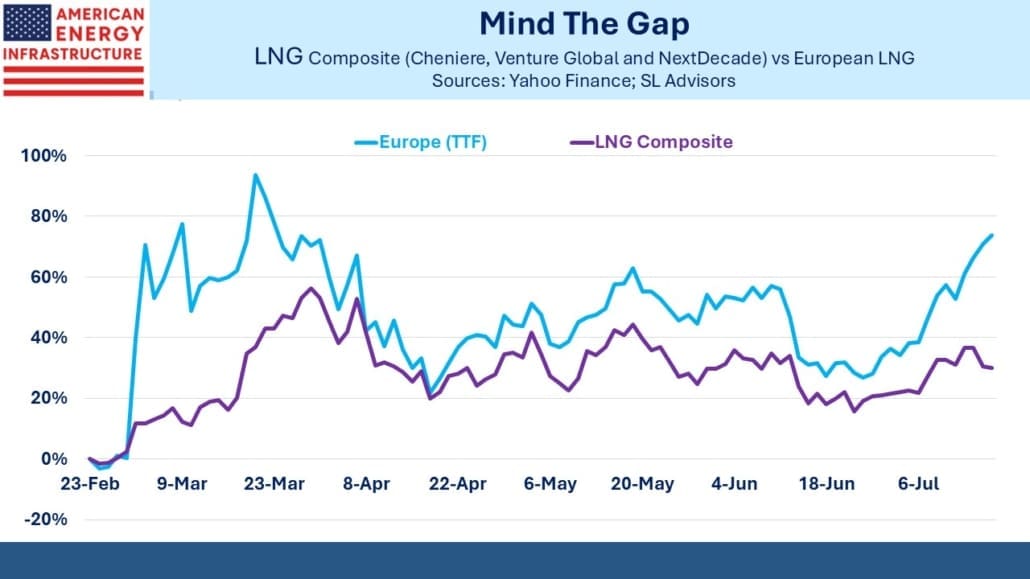
Since the Iran War began at the end of February, the price of European LNG and a composite of three US LNG exporters (Cheniere, Venture Global and NextDecade) have tracked each other fairly reliably. At the outbreak of hostilities, LNG investors were slow to realize the opportunity, but after a month of conflict both were up 40-50%.
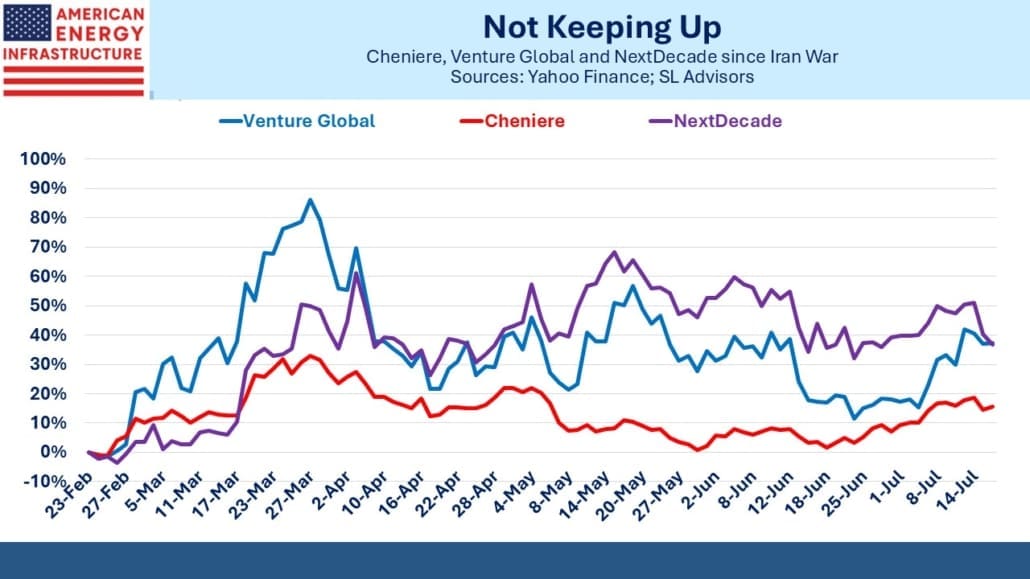
March 27 is the highest so far for the three stocks, which generally retreated during 2Q. The truce in early June depressed European LNG and the exporters, but it was predictably short-lived.
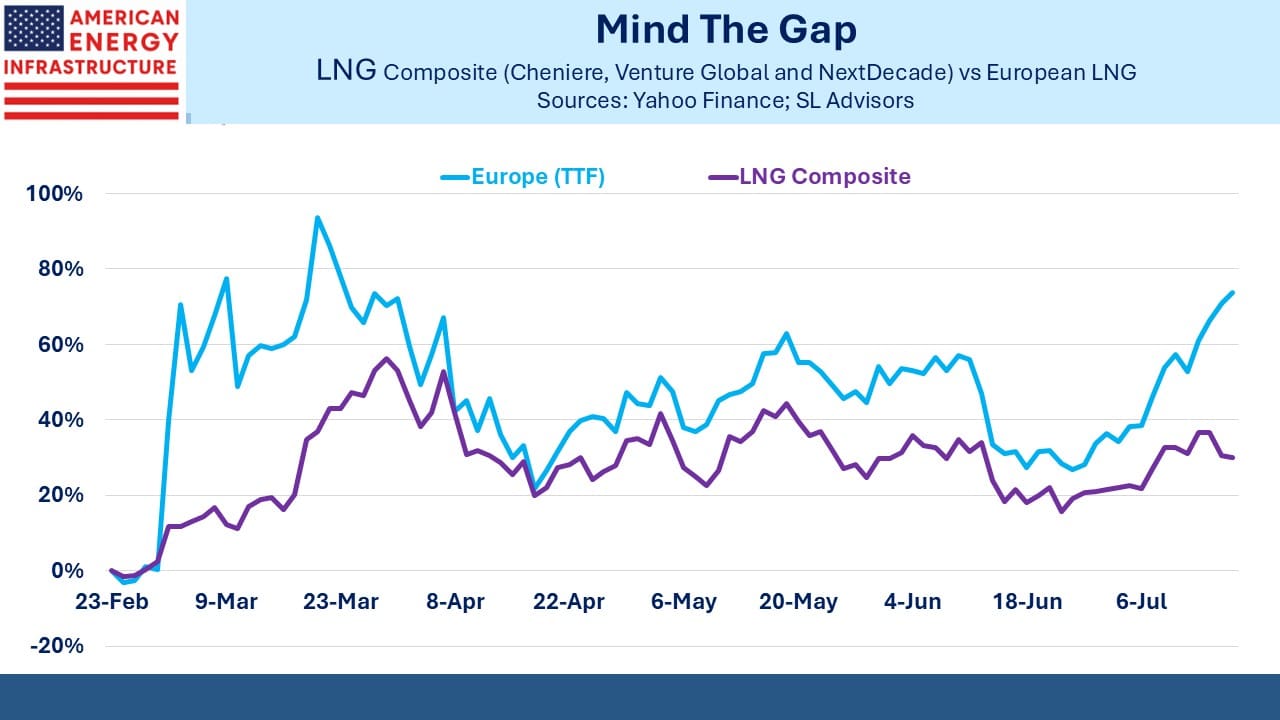
Last week a divergence opened up between the two. With maritime traffic through the Strait of Hormuz once more at a virtual standstill, the European LNG benchmark has rallied above its pre-truce early June level. By contrast, the LNG names have rallied modestly. It’s as if LNG investors think another truce is likely, whereas the European LNG benchmark is more pessimistic.
The European TTF LNG benchmark is trading above $18 per Million BTUs (MMBTUs, approximately 964 cubic feet), compared with $10 before the conflict began. The US Henry Hub is below $3. The arbitrage profit is substantial for those able to exploit it. Feedstock to US LNG export terminals is running at 18 Billion Cubic Feet per Day (BCF/D), worth $270million per day before costs.
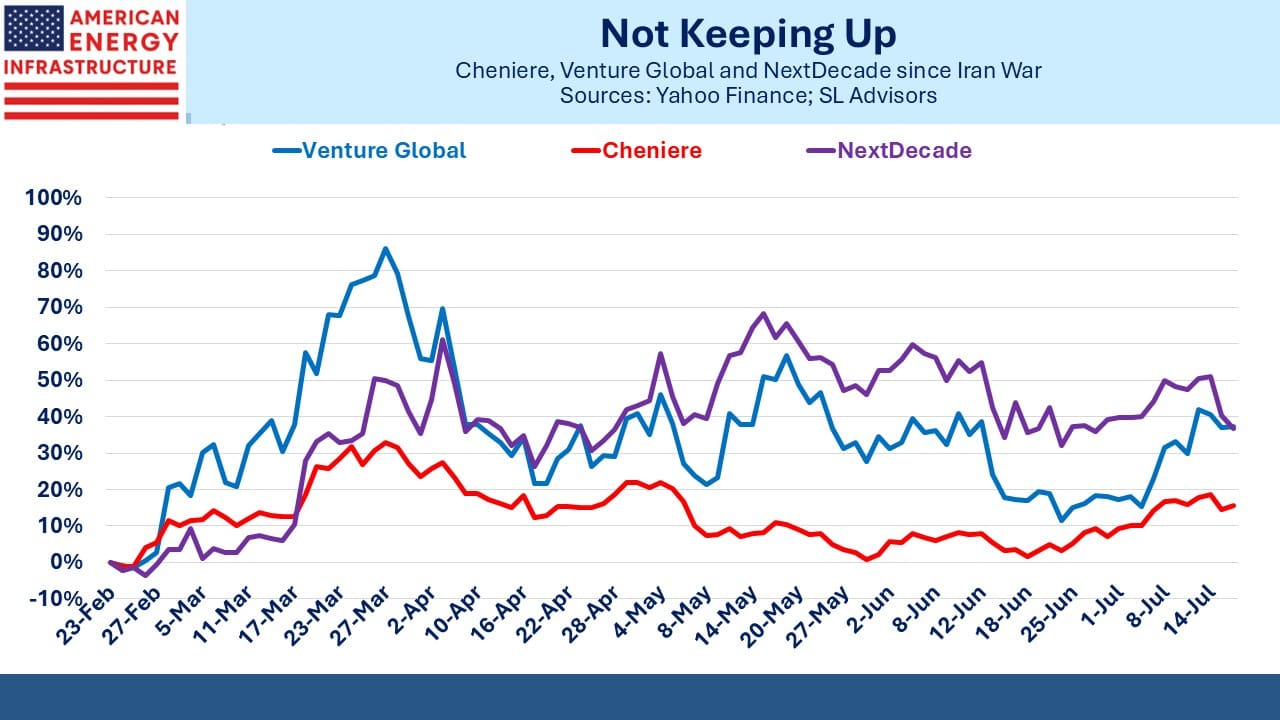
All three stocks are substantially below their highs of late March. Cheniere has contracted 95% of its liquefaction capacity through 2035, so has the least to gain from the near-term high spread between US and global prices. Venture Global (VG), which retains around a third of its capacity uncommitted, has the most to gain.
In a recent SEC filing, VG disclosed that they charged $6.45 per MMBTUs during 2Q26 to liquefy gas for transport by ship, up from $3.82 is 1Q26.
NextDecade expects to begin shipping LNG early next year, so today’s prices offer them no direct benefit.
Shipments of LNG from Qatar have been non-existent other than during the brief truce last month. Even with an immediate cease-fire, it would still be late August before they could resume shipments. Their customers are having to endure a supply interruption of at least six months.
How Qatar’s reputation for reliability is affected by the force majeure they declared remains to be seen. Regime change in Iran that resulted in a more neighborly set of leaders seems implausible. However the Iran conflict ultimately resolves, it’s likely that a leadership of Moslem extremists will retain the ability to harass shipping through the Persian Gulf.
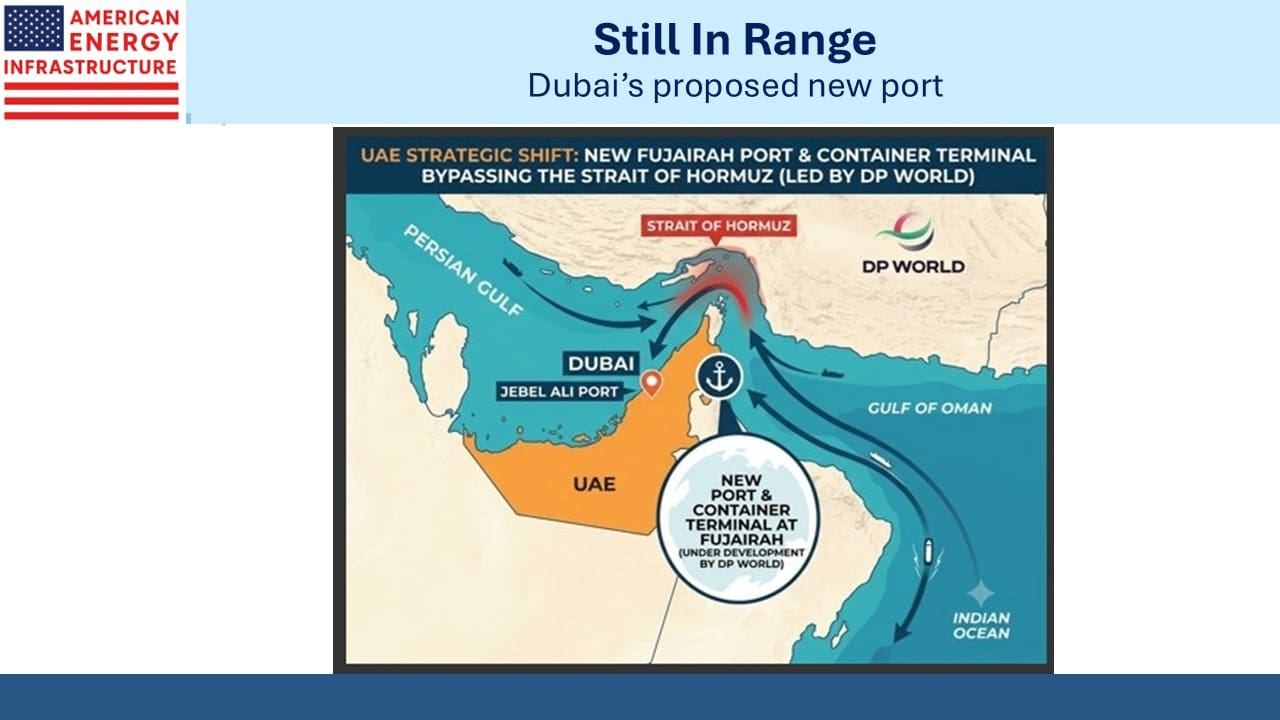
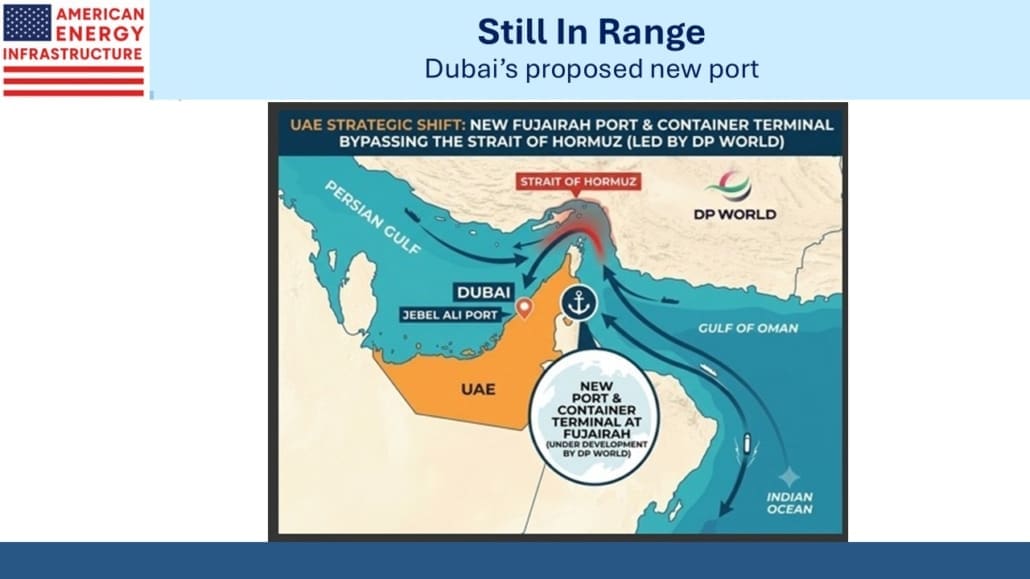
Regional governments are considering ways to avoid the Strait of Hormuz. Dubai’s DP World is planning a new port in Fujairah, allowing ships to be loaded without entering the Persian Gulf at all. Traffic at their Jebel Ali Port is estimated to be down 90-95%. However, Iranian missiles routinely cross the Persian Gulf and hit Qatar’s Ras Laffen LNG facility in early March. Fujairah will still be in range.
Chevron is working with Iraq to build an oil pipeline through Syria to the Mediterranean, allowing them to avoid the Persian Gulf completely. Saudi Arabia’s pipeline that crosses its country to the Red Sea has turned out to be a smart back-up plan for current events.
Qatar will likely need to build a gas pipeline to a safe place – perhaps to Fujairah with the blessing of the United Arab Emirates, or even to the Red Sea across Saudi Arabia. The initiatives already announced show that policymakers in the region are contemplating investing $billions to move their trade out of Iran’s reach. They clearly expect neighboring religious zealots to present a long-term threat.
It’s therefore odd that investors haven’t incorporated similar analysis when looking at US LNG stocks. Building energy infrastructure in the Middle East to neutralize Iran’s military threat will take years and suggests policymakers are concerned it will persist. This is not good for Qatar’s ability to engage with its customers, and US companies are the clearest beneficiary.
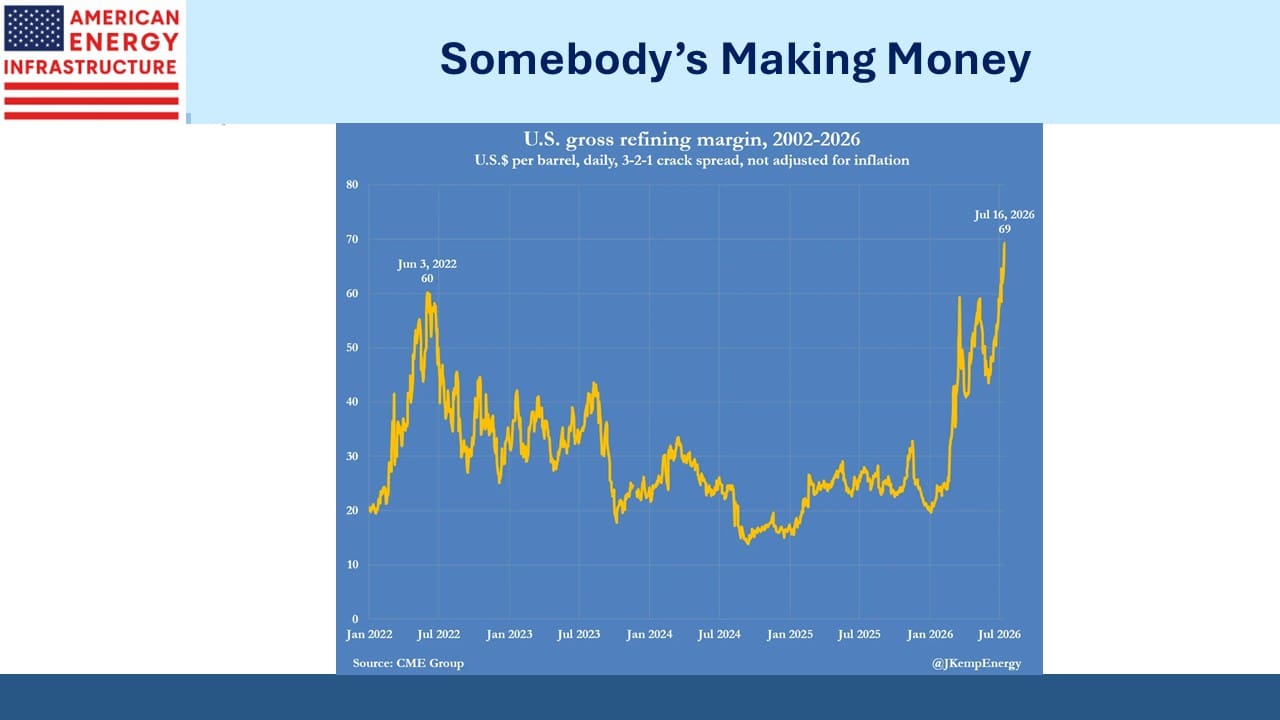
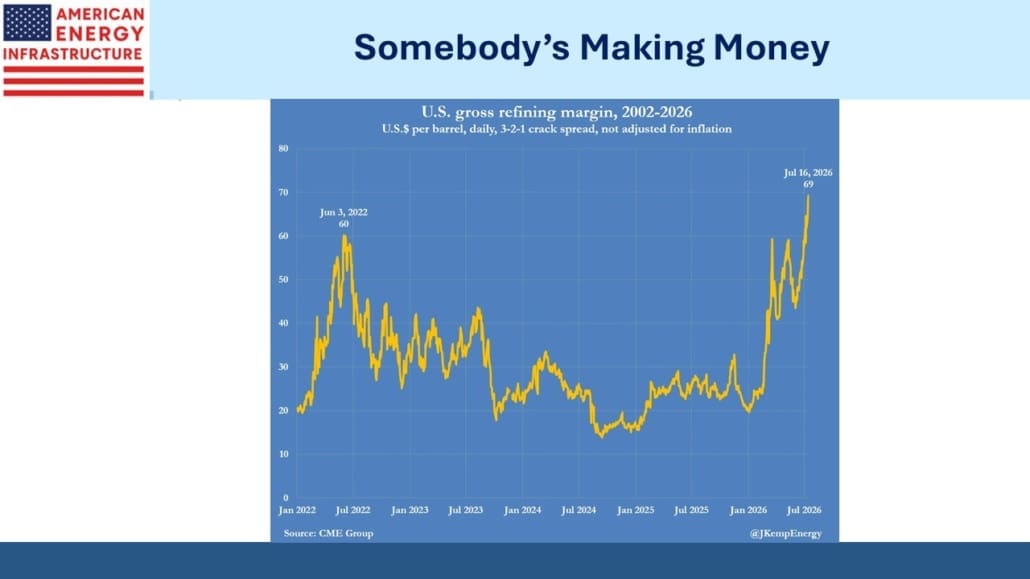
The risk of supply disruption is rippling across the entire energy sector. Refining margins are the highest in five years. Almost a tenth of global refining capacity is offline, caused by Ukraine’s success in destroying Russian energy infrastructure and the continued closure of the Persian Gulf.
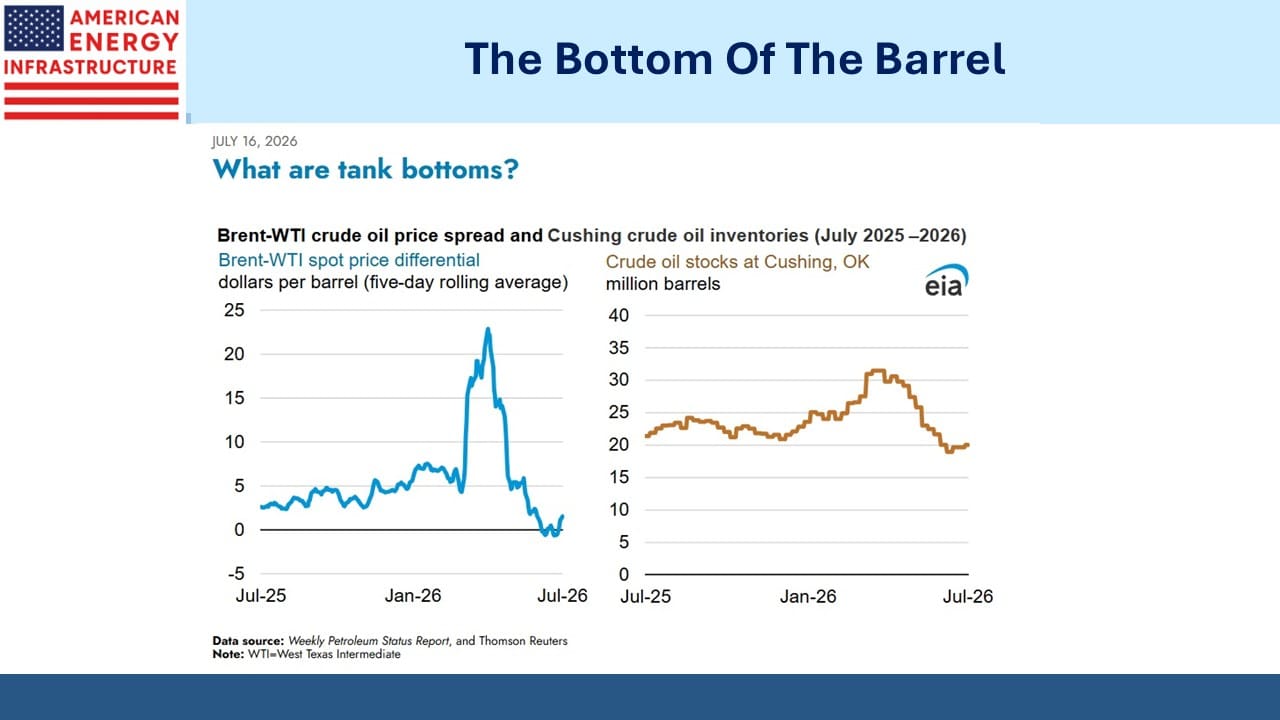
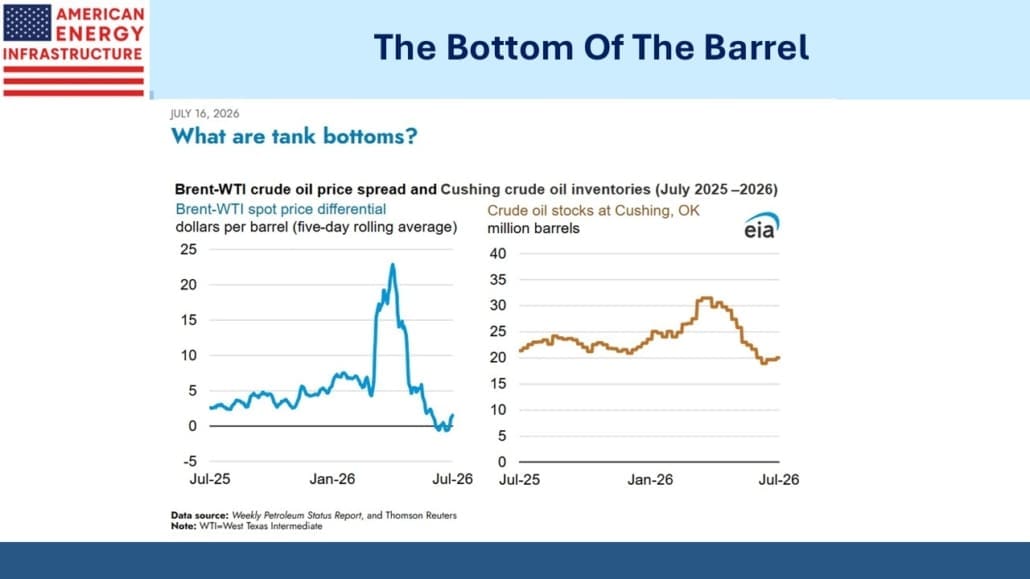
US crude inventories continue to fall. The spread between the Brent and US WTI benchmarks is historically narrow, indicating increased US demand to replenish supplies.
Russia’s 2022 invasion of Ukraine and the religious fervor of Iran’s military dictatorship have both shown the value of energy security, something the US possesses and is well positioned to offer to our friends and allies. US energy assets remain cheap.
—
Originally Posted July 19, 2026 – Building Away From Iran
Please go to following link for important legal disclosures: https://sl-advisors.com/legal-disclosure
SL Advisors is invested in all the components of the American Energy Independence Index via the ETF that seeks to track its performance.
Information posted on IBKR Campus that is provided by third-parties does NOT constitute a recommendation that you should contract for the services of that third party. Third-party participants who contribute to IBKR Campus are independent of Interactive Brokers and Interactive Brokers does not make any representations or warranties concerning the services offered, their past or future performance, or the accuracy of the information provided by the third party. Past performance is no guarantee of future results.
This material is from SL Advisors and is being posted with its permission. The views expressed in this material are solely those of the author and/or SL Advisors and Interactive Brokers is not endorsing or recommending any investment or trading discussed in the material. This material is not and should not be construed as an offer to buy or sell any security. It should not be construed as research or investment advice or a recommendation to buy, sell or hold any security or commodity. This material does not and is not intended to take into account the particular financial conditions, investment objectives or requirements of individual customers. Before acting on this material, you should consider whether it is suitable for your particular circumstances and, as necessary, seek professional advice.
Futures are not suitable for all investors. The amount you may lose may be greater than your initial investment. Before trading futures, please read the CFTC Risk Disclosure. A copy and additional information are available at ibkr.com.
Related Articles















Join The Conversation
For specific platform feedback and suggestions, please submit it directly to our team using these instructions.
If you have an account-specific question or concern, please reach out to Client Services.
We encourage you to look through our FAQs before posting. Your question may already be covered!