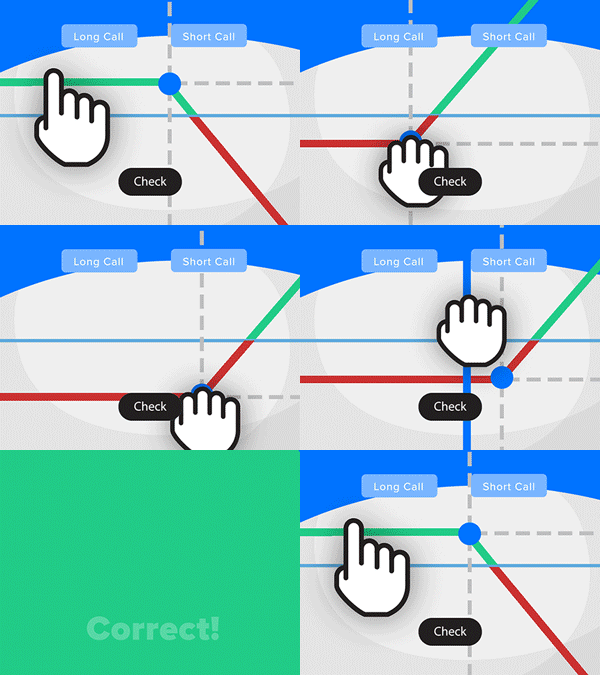
- Solve real problems with our hands-on interface
- Progress from basic puts and calls to advanced strategies
Interactive Options Course

Posted November 13, 2026 at 1:31 pm
Tech is getting slammed as Nvidia’s shakeup is intensifying in response to mounting evidence of the firm’s chips reaching the wrong hands in China. The entire semiconductor space is taking a beating on this Friday the 13th, with investors concerned that tighter regulations and heavier oversight may ding revenue and income prospects. The sustained outage of Microsoft’s marquee corporate cloud-based products, including outlook and teams, isn’t helping sentiment either. The morning’s equity losses are a reversal from gains prior to the opening bell that resulted from today’s lighter-than-expected PPI, but selling pressure began dominating shortly thereafter. The Nasdaq 100 is once again below its critical 200-day moving average, as it plunges 2% and leads the major indices lower, with the S&P 500, Russell 2000 and Dow Jones Industrial sinking less than 1%. Indeed, 7 of the 11 principal sectors are appreciating this session, as the cyclical trade is supported by lighter Fed hike expectations driven by that cooler-than-projected wholesale inflation report. The yield curve is descending in bull steepening motion led by the monetary policy sensitive short end, but the decline is modest and the greenback is strengthening, as the 6.5% annualized number still printed a 47-month high, propelled by heavier food and energy costs. The retreat in animal spirits has commodities and cryptocurrencies depreciating across the board, while traders clamor for downside hedges, as premiums on volatility protection instruments rise amidst a VIX that almost reached 21.
Annualized wholesale inflation hit its fastest level since November 2022 last month, as heavy fuel charges continued to drive costs higher across supply chains. The October Producer Price Index (PPI) climbed 0.3% month over month (m/m) and 6.5% year over year (y/y). Economists anticipated 0.4% and 6.6% prints following September’s 1.4% and 6.3% results. Transportation/warehousing services and food drove the pressure in the short-term, with those segments becoming 2% and 1.3% more expensive m/m. Core goods and other services also contributed to the lofty headline result, rising 0.5%, and 0.2%, with the former posting its quickest acceleration since May, indicating that the impact of pricier gasoline is spreading more materially to physical products ex food and energy. On a positive note, energy and trade dampened the headline’s climb. They posted 0.1% and 0.2% m/m declines.

Nvidia’s earnings report this Tuesday will be key in determining how the company’s prospects might be hurt by the abrupt leadership change. If clues point to order books being materially bolstered by illegal sales to Chinese entities, then the ongoing buoyancy of the AI space will be subjected to greater scrutiny. But a heavy amount of pessimism has already been priced in, and alternative firms in the arena are executing quite well, so the Nvidia crisis alone won’t be enough to derail the AI buildout. Still, Nvidia’s capacity to provide vendor financing tactics could be weakened severely, and subsequently, the credit dynamics of the industry could deteriorate considering that the firm was instrumental in serving as a global banker of GPUs and it maintained relatively loose lending criteria that propelled the sector’s growth. Will someone other than Jensen be willing to capitalize customers at significant scale?
Employment growth was somewhat unremarkable with the euro area reporting no quarter over quarter (q/q) change and a 0.4% y/y climb. In the preceding period, payrolls grew by a stronger 0.1% q/q and 0.5% y/y.
The region’s trade deficit in September deepened from August’s 7.8 billion euros shortfall to 8.7 billion euros, or roughly $9.6 billion, in the final month of the quarter. Higher energy stickers resulted in the value of fuel imports climbing 9.2%, which contributed to imports growing 2.3%, while exports climbed only 2%.
Importers in South Korea saw prices of foreign products fall 1.8% m/m in October with a strong won and crude oil price decline responsible to for the drop. Exports were able to boost prices by 0.7%, a reversal from September’s 0.5% slip.
New to Interactive Brokers?
Open AccountInformation posted on IBKR Campus that is provided by third-parties does NOT constitute a recommendation that you should contract for the services of that third party. Third-party participants who contribute to IBKR Campus are independent of Interactive Brokers and Interactive Brokers does not make any representations or warranties concerning the services offered, their past or future performance, or the accuracy of the information provided by the third party. Past performance is no guarantee of future results.
This material is from IBKR Macroeconomics, an affiliate of Interactive Brokers LLC, and is being posted with its permission. The views expressed in this material are solely those of the author and/or IBKR Macroeconomics and Interactive Brokers is not endorsing or recommending any investment or trading discussed in the material. This material is not and should not be construed as an offer to buy or sell any security. It should not be construed as research or investment advice or a recommendation to buy, sell or hold any security or commodity. This material does not and is not intended to take into account the particular financial conditions, investment objectives or requirements of individual customers. Before acting on this material, you should consider whether it is suitable for your particular circumstances and, as necessary, seek professional advice.
Futures, event contracts, and forecast contracts are not suitable for all investors. Before trading these products, please read the CFTC Risk Disclosure. For a copy, visit our Warnings and Disclosures Page.
Trading in digital assets, including cryptocurrencies, is especially risky and is only for individuals with a high risk tolerance and the financial ability to sustain losses. Eligibility to trade in digital asset products may vary based on jurisdiction.
There is a substantial risk of loss in foreign exchange trading. The settlement date of foreign exchange trades can vary due to time zone differences and bank holidays. When trading across foreign exchange markets, this may necessitate borrowing funds to settle foreign exchange trades. The interest rate on borrowed funds must be considered when computing the cost of trades across multiple markets.
Spot currencies are not available at IBKR Singapore.
Related Articles












Join The Conversation
For specific platform feedback and suggestions, please submit it directly to our team using these instructions.
If you have an account-specific question or concern, please reach out to Client Services.
We encourage you to look through our FAQs before posting. Your question may already be covered!