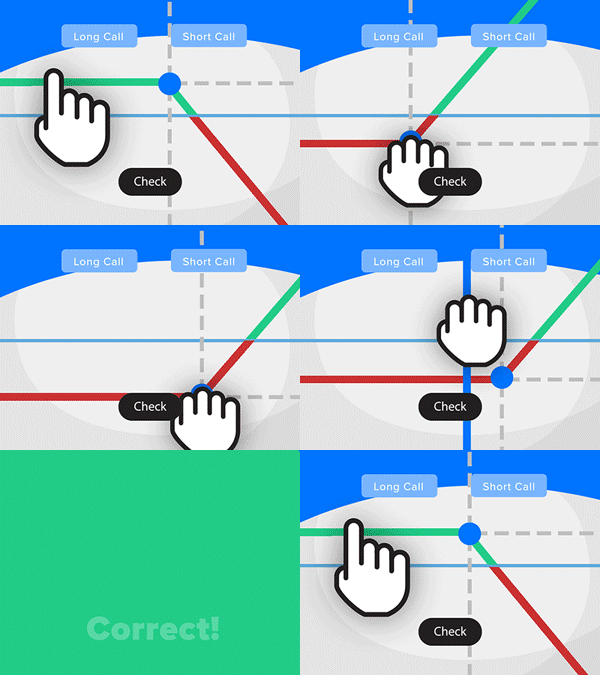
- Solve real problems with our hands-on interface
- Progress from basic puts and calls to advanced strategies
Interactive Options Course

Posted October 12, 2026 at 9:33 am
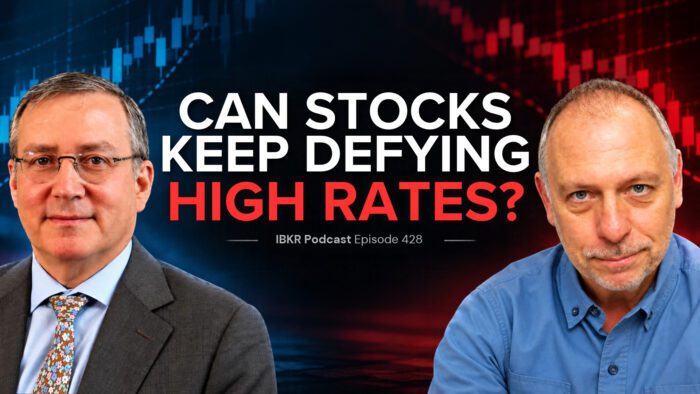
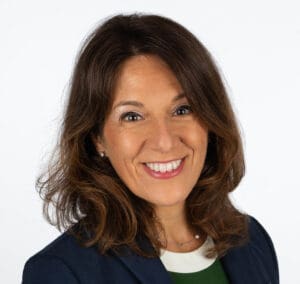
What does it really take to build a lasting career on Wall Street? Cboe’s Stacey Gilbert joins Interactive Brokers’ Judith Casasampere to reflect on nearly three decades in the derivatives industry and to share lessons on risk-taking, failure, mentorship, confidence, and finding opportunities to grow.
The following is a summary of a live audio recording and may contain errors in spelling or grammar. Although IBKR has edited for clarity no material changes have been made.
Good morning. This is Judith Casasampere from Interactive Brokers, and we are here today to present Stacy Gilbert. She’s the Senior Director of the Options Institute for the Cboe Global Markets. How are you, Stacy?
I’m doing great, Judith. How are you today?
Fine. Ready to start this podcast because what happens when a young woman with no clear roadmap enters into one of Wall Street’s most competitive and male-dominated fields? Nearly three decades later, she’s here. She has traded through market booms and crisis, trained future traders, led the derivatives strategies teams, and then become one of the industry’s leading educators. In this conversation, we want to have Stacy explain us how the real story of building a career in the derivatives market is, and how the obstacles, the breakthroughs, and obviously the mentorships and the moment of doubt that led her here today.
Fantastic. I can’t believe three decades. Can we really say that out loud? I feel like that’s just not fair to say here. All right, let’s go back. I’ve only been in the industry for three years, right? That’s what I look like, right?
No, then the podcast will take only one minute. So no, we wanna take advantage of you here.
Fantastic. No, it’s a great question. I mean, when I think about how I got into this industry, I like to say it was by accident. I actually went to college to become a doctor, and just, you know, life happens, things happen, opinions change, focus changes, and by my senior year, I had no idea what I wanted to do. I’d studied math and minored in economics and actually really loved drama. And I remember telling my dad, I really want to focus on drama. And he’s like: Why don’t we think about a double major here of, like, math and drama? This way, you have a plan, right? You have a backup. You have multiple paths. It’s so funny. I think about it now as almost thinking of hedging what my future career could be. I interviewed everywhere in college, and ironically enough, I thought I was gonna go one path, and it was trading firms that kept calling me back for second- and third-round interviews. I had no idea what trading was.
I had no idea why they were calling me back. It was one of those situations where I thought, okay, what do I know about the world? Very little. What do these firms know about their industries? A lot. Okay, so let me just try this out. And it turns out it was the math, and I was a college athlete, so it was the math and the competitiveness that got me into this industry.
And I look back at it now, and it’s funny. We’ll eventually get to what are some suggestions you would give anyone who’s thinking about this industry or anybody who’s in college right now about to embark on their career, and my suggestion is always know what you know and know that you don’t know much, and just interview around because those industries know the type of personality, the type of skill set that is likely to be successful.
Here we are, as Judith, you pointed out, three decades later, and I’m still here in this industry that I had no idea what it was my senior year in college.
That’s so cool. But then you started at the AMEX floor, so during the dot-com era, and how was it like for being a woman, being on the trading floor? What can you share with us? What can prove that your colleagues—you don’t even have to prove? I mean, what was your experience?
I mean, it was an amazing experience, right? And I look back on it probably more fondly than I felt at the time just because you’re in the thick of it at that moment. You have no idea really what’s going on. You have no comparison. Now, as I look back, I realize how special that time really was. The female versus male dynamic, actually, I would say by that time in the industry, it was actually to my advantage to be a female. When I stood in a crowd, I was usually the only female in the crowd. What’s my advantage in that situation? Well, if everybody’s yelling the same thing, buy ’em at the same time, my voice sounds different.
Most brokers would recognize my voice, so you couldn’t say you didn’t hear me because I had just a different sort of tone to my voice, so you did hear me. I also probably had the advantage at that time that there were a number of men who had been in the industry for years, who at that point had daughters that they were looking out for. At some point, they wanted to make sure that somebody was going to, you know, be a mentor, be a sponsor to their daughter, and I got the benefit of them sort of seeing me maybe 10 years ahead of what their daughter was at that point to be their mentor, their sponsor. So for me, it was a great experience. I did not have a tremendous amount of, “You’re a woman, you can’t be a part of this.” That’s not to say that there weren’t places where, you know, only men were invited or I wasn’t invited. It was okay. I look back on it and, you know, again, think about the things that got me into this industry. I like math and I like to compete. Throw me in a crowd. It’s math, it’s competition, I’m ready to go.
That’s so cool. And it’s true because at the end of the day, it’s only you that you feel an inferiority in the sense that if you really think that, “Oh, I am alone here, I’m the only female,” no. I mean, people are there to work, and as long as you prove that you are valid, you are focused, I would think that anybody will respect you, and that’s how it should go, and that’s how fair play is.
Exactly. And I will say that the beautiful part about where I started, I initially started at Susquehanna International Group, and the wonderful thing about starting with a firm that had such a great reputation for trading options was that I had a firm behind me that all they wanted me to do was be successful. And if I was successful, that’s all they cared about. There’s no politics, there’s no, “I had to play this game or that game.” If I was a good trader and I was able to be successful as a trader, that’s all that mattered. And everybody in the crowd knew that as well, that basically I had a firm behind me that was supporting me completely.
So from that perspective, again, I would say, was it different or difficult or kind of odd to be in a room where I’m the only female and there may be 15 other men surrounding me in a crowd? Sure. Did I care? No. It was okay. I was there to win. I was there to play a game and try to be as successful at the game as I could possibly be, and I had the firm behind me that said, “We think you can do this. Go out there and go do it.”
So from that, I actually loved being a female ’cause it actually gave me—like I said, I thought it was a bit of an advantage at that point, which, let’s be honest, if you wanna win, you take every fair advantage you can.
It’s true. That’s the name of the game. But then moving from your education into the derivatives trading strategies and all this, you shifted to a leadership job, a leadership role, and what was it that made you take the decision? What happened here?
Yeah. No, it’s so interesting. I didn’t know this about myself at the time, and as I look back throughout my career, I can recognize that there was a certain part of my personality that just always wanted a challenge. So I would say every three to five years, I was always looking for a challenge. I wasn’t somebody who could sit in a role and stay there for 20 years. That just wasn’t my personality. I wanted constantly, help me learn something new. Can I learn something new? Can I learn something new? And I think about it growing up—we moved around a lot as I was a kid, so I may have just been used to constant change, and that may have just been something that I always enjoyed.
So as new opportunities were presented, again, as I mentioned, being female in a very male-dominated role and having men who were at that point where they were looking to have somebody to sponsor, I was an easy person to sponsor, right? I was a hard worker. I was able to communicate well. I could actually show that I was mathematically sound enough that I could do whatever the mathematical requirements were for a job. So my name would come up a lot, and I just opted in every single time. It was just like, “Yeah, sure, I’ll do this. Sure, I’ll try this.” Not every one was great, right? Sometimes my skill set actually was not right for that role. But I learned that along the way. And it’s interesting, you mentioned 30 years, three decades in the industry.
The role that I’m in now in education, the beauty of this role is that over 30 years, I learned what I loved most, right? By doing all of these different roles, by having all of these different opportunities. So again, if I think about the female aspect of this industry, when you’re being asked to try something, again, nobody wants to see you fail. If you’re given the opportunity, try it, right? And I always say this to anyone who starts a new job. The first six months of any new job, you feel like you made the biggest mistake of your life. You’re like, “I am just not qualified for this. I am…” And again, I think it’s really specific for women. We just have this almost imposter syndrome most of the time. Like, what am I doing here? Why did I take this role? And somewhere around that six-month mark, boom, magic. You’re like, “I got this. No, this is good.”
But still, I mean, we’ve talked about confidence. That’s actually one thing that you do need, you know, to be able to get through education, obviously, that you said on your background. But then what are the things that you are most proud of? Obviously taking opportunities, taking challenges, moving forward. But if you just say, okay, there is one thing to encourage people to just say, “Okay, you need to do this. You definitely need to do this,” what would you say? Obviously take opportunities, but what else?
Yeah. Be okay to fail, right? And it’s really hard in this industry because your thought is, I’ve got… You know, especially some of the students that we see now coming out of some of these top-tier schools who have done nothing but be successful in their life. It is amazing how much you can learn from failure, right? It is amazing how much you can think about a situation and you’re just—it’s not like, “Oh, I was terrible at what I did.” It was, “Okay, what were the skills that make this successful? What are the areas that I need to think about to actually be more successful in a different opportunity?”
So I think it’s okay, even if—and again, I’ll use some sort of stats that are very specific to women. In general, if we’re looking at a job description, we as women, there have been studies that have shown this, we think we need to basically check the box on almost all of them, right? We’re less likely to take a risk of something that we don’t think we are 100% qualified for.
And again, it just comes back to this thought that I would just, again, take risks. Take risks and ask questions, right? Show interest. It’s okay to say, like, “I’m sorry, I’m confused by what you just said.” Right? If somebody says, “Okay, you’re an idiot,” well, whatever. You’re not gonna win everybody over. Okay? So note to self, I’ve learned that that’s not the right person to ask that question to. Let’s move to somebody else.
And it’s about curiosity at the same time, right? And it’s also a learning process. But then let me move this learning process to what is sponsorship and mentorship. What do you think about that? And how would you define both?
What do you think is most useful, especially for women?
Yeah, no, absolutely. So both. Both are incredibly important, and I’ve been both. And what I think is actually really important as a woman in this industry for 30 years is I actually have been a sponsor and a mentor to men as well, right? It doesn’t have to just be women sponsoring women, women mentoring women, because some of my greater sponsors or mentors have been men, right?
And it’s okay to just recognize, hey, listen, I see the world, or I think about it this way. How do you think about the world? Here’s my experience. I’ll use kind of an example. It’s my favorite example of, like, I fly into a foreign country. I am less likely to just jump in, we’ll say, you know, just a black car of some sort to take me to the hotel. More likely to have something that I know is a taxi, it’s registered, I know everything about it. Whereas my male counterparts may be very different. Like, “Oh, I’m just gonna walk there.” And I’m like: Well, how are you gonna just walk through the city that we don’t know yet? These are parts that we don’t know.
And it’s just this understanding of how we think about risk, and we just present to this problem differently. So in terms of mentorship and sponsorship, I think it’s just really helpful to look for an individual that has a different background. It doesn’t have to be male versus female, just a different background. I’ve worked with people who’ve grown up in rural areas, grown up in inner cities. They’re just looking at the world differently. It doesn’t matter, male or female. So I think mentorship and sponsorship is just find somebody, if you’re in early career, find somebody that you can learn from, and find somebody that can kind of put you on a path that you think you wanna go. And then as you get further into your career, look for somebody that can help you learn as well, as a mentor, as a sponsor, that can bring a different perspective to something. Because let’s be honest, we’re always trying to learn and think differently, and the only way to do that is to have somebody who presents information differently to us.
And that actually leads me to your role now as a global educator and as a senior director on all these institutes, right? So you probably have to design a lot of programs for people to learn, to be able to continue their career paths, for people to actually get the curiosity to keep on learning, right? How do you focus that?
So it’s what I think is the best way to learn, and again, I think it doesn’t matter who you’re teaching. The best way to learn is you have to have some humor involved. You have to have it be entertaining, right? You have to make sure, as I always say, with any class that I am teaching with any of my colleagues with the Options Institute, our goal is you walk away where you learned something that you wanna learn a little bit more about, and you had a good laugh, right? Because you’ll remember the class and you’ll come back again, and our goal is to continue to educate. Well, you can’t educate if you’re womp, womp, womp, womp, womp. Like, nobody’s coming back for that. So when I think about how to develop these classes, a lot of it is how can I connect with somebody in a way that is personal or engaging or funny or just, you know, pop culture related where everybody can be like, “Oh, okay. It’s kind of dorky, but that was kind of funny,” right?
You just walk away where you’re like, “All right, you know, I didn’t mind that so much.” So I think that’s really important. When I did education that was more specific for trading or when I’ve worked with individuals that it’s focusing on trading, there are some unique differences between, I’ll say, the way—and I’m generalizing here—but the questions that I would get from females versus the questions I would get from males.
Throughout my 30 years, it was very rare for me to meet a woman who suffered from overconfidence, right? That decision bias of overconfidence, it just wasn’t nearly as prevalent in most of the women that I’d met through my career. I saw it more in some of the males that I taught, males that I worked with, or males that I worked for. That was a more obvious trait. And again, it’s just sort of a difference there of how to think about a problem. So when I would think about teaching, there were just sort of different ways to think about what are some of the ways that I think this individual may be looking at this problem versus how this individual may be looking at this problem.
So again, there was no, like, it wasn’t like all women suffer from this and all men suffer from this. It’s just in general, these were some of the traits I’m like, okay, here I need to be a little bit more aware of overconfidence seems to be more present. Over here, overconfidence isn’t as present, so let’s just think about the way we’re gonna present this information and how we’re gonna interact.
And it’s important because, I mean, to put things in perspective, you’re talking about futures, options, derivatives, and it’s not really a funny matter. I mean, it’s a really interesting matter. I actually was also—my first touch into finance was being in a scholarship from the Spanish Derivative Exchange. So I, for myself, yeah, I also started with derivatives, futures and options. So I love that you are representing the Cboe. But the thing is, tell us something funny, some memories that you would like to share with our crowd from either the teaching or from the experience on the trading floor about our financial topics.
Oh, yeah. No, so I often get asked, like, what was your worst trading day ever, right? That’s what everybody is always curious about. It was really early in my career. This was during the dot-com days. I could tell you the broker who came into the crowd. I could tell you exactly the trade that he did or that, you know, he was representing.
I could tell you exactly what my participation was in that. The next day, the stock basically was up 100%. I didn’t have the position on that was favorable to be up 100%. And I can remember this so clearly, everything about the situation of, oh my gosh, I’m gonna be fired. Oh my gosh, I’m not gonna have a job. Oh my gosh, I’m the worst decision maker ever. You know, like, all of these things go through your head of it’s over. It’s done. How could I do that? Why did I think this? Why did I think this? And I will say, the way that this sort of played out, the funny part was the owner of the company got a call.
They were like, “Hey, by the way, this stock’s up 100%, and Stacy is trading this stock.” And it was kind of like, “Who is Stacy?” Because I was so new. My name was known at that point. Who is Stacy trading this? But there was no, like, we have to pull her out of the crowd. She’s not capable of doing this. There was none of that. So that’s kind of the more serious side. It was like, no, she’s perfectly capable. But the funny part was like, who? And I never get past that, so it makes me laugh. There are stories that are not appropriate to tell, like just some of the camaraderie that you have in a crowd, some of the stories that come out, some of the relationships that you build.
There were some really good laughs that I would have in a crowd. Now, keep in mind, these are people you’re competing against, right? These are people that if somebody walks in, I used to say, somebody walks in, throws 100 one-dollar bills into the air, who’s getting the most of this? This is who I’m competing with as I’m standing in the crowd.
But you’re also just sharing stories. Like, I knew their lives. You’re invited to weddings. It’s just kind of a magical experience. Like I say, I didn’t recognize it at the time, but I look back and I’m like, it was really, really special.
It is nice. That’s really cool. And it’s part of the history, but it’s part of also how human people can work together, compete together, and actually at the same time be part of a family, because it’s like you guys—I mean, I see it as a family, really.
Yeah, it was great. I still see those people occasionally. I’ll come across them on LinkedIn. We’re like, “Oh my gosh, it’s been 25 years. How are you?” They’re like, “I’m married. My kids are at school. This is…” I’m like, “What?” Where does time go sometimes?
And my final question, what would you say to your 22-year-old self when you started in the career? What are the key things that you would tell her? “Please don’t do this.”
Yes. I would say just take a breath. It’s okay. And again, 22, you’re doubting yourself. And even if a person, you know, who had 30 years’ experience at the time came to the 22-year-old version of me and said, “Hey, don’t doubt yourself,” I’m still gonna doubt myself. I know that. I will say the best piece of career advice I ever got, I was 25 at the time. So this is one that I try to say, you know, like, pay it forward. I loved this piece of advice. It helped me throughout my career. There were people, you know, sometimes you work with people that you just don’t click, right?
There’s just a personality or there’s just something that you’re like, “Oh my gosh.” This person once said to me that I’m viewing the world incorrectly. Said, “You’re looking at this person and you’re finding all the things that don’t work. You’re not looking at this person and finding all of the things that you can learn.” Said, “Figure out what they can teach you,” and then suddenly, like, this anger and this frustration and everything about this person goes away. And I remember sort of reshaping the way that I would think about this person. So I would ask this person questions that I knew I didn’t know answers to. They were just much more sophisticated than I was in terms of, like, culture. So I would ask, like, “Okay, when you’re at a table and there are, like, six spoons, like, which one am I supposed to grab here?” It’s just stuff that I didn’t know. But when I started presenting and asking questions in that way, the relationship changed dramatically, where we worked together very, very well from that point on.
And it was amazing ’cause I kept looking at all of the things that I didn’t like instead of reframing it of what are the things that I can learn. And the minute I’m in a situation now, I always try to think about how can I reframe this where I don’t get angry and frustrated and just be like, “Ah!” Blow up. How can we reframe this and how can we learn from this? Because again, life is just every lesson that we have the opportunity to learn from, we get to grow from. And that’s just the wonderful experience of being in this industry. Every day is different. Every day you get to learn something. Some days are good, some days aren’t so good. But at the end of the day, don’t be afraid to learn and recognize that every day, no matter how far you are into your career, is a learning experience.
That’s so true. That’s so true, and I do love and treasure this. This is good advice.
Thank you. I’ll try to tell my children. They won’t listen, but maybe when they’re 30 years into their career they’ll be like, “Oh, I guess mom wasn’t totally wrong.”
I’m so thankful, and we are all so thankful for you sharing your story, your insight with us. And thank you as well to the listeners that are going to be listening to it and tuning into it. They are going to keep on growing their own experiences, own confidence, and exploring the markets.
Thank you so much, Judith. Thank you for inviting me here. This was wonderful.
Thank you.
Thanks.
Options involve risk and are not suitable for all investors. Prior to buying or selling an option, a person must receive a copy of Characteristics and Risks of Standardized Options. Copies are available from your broker, or at www.theocc.com. The information in this program is provided solely for general education and information purposes. No statement within the program should be construed as a recommendation to buy or sell a security or to provide investment advice. The opinions expressed in this program are solely the opinions of the participants, and do not necessarily reflect the opinions of Cboe or any of its subsidiaries or affiliates. You agree that under no circumstances will Cboe or its affiliates, or their respective directors, officers, trading permit holders, employees, and agents, be liable for any loss or damage caused by your reliance on information obtained from the program.
Copyright © 2023 Chicago Board Options Exchange, Incorporated. All rights reserved.
The analysis in this material is provided for information only and is not and should not be construed as an offer to sell or the solicitation of an offer to buy any security. To the extent that this material discusses general market activity, industry or sector trends or other broad-based economic or political conditions, it should not be construed as research or investment advice. To the extent that it includes references to specific securities, commodities, currencies, or other instruments, those references do not constitute a recommendation by IBKR to buy, sell or hold such investments. This material does not and is not intended to take into account the particular financial conditions, investment objectives or requirements of individual customers. Before acting on this material, you should consider whether it is suitable for your particular circumstances and, as necessary, seek professional advice.
The views and opinions expressed herein are those of the author and do not necessarily reflect the views of Interactive Brokers, its affiliates, or its employees.
Options involve risk and are not suitable for all investors. For information on the uses and risks of options, you can obtain a copy of the Options Clearing Corporation risk disclosure document titled Characteristics and Risks of Standardized Options by going to the following link ibkr.com/occ. Multiple leg strategies, including spreads, will incur multiple transaction costs.
Futures are not suitable for all investors. The amount you may lose may be greater than your initial investment. Before trading futures, please read the CFTC Risk Disclosure. A copy and additional information are available at ibkr.com.







Join The Conversation
For specific platform feedback and suggestions, please submit it directly to our team using these instructions.
If you have an account-specific question or concern, please reach out to Client Services.
We encourage you to look through our FAQs before posting. Your question may already be covered!