
- Solve real problems with our hands-on interface
- Progress from basic puts and calls to advanced strategies
Interactive Options Course

Posted January 3, 2024 at 10:47 am
Seasonality is a fascinating phenomenon in the world of stock trading. It refers to the predictable patterns and trends that occur in the financial markets at specific times during the year. In this comprehensive blog, we’ll explore the core concepts and practical aspects of seasonality trading.
In this blog, we will cut through the complexities of predictable market patterns and arm you with actionable strategies for navigating the financial landscape. If you’ve ever pondered the cyclical nature of stock prices and the strategic advantages they offer, you’re in the right place. In this blog, we’ll demystify seasonality, highlighting its crucial role in stock trading and providing you with insights and practical strategies to make informed decisions throughout the year.
Seasonality in time series, stock seasonality, and seasonal trading aren’t just industry jargon; they’re trading tools used to gain an edge in the dynamic world of finance. We’ll break down seasonality from understanding recurring patterns in data to applying powerful trading strategies. Whether you’re a seasoned investor or just starting out, our goal is to equip you with the knowledge and tools to leverage seasonal opportunities and make well-informed decisions.
From calendar-based strategies to holiday-driven strategies, we’ll explore real-life examples illustrating the impact of seasonality on stock markets. You’ll grasp the importance of seasonality in trading, master risk management through diversified portfolios, and understand how market sentiment shapes strategic trading decisions.
As we guide you through implementing seasonality trading strategies in Python, expect practical insights into backtesting with the help of which, you can optimise your approach. Join us on this direct journey, and unlock the power of seasonality trading for a more informed and strategic approach to investing.
Some of the concepts covered in this blog are taken from this Quantra course on Event driven trading strategies. If you’d like to understand the course’s structure and the topics it covers, you can take advantage of the course’s Preview feature for free.
Let us learn more about seasonality trading and its strategy with this blog that covers:
Seasonality refers to the recurring and predictable patterns or fluctuations in data or events that tend to repeat at specific times within a given period, typically on a yearly, quarterly, monthly, or weekly basis.
In financial markets, seasonality can manifest as periodic price movements or trading trends that coincide with certain times of the year, such as holidays, seasons, or fiscal quarters. Understanding seasonality is crucial for making informed decisions in the trading domain.
To summarise, seasonality trading is a method that combines historical data analysis with well-defined trading rules. This approach has gained popularity as it allows traders and investors to potentially exploit recurring opportunities and make informed decisions.
Example – Santa Claus Rally:
One well-known example of seasonality trading is the “Santa Claus Rally.” This refers to the historical tendency for stock markets to experience a positive upswing during the last five trading days of December and the first two trading days of January. This period encompasses the Christmas and New Year holidays.
The Santa Claus Rally is based on the idea that, during the holiday season, investors often display a more optimistic and festive sentiment. They might be influenced by year-end bonuses, tax considerations, and the general goodwill associated with the holidays. As a result, stock prices tend to rise during this time.
Traders and investors have, over the years, noticed this seasonality pattern and sometimes adjust their trading strategies to take advantage of it. They may choose to enter or hold positions during this period, anticipating the potential for price increases.
Seasonality trading can be a powerful tool, especially for those new to the world of financial markets.
Here’s why it matters:
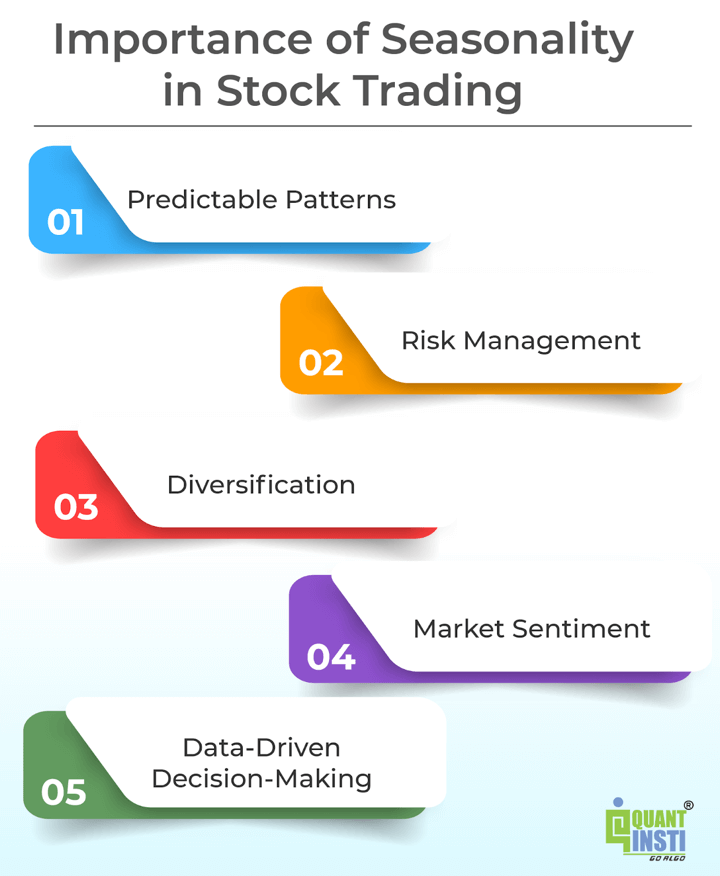
While seasonality can be a valuable asset for traders, it should always be used in conjunction with other forms of analysis. Market conditions change, and past performance is not a guarantee of future results. Incorporating seasonality into your trading approach can enhance your understanding of the market and contribute to better-informed investment decisions.
Seasonality trading strategies are based on identifying and leveraging recurring patterns in asset prices or market behaviours during specific times of the year.
Here’s a list of some common seasonality trading strategies:
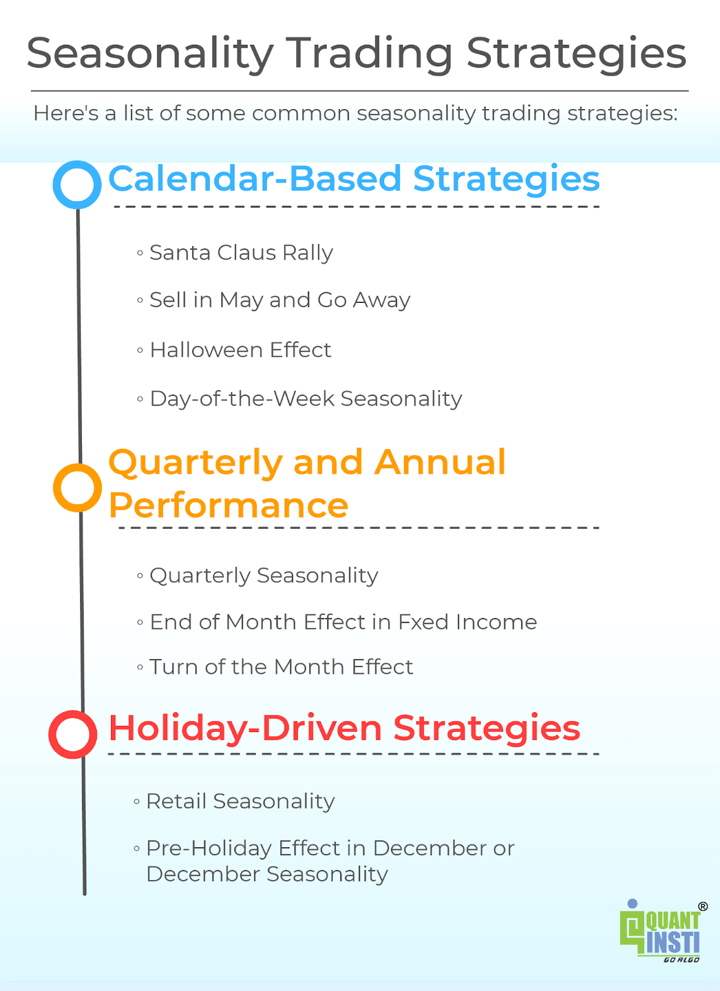
Traders buying stocks on Mondays and selling on Fridays, known as the Monday and Friday Effects are based on historical patterns. Reasons include reacting to weekend news on Mondays, a perceived positive bias, and selling on Fridays to manage weekend risk.
Stay tuned for the next installment to learn about a seasonality trading strategy in Python.
Originally posted on QuantInsti blog.
Information posted on IBKR Campus that is provided by third-parties does NOT constitute a recommendation that you should contract for the services of that third party. Third-party participants who contribute to IBKR Campus are independent of Interactive Brokers and Interactive Brokers does not make any representations or warranties concerning the services offered, their past or future performance, or the accuracy of the information provided by the third party. Past performance is no guarantee of future results.
This material is from QuantInsti and is being posted with its permission. The views expressed in this material are solely those of the author and/or QuantInsti and Interactive Brokers is not endorsing or recommending any investment or trading discussed in the material. This material is not and should not be construed as an offer to buy or sell any security. It should not be construed as research or investment advice or a recommendation to buy, sell or hold any security or commodity. This material does not and is not intended to take into account the particular financial conditions, investment objectives or requirements of individual customers. Before acting on this material, you should consider whether it is suitable for your particular circumstances and, as necessary, seek professional advice.
Futures are not suitable for all investors. The amount you may lose may be greater than your initial investment. Before trading futures, please read the CFTC Risk Disclosure. A copy and additional information are available at ibkr.com.











Join The Conversation
For specific platform feedback and suggestions, please submit it directly to our team using these instructions.
If you have an account-specific question or concern, please reach out to Client Services.
We encourage you to look through our FAQs before posting. Your question may already be covered!