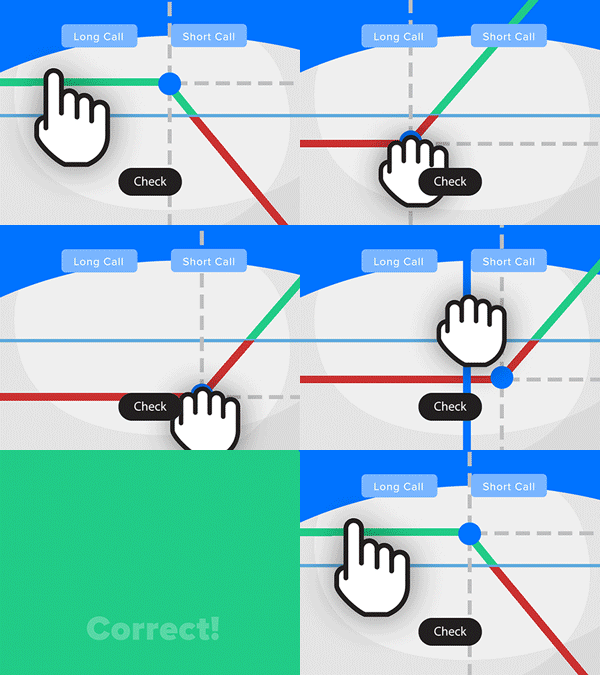
- Solve real problems with our hands-on interface
- Progress from basic puts and calls to advanced strategies
Interactive Options Course

Posted October 23, 2026 at 11:30 am

The article “Leverage Factor-Based Investing Enhance Returns Using Historical Financial Ratios” was originally published on PyQuant News.
In today’s evolving investment landscape, factor-based investing is a favored strategy for both asset managers and individual investors. A core element of this approach is the use of historical financial ratios, which provide insights into the strengths and weaknesses of different securities. This guide explores how to understand and apply these ratios for effective portfolio diversification.
Factor-based investing is popular for its ability to enhance returns and manage risk. Unlike conventional methods focusing on individual stock performance, this strategy targets factors driving returns historically. Common factors include value, size, momentum, quality, and volatility. Each factor represents a market anomaly, providing a structured framework for portfolio diversification.
Financial ratios, derived from a company’s financial statements, offer a snapshot of a company’s financial health. These ratios are classified into liquidity, profitability, leverage, and efficiency metrics. In factor-based investing, they help pinpoint companies with desirable traits. For instance, a low price-to-earnings (P/E) ratio may signal a value investing opportunity, while a low debt-to-equity ratio might indicate a strong balance sheet.
To effectively leverage historical financial ratios, investors need access to accurate and comprehensive financial data. Here’s how to manage this data:
Start by gathering historical financial data from reliable sources like Bloomberg, Reuters, or Yahoo Finance. Ensure this data is accurate, complete, and consistent over time.
Store the collected data in a manner that allows for easy access and analysis. Databases or data warehouses are ideal, with cloud-based data storage solutions offering scalability and accessibility.
Standardize financial ratios for effective comparison across different periods and companies. Adjust for factors such as currency fluctuations, accounting changes, and corporate actions like mergers and acquisitions.
Keep the dataset current by regularly updating it with new financial statements and correcting any discrepancies.
Once stored, historical financial ratios can be integrated into investment models. This involves several techniques:
Use financial ratios to screen for stocks with desirable factor traits. For example, search for companies with low P/E ratios to build a value-focused portfolio.
Backtesting involves applying an investment strategy to historical data to evaluate its effectiveness. By assessing past performance, investors can refine strategies before implementing them in live markets. For example, test a portfolio built on low P/E stocks against historical data to see if it consistently outperforms.
Financial ratios can also help assess and manage portfolio risk. Leverage ratios, for example, can identify companies with high debt that might pose risks in volatile markets.
Using historical financial ratios comes with several challenges:
Ensure data quality to avoid flawed analysis and poor investment decisions. Regular audits and checks can help maintain accuracy.
Financial ratios are influenced by market conditions. Consider how factors like interest rates, economic cycles, and regulations impact the relevance of certain ratios.
Managing large datasets requires robust technology. Invest in systems capable of efficient data storage, processing, and analysis.
For those eager to learn more about factor-based investing and financial ratios, these resources are invaluable:
Incorporating historical financial ratios into factor-based investment models is a powerful way to enhance returns and manage risk. By understanding data collection, storage, and analysis, investors can fully harness these metrics. As the investment landscape evolves, those who skillfully apply financial ratios will thrive in complex markets and achieve their financial goals.
Information posted on IBKR Campus that is provided by third-parties does NOT constitute a recommendation that you should contract for the services of that third party. Third-party participants who contribute to IBKR Campus are independent of Interactive Brokers and Interactive Brokers does not make any representations or warranties concerning the services offered, their past or future performance, or the accuracy of the information provided by the third party. Past performance is no guarantee of future results.
This material is from PyQuant News and is being posted with its permission. The views expressed in this material are solely those of the author and/or PyQuant News and Interactive Brokers is not endorsing or recommending any investment or trading discussed in the material. This material is not and should not be construed as an offer to buy or sell any security. It should not be construed as research or investment advice or a recommendation to buy, sell or hold any security or commodity. This material does not and is not intended to take into account the particular financial conditions, investment objectives or requirements of individual customers. Before acting on this material, you should consider whether it is suitable for your particular circumstances and, as necessary, seek professional advice.
Mutual Funds are investments that pool the funds of investors to purchase a range of securities to meet specified objectives, such as growth, income or both. Investors are reminded to consider the various objectives, fees, and other risks associated with investing in Mutual Funds. Please read the prospectus accordingly. This communication is not to be construed as a recommendation, solicitation or promotion of any specific fund, or family of funds. Interactive Brokers may receive compensation from fund companies in connection with purchases and holdings of mutual fund shares. Such compensation is paid out of the funds' assets. However, IBKR does not solicit you to invest in specific funds and does not recommend specific funds or any other products to you. For additional information please visit https://www.interactivebrokers.com/en/index.php?f=1563&p=mf
Any discussion or mention of an ETF is not to be construed as recommendation, promotion or solicitation. All investors should review and consider associated investment risks, charges and expenses of the investment company or fund prior to investing. Before acting on this material, you should consider whether it is suitable for your particular circumstances and, as necessary, seek professional advice.









Join The Conversation
For specific platform feedback and suggestions, please submit it directly to our team using these instructions.
If you have an account-specific question or concern, please reach out to Client Services.
We encourage you to look through our FAQs before posting. Your question may already be covered!