
- Solve real problems with our hands-on interface
- Progress from basic puts and calls to advanced strategies
Interactive Options Course

Posted December 24, 2025 at 12:10 pm
The article “Does Regulation Actually Clean Up Bad Behavior?” was originally published on Alpha Architect blog.
Regulation is meant to clean up bad behavior. But what if it just pushes it around? This paper explores how FINRA’s efforts to discipline “bad brokers” often lead to regulatory leakage—problematic advisors leaving one firm only to resurface elsewhere. The results reveal that misconduct doesn’t always end when regulators act; instead, it migrates. The study sheds light on why enforcement alone may not be enough to protect investors.
Regulation triggers broker migration, not elimination
When FINRA sanctions firms with high misconduct rates, those firms often close or lose licenses but many advisors previously disciplined simply relocate to less regulated or more tolerant firms. Roughly 30% of sanctioned brokers remain active in the industry within two years.
Contagion effects follow the brokers
The authors find that these relocated brokers often bring their problematic behavior with them. The new firms that hire such individuals experience a 25% higher future misconduct rate than peers that don’t, suggesting that cultural or incentive structures travel with the offenders.
Regulatory “spillovers” distort competition
Firms that inherit migrating bad brokers temporarily gain market share, likely due to aggressive sales tactics or lax compliance. But the effect reverses as misconduct and client complaints accumulate, eroding reputation and profitability over time.
Better screening mitigates leakage
Firms with stronger compliance infrastructure and more selective hiring practices are significantly less likely to experience leakage. The research suggests that robust background checks and tighter licensing rules can sharply reduce the persistence of misconduct in the industry.
Strengthen internal screening and compliance
Hiring history matters. Firms should review not only individual disciplinary records but also prior firm-level cultures. Repeated patterns of migration from sanctioned firms can be a red flag.
Design compensation that discourages misconduct
Commission-heavy pay models correlate with higher migration of problematic brokers. Shifting toward client-aligned fee structures can lower both reputational and regulatory risk.
Understand cultural contagion
Misconduct isn’t just an individual problem—it spreads through culture. Firms that onboard advisors from high-risk environments should implement onboarding and supervision protocols to prevent transmission of bad norms.
Use regulatory data as an early warning system
FINRA’s BrokerCheck and enforcement disclosures contain predictive signals. Monitoring these datasets can help identify emerging patterns of “regulatory leakage” before they affect clients or the firm.
“Regulators work hard to protect investors, but bad actors don’t always disappear—they often just move. Research shows that when firms with compliance issues are sanctioned, some of their brokers resurface elsewhere and carry the same risky behaviors with them. The best defense is strong due diligence—choosing firms that vet their advisors carefully and enforce strict ethical standards.”
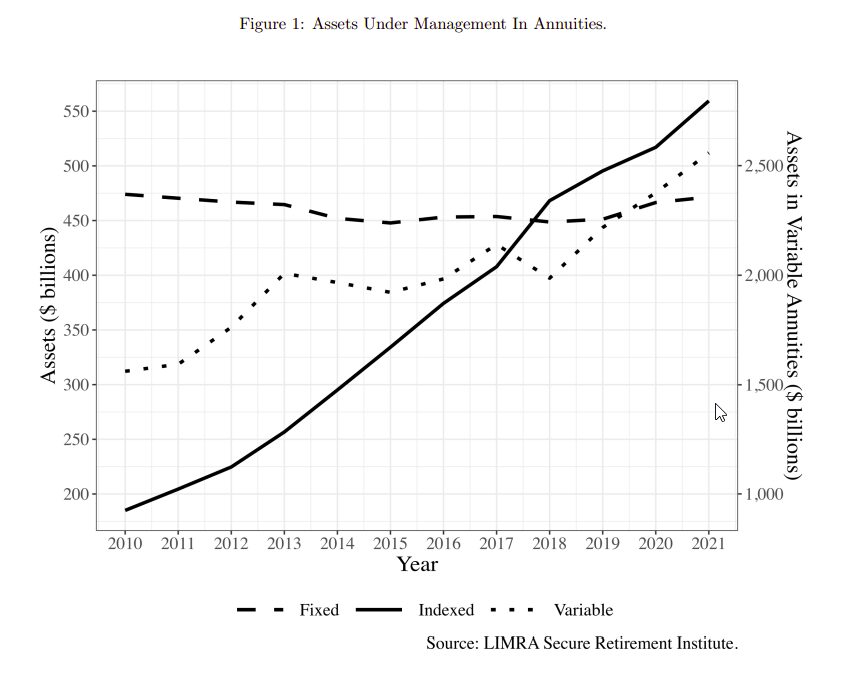
The results are hypothetical results and are NOT an indicator of future results and do NOT represent returns that any investor actually attained. Indexes are unmanaged and do not reflect management or trading fees, and one cannot invest directly in an index.
We create a single database containing four categories of financial advisors: (1) brokers regulated primarily by FINRA, (2) investment advisers regulated by the SEC, (3) investment advisers regulated primarily by state regulators, and (4) insurance producers. There is significant overlap across the categories; more than 40% of the advisors are registered with more than one regulator. We examine how this regulatory fragmentation intersects with regulatory discipline by studying two FINRA rules designed to nudge “bad” brokers out of FINRA’s regulatory regime. Although the rules caused thousands of high-risk brokers to exit the FINRA broker regime, 98% of those who exited are currently registered with state regulators as insurance producers.
The views and opinions expressed herein are those of the author and do not necessarily reflect the views of Alpha Architect, its affiliates or its employees. Our full disclosures are available here. Definitions of common statistics used in our analysis are available here (towards the bottom).
This site provides NO information on our value ETFs or our momentum ETFs. Please refer to this site.
Information posted on IBKR Campus that is provided by third-parties does NOT constitute a recommendation that you should contract for the services of that third party. Third-party participants who contribute to IBKR Campus are independent of Interactive Brokers and Interactive Brokers does not make any representations or warranties concerning the services offered, their past or future performance, or the accuracy of the information provided by the third party. Past performance is no guarantee of future results.
This material is from Alpha Architect and is being posted with its permission. The views expressed in this material are solely those of the author and/or Alpha Architect and Interactive Brokers is not endorsing or recommending any investment or trading discussed in the material. This material is not and should not be construed as an offer to buy or sell any security. It should not be construed as research or investment advice or a recommendation to buy, sell or hold any security or commodity. This material does not and is not intended to take into account the particular financial conditions, investment objectives or requirements of individual customers. Before acting on this material, you should consider whether it is suitable for your particular circumstances and, as necessary, seek professional advice.












Join The Conversation
For specific platform feedback and suggestions, please submit it directly to our team using these instructions.
If you have an account-specific question or concern, please reach out to Client Services.
We encourage you to look through our FAQs before posting. Your question may already be covered!