
- Solve real problems with our hands-on interface
- Progress from basic puts and calls to advanced strategies
Interactive Options Course

Posted March 25, 2026 at 1:45 pm
The article “AI Will Create Millions of Quants” was originally published on Robot Wealth blog.
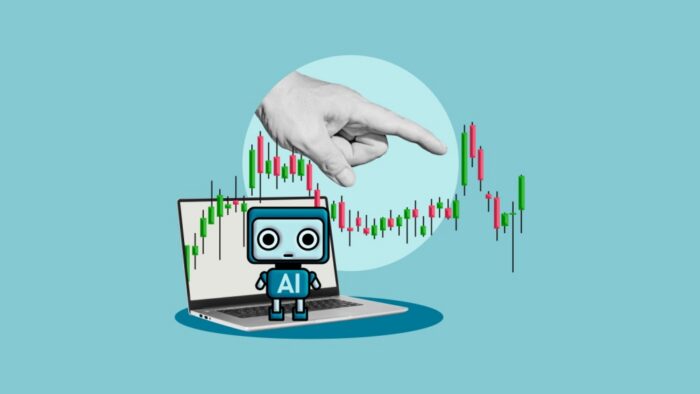
AI makes it easier than ever to build trading strategies.
Prompt a model, run a backtest, optimise some parameters, and suddenly you’ve got a beautiful equity curve staring back at you. It feels like progress. It feels like research.
I wrote recently about how AI coding assistants tend to prescribe “more of the disease, faster”, skipping the learning that makes trading research actually valuable. This article is the bigger picture version of that argument.
Because something interesting is happening. The barriers to building quantitative trading strategies are collapsing. And that sounds like it should be great news.
It isn’t.
AI makes strategy creation trivial.
Think about what you used to need to build and test a trading strategy: coding ability, data access, infrastructure, technical knowledge. Acquiring all of that took months or years.
Now you can prompt an LLM and have a coded, backtested strategy in minutes. That’s a real shift. I’m not dismissing it.
But lowering the cost of experimentation doesn’t just increase discoveries. It increases false discoveries.
This is the same thing that happened in academic research, factor investing, and machine learning competitions. Cheap experimentation leads to a flood of results that look significant but aren’t.
The difference is that now it’s happening to anyone with a laptop and a ChatGPT subscription.
The classic rite of passage of the aspiring quant/systematic trader is to fall into the Backtest Cycle of Doom:
It feels like you’re converging on something real.
But you’re not. You’re overfitting noise.
Each tweak is another implicit hypothesis test. Run enough of them and statistics guarantees you’ll find something that looks incredible. If you test 10,000 parameter combinations, some of them will show spectacular performance. Not because they work, but because there will always be something that fit the past somewhere in the noise.
AI accelerates every step of that loop. So instead of running 20 bad tests manually, you can run 20,000 with AI assistance.
And you’ll find something that looks fantastic.
Nice looking backtests are cheap now.
This is worth thinking about for a moment.
In the age of AI, a beautiful backtest proves almost nothing.
The probability that some parameter combination produces an amazing equity curve approaches certainty as the number of combinations you try increases.
This is just the multiple testing problem, and it’s been well understood in statistics for decades. If you run 1,000 tests at 5% significance, you’d expect about 50 false positives. AI just makes it trivially easy to run those 1,000 tests without even realising you’re doing it.
So the thing that used to be hard (producing a good-looking backtest) is now easy. Which means it’s no longer informative.
So what actually matters?
Before a backtest should even exist, there should be a question: why would the market pay me to do this trade?
The classic engineer’s mistake is to skip this question (I’m speaking from experience).
Engineers work on problems with well-understood physics, and we tend to assume that trading strategies belong in that category. We go straight to data, straight to code, straight to backtests.
Eventually, we realise that that’s backwards. We have to do the work to discover the underlying physics first.
Answering the question “why would the market pay me to do this trade” requires thinking about incentives, market structure, behavioural biases, institutional constraints. In other words, a theory of edge.
Good edges usually exist because of something structural:
Take momentum as an example. It shows up in backtests across practically every asset class. But if you discover momentum through data mining without understanding why it exists (career risk, slow capital reallocation, persistent underreaction), you’ll goal-seek a set of parameters that maximise momentum returns in a backtest.
At best, that’s wasted effort. Worst case, you’re destroying a perfectly good edge by overfitting to noise.
AI has no theory of edge.
LLMs know how strategy rules are described. They know what backtests look like. They know what indicators people use.
But they don’t know which ideas are rubbish. They don’t know which edges have real economic drivers behind them. They can’t distinguish a statistical mirage from a structural opportunity.
Why?
Because the internet is flooded with trading nonsense, and the model learned from all of it.
When you ask AI for trading strategies, you’re getting the average of the internet’s worst ideas, dressed up in professional-looking code, spouted with unwarranted conviction.
AI is a tool for doing the technical work faster. I use it every day. But the technical work was never the hard part.
The real scarcity is judgment.
In the AI era, the scarce resource isn’t coding ability, data access, or computing power. Those are now abundant (although my compute bill is taking a hammering these days… another side effect of the AI era).
What’s scarce is scepticism, research discipline, statistical thinking that recognises uncertainty, and market intuition.
Judgement, basically.
I reckon AI will absolutely transform quantitative trading. But probably not in the way people expect. It won’t magically create thousands of profitable traders. It will create millions of people capable of producing beautiful backtests, most of which will be illusions.
The traders who do well will still be the ones who start somewhere different. Not with a backtest, but with that question: why would the market pay me to do this trade?
That question is the beginning of every real edge. And it’s still hard to answer.
For more information on this topic, visit Robot Wealth blog.
Information posted on IBKR Campus that is provided by third-parties does NOT constitute a recommendation that you should contract for the services of that third party. Third-party participants who contribute to IBKR Campus are independent of Interactive Brokers and Interactive Brokers does not make any representations or warranties concerning the services offered, their past or future performance, or the accuracy of the information provided by the third party. Past performance is no guarantee of future results.
This material is from Robot Wealth and is being posted with its permission. The views expressed in this material are solely those of the author and/or Robot Wealth and Interactive Brokers is not endorsing or recommending any investment or trading discussed in the material. This material is not and should not be construed as an offer to buy or sell any security. It should not be construed as research or investment advice or a recommendation to buy, sell or hold any security or commodity. This material does not and is not intended to take into account the particular financial conditions, investment objectives or requirements of individual customers. Before acting on this material, you should consider whether it is suitable for your particular circumstances and, as necessary, seek professional advice.









Join The Conversation
For specific platform feedback and suggestions, please submit it directly to our team using these instructions.
If you have an account-specific question or concern, please reach out to Client Services.
We encourage you to look through our FAQs before posting. Your question may already be covered!