
- Solve real problems with our hands-on interface
- Progress from basic puts and calls to advanced strategies
Interactive Options Course
Posted October 6, 2026 at 10:01 am
Are higher bond yields creating a headwind for equity markets?
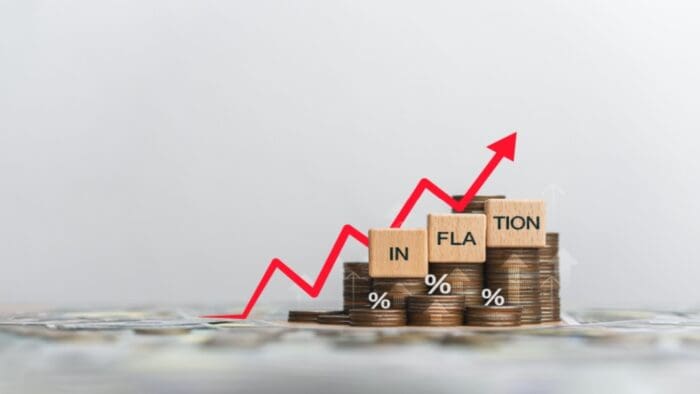
According to the latest reading,1 the core Personal Consumption Expenditures (PCE) Index, a key inflation gauge for the U.S. Federal Reserve, rose 3% year-over-year in August 2026, down from 3.3% in July. While this figure might appear to be a positive sign that inflation is easing, core PCE does not tell the full story. Energy is an important part of the broader inflation picture right now, but it is excluded from the core measure. In fact, the Fed is paying close attention to energy because its effects extend well beyond the sector itself, affecting transportation, data centres and other energy-intensive areas. And until it is clear whether those inflationary pressures are transitory or longer lasting, the Fed cannot ignore them. On one hand, rates could rise if inflation remains around these levels or moves higher. On the other hand, we would need to see a significant and sustained decline in inflation before the Fed would consider cutting rates. So far, the probability of a hike in October has fallen to around 40% following recent comments from Fed governors, but remains as high as 90% for December, suggesting a hike is still likely this year. At the same time, other parts of an economy remain strong, including spending, employment, GDP, earnings and productivity.
Bottom line: While core PCE eased in August, inflation remains elevated enough to keep rate hikes on the table.
Bond yields are moving higher as inflation remains above target, alongside an increase in bond issuance. The velocity of that movement is quite extreme as well, putting more focus on bonds. This reflects a combination of higher Treasury issuance, greater borrowing needs among corporations and stronger productivity, all of which are contributing to higher yields. This trend has raised the stakes for equity markets. Typically, the equity risk premium comes down as bond yields rise, since investors can earn more income with less risk. However, this time equity investors are looking through those risks and focusing on earnings, which remain strong enough to overshadow the pressure from higher yields. In other words, while the bond market is reflecting the broader risks in the environment, equity markets appear to believe that earnings can continue to support valuations despite those risks. So far, that focus on earnings has supported higher equity markets, leaving the bond and equity markets at odds in how they are interpreting the current environment.
Bottom line: While higher bond yields are creating a headwind for equities, strong earnings are giving investors reason to believe valuations can hold up despite those risks.
With shipping through the Strait of Hormuz restricted, Europe has struggled to rebuild its gas stockpiles as it normally does each summer, leaving reserves well below the seasonal average. This adds to an energy market already strained since the Russia-Ukraine conflict and continues to weigh on the economy that is heavily reliant on imported energy. Higher oil prices could also feed through to sectors such as transportation and other energy-intensive industries, which is why we haven’t moved to overweight, or even neutral, on Europe within international markets. The region is facing other headwinds as well, with recent reports indicating that the Trump administration has warned Germany and France of a possible US diesel export ban unless they release emergency diesel reserves to help ease soaring global fuel prices.2 Together, these pressures reinforce our negative view of the region. Looking ahead, there are some reasons for optimism. Alternative supply routes are emerging, with more oil flowing through pipelines such as Saudi Arabia’s East-West pipeline, while new infrastructure is also being developed, including potential expansion of Canadian ports that could serve European markets. Over the long term, greater diversification of supply routes should help reduce reliance on any one supply or transportation corridor. In the short term, however, energy remains a major headwind for Europe, adding to the broader challenges we see across international markets. Finally, the Purchasing Managers’ Indices (PMIs) are improving, so if that momentum can continue, then perhaps there is some upside potential in Europe.
Bottom line: Europe’s ongoing energy challenges remain a significant headwind, although greater diversification of supply routes could provide some relief over time.
Positioning
For a detailed breakdown of our portfolio positioning, check out the latest BMO GAM House View Report, titled The broadening summer rally confronts a higher-rate reality.
—
Originally Posted October 5, 2026 – What inflation metrics aren’t telling us
Commissions, management fees and expenses all may be associated with investments in exchange traded funds. Please read the ETF Facts or prospectus of the BMO ETFs before investing. Exchange traded funds are not guaranteed, their values change frequently and past performance may not be repeated.
For a summary of the risks of an investment in the BMO ETFs, please see the specific risks set out in the BMO ETF’s prospectus. BMO ETFs trade like stocks, fluctuate in market value and may trade at a discount to their net asset value, which may increase the risk of loss. Distributions are not guaranteed and are subject to change and/or elimination.
BMO ETFs are managed by BMO Asset Management Inc., which is an investment fund manager and a portfolio manager, and a separate legal entity from Bank of Montreal.
®/™Registered trade-marks/trade-mark of Bank of Montreal, used under licence.
Information posted on IBKR Campus that is provided by third-parties does NOT constitute a recommendation that you should contract for the services of that third party. Third-party participants who contribute to IBKR Campus are independent of Interactive Brokers and Interactive Brokers does not make any representations or warranties concerning the services offered, their past or future performance, or the accuracy of the information provided by the third party. Past performance is no guarantee of future results.
This material is from BMO Exchange Traded Funds and is being posted with its permission. The views expressed in this material are solely those of the author and/or BMO Exchange Traded Funds and Interactive Brokers is not endorsing or recommending any investment or trading discussed in the material. This material is not and should not be construed as an offer to buy or sell any security. It should not be construed as research or investment advice or a recommendation to buy, sell or hold any security or commodity. This material does not and is not intended to take into account the particular financial conditions, investment objectives or requirements of individual customers. Before acting on this material, you should consider whether it is suitable for your particular circumstances and, as necessary, seek professional advice.
Related Articles

















Join The Conversation
For specific platform feedback and suggestions, please submit it directly to our team using these instructions.
If you have an account-specific question or concern, please reach out to Client Services.
We encourage you to look through our FAQs before posting. Your question may already be covered!