Protective Collars

Protective Collars
Use the Options Wizard to Limit Downside Risk While Defining Upside Potential
A protective collar is an options strategy used with an existing stock position to manage risk over a defined period. It combines a long put and a short call to define potential outcomes by limiting downside and capping upside. The strategy is designed for investors focused on predictability and capital preservation rather than short-term return maximization.
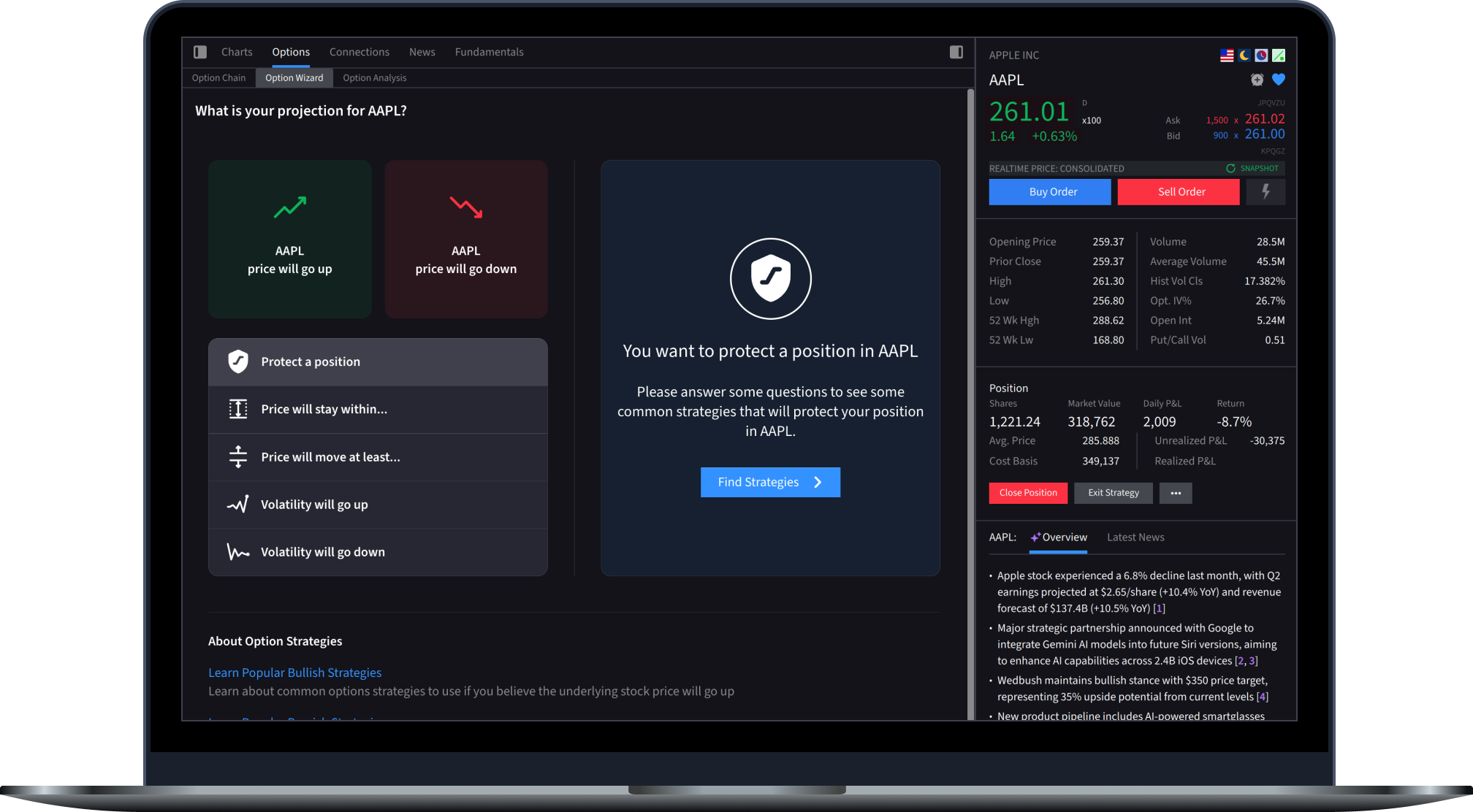
Protective collar strategies are automatically detected by the Options Chain Strategy Builder
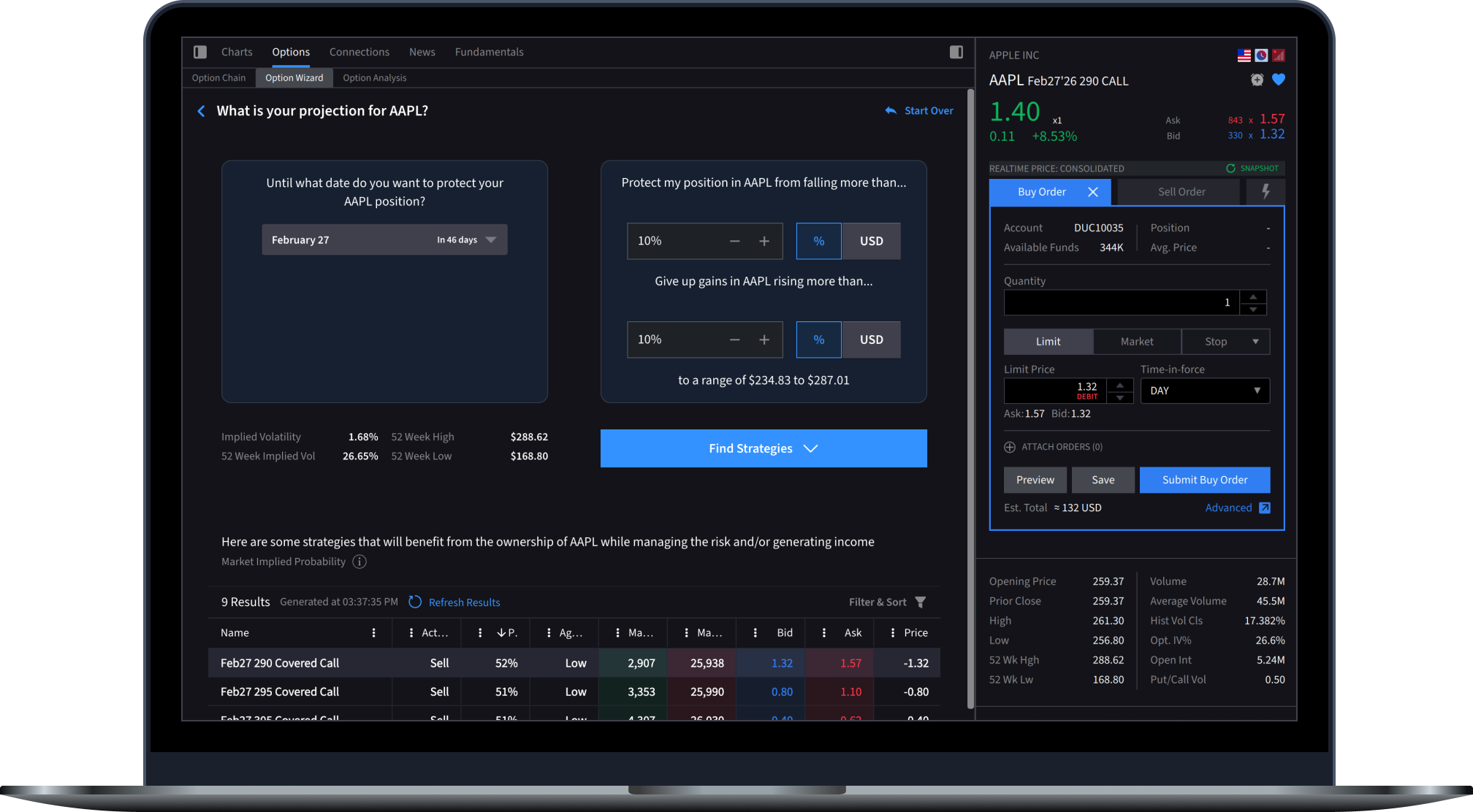
and can be built using the Options Wizard.
Why Investors Use Protective Collars
Protective collars are used to reduce risk without exiting a stock position by:
- Limiting downside exposure
- Protecting unrealized gains
- Keeping you invested during uncertain markets
- Defining outcomes around known events
This approach is often considered when short-term volatility is expected and long-term ownership remains intact.
Structuring a Strategy
A protective collar combines an existing stock position with two options. Investors buy a put to establish a downside floor and sell a call to help offset the cost of protection. The put strike is set as a defined downside distance from the current price (typically using a percentage-based or volatility-based/standard deviation framework), while the call strike is set above it. Both options usually share the same expiration date. In some cases, call premium can fully offset the cost of the put, creating a zero-cost collar.
Potential Outcomes at Expiration
If the stock declines
Losses are limited to the difference between the stock price and the put strike, adjusted for net option premiums.
If the stock trades within the range
The position behaves similarly to stock ownership, with gains or losses reflecting price movement within the collar range.
If the stock rises above the call strike
Gains are capped at the call strike, adjusted for net option premiums. Please note, shares may be called away, resulting in the position being sold if dividend or share price appreciation causes the short call option to be exercised.
Risk, Reward and Trade-Offs
A protective collar defines potential losses and gains. Maximum loss and maximum gain are capped, with breakeven determined by the stock price and net option cost or credit. The strategy prioritizes predictability over unlimited upside.
This strategy is not designed to maximize short-term returns.
- Closer put strikes increase protection but raise cost
- Higher call strikes preserve more upside but reduce income
- Wider strike ranges allow more price movement but offer less control
- Strikes are adjusted based on time horizon and volatility expectations
- Downside risk is limited
- Hedging cost may be reduced
- Stock ownership is maintained
- Upside potential is capped
- Call assignment is possible
- Positions require monitoring near expiration
- Investors with existing stock positions
- Investors seeking defined outcomes
- Investors focused on capital preservation
Smart Strategy Detection
If you build a Risk Reversal (sell call, buy put) against a stock you already own, the Options Chain Strategy Builder will automatically update the strategy name to Protective Collar and pair it with the corresponding stock position.
USER GUIDES
Get Started with Protective Collar
For more information on Protective Collar, select your trading platform.

Start Using Protective Collars Today!
Disclosures
- Options trading involves risk and is not suitable for all investors. Before trading options, investors should read the Characteristics and Risks of Standardized Options, also known as the options disclosure document (ODD). Supporting documentation for any claims or statistical information is available upon request. Past performance is not indicative of future results. Protective collar strategies involve multiple transactions and costs, including commissions and fees. The strategy does not guarantee protection against loss and limits potential gains. Investors should carefully consider their financial situation, risk tolerance, and investment objectives before implementing this strategy.