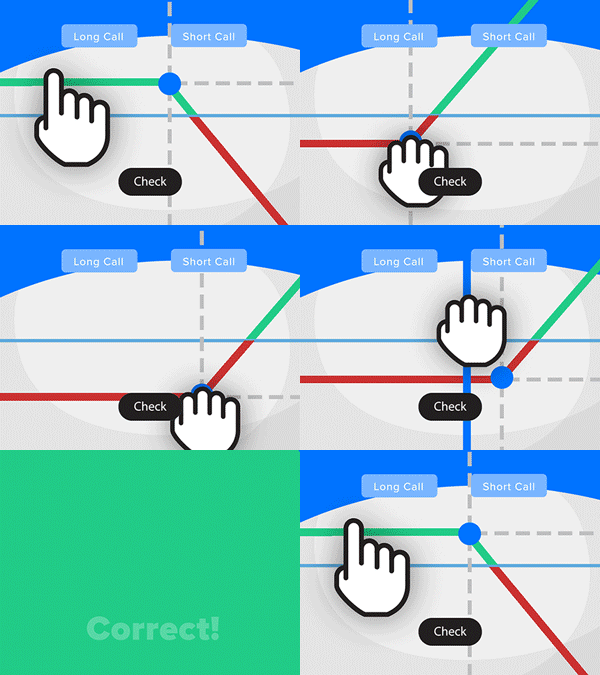
- Solve real problems with our hands-on interface
- Progress from basic puts and calls to advanced strategies
Interactive Options Course

Posted October 16, 2026 at 11:45 am
Last week, a supertanker loading crude in the Gulf of Oman was fixed at $1.01 million a day for a voyage to Asia, with another deal reportedly agreed at $1.16 million. Bloomberg Intelligence says the benchmark rate for these very large crude carriers, or VLCCs, hit a record $907,635 a day on October 6 and could cross $1 million before the month is out.
Back in March, I wrote that shipping stocks had caught a windfall as freight markets went vertical. Like most, I expected the conflict with Iran to be intense but brief. It’s lasted far longer than I or most of Wall Street anticipated, and the windfall has grown into one of the most profitable stretches the shipping industry has seen.
The Baltic Exchange Dirty Tanker Index, which tracks the cost of shipping crude oil across dozens of routes, stood at 7,444 last Tuesday. That’s more than six times where it was a year ago and the highest reading in Bloomberg data going back to 2010.

So what’s driving this? In a word, inefficiency.
Both of the Middle East’s key checkpoints, the Strait of Hormuz and the Bab el-Mandeb, remain under active threat. Much of the crude leaving the Persian Gulf is now shuttled out in smaller tankers under the protection of U.S. naval forces, then transferred onto supertankers in the Gulf of Oman. Many vessels are still sailing the long way around Africa.
These detours can keep a ship at sea for days or weeks longer than the trip would normally take, and a ship that’s stuck at sea or waiting at anchor can’t haul the next cargo. C.H. Robinson estimates that roughly 12% of global container ship capacity is currently tied up by port congestion alone.
If disruption were the whole story, I’d be skeptical this boom could last. But demand is strong too.
The JPMorgan Global Manufacturing PMI rose to 53.0 last month, its highest level since February 2022. S&P Global credits spending on AI infrastructure and defense equipment, along with companies building inventory out of fear of further supply disruptions. Across the broader economy, new export business grew at the fastest pace in more than five years.
As I’ve said many times before, the PMI has historically been a useful leading indicator of demand for goods and commodities, and right now it’s flashing green.

Trade data tell the same story. Global goods trade grew faster in the first half of 2026 than in any half-year in the past 15 years apart from the post-Covid rebound, according to DHL. AI-related goods such as semiconductors accounted for 76% of that growth in the first quarter.
That demand is showing up at America’s ports, even with consumer confidence sitting at a 12-month low. The Port of Los Angeles just wrapped up the busiest three-month stretch in its history, and import volume headed for Long Beach over the next three weeks is running roughly 50% above year-ago levels.
The Shanghai Containerized Freight Index, a broad measure of spot rates for ships leaving China, has more than tripled over the past year. It’s still about 28% below the record it set in January 2022.

The index hides a split, though. Rates on routes to Europe are cooling as some services return through the Suez Canal. Drewry’s World Container Index shows the cost to ship a 40-foot container from Shanghai to Rotterdam has fallen about 31% since July.
Routes to the U.S. are going the other way. That same container from Shanghai to New York now costs $10,428, up 78% since mid-June, and rates on the route between North Asia and the East Coast of the U.S. are within about $200 of their all-time high set in April 2022.
Interestingly, shipping a 40-foot container from Shanghai to L.A. costs $7,835, but shipping it back costs only $791, roughly a tenth as much.
Elevated rates are a tide that lifts all boats, and carriers’ earnings guidance shows it. Hapag-Lloyd started the year forecasting anything from a $1.3 billion loss to a $400 million profit. The company has since raised its outlook twice and now expects 2026 operating earnings (EBIT) of $1.25 billion to $1.75 billion.
Zim, Maersk, Ocean Network Express and Matson have all raised their outlooks this year as well.
Tanker owners are cashing in too. Teekay Tankers reported record second-quarter adjusted net income of $193.6 million, or $5.56 per share, and ended June with more than $1.2 billion in cash and short-term investments.
As many of you are aware, shipping is a cyclical business, and boom times like this have a way of planting the seeds of the next bust.
Shipowners are flush with cash right now, and they’re spending it on new vessels. According to Hellenic Shipping News, some 198 VLCCs have been ordered so far this year, compared with 89 in all of 2025. The tanker orderbook now equals 37% of the existing fleet. The container orderbook has reached 13 million TEUs, or roughly 37% of the global fleet’s current capacity of 34.8 million TEUs, according to Alphaliner. That’s more than the combined fleets of Maersk, CMA CGM and COSCO.
Those ships won’t all arrive at once, but they will arrive. Tanker supply growth is expected to outpace demand starting in 2027. And whenever the Red Sea and Hormuz fully reopen, the vessels now sailing the long way around will be freed up for other work, effectively adding capacity overnight.
Wall Street appears to see this coming. Consensus estimates for tanker owners show quarterly earnings peaking this quarter and drifting lower through mid-2027, according to Bloomberg.
For investors, I believe this argues for staying engaged with the sector while keeping a close eye on the orderbook. Cash flows are extraordinary right now. But the cure for high rates is high rates, and the world’s shipyards are already busy filling that prescription.
—
Originally Posted October 16, 2026 – Why Freight Rates Are Soaring, and What the Shipyard Boom Means for Investors
All opinions expressed and data provided are subject to change without notice. Some of these opinions may not be appropriate to every investor. By clicking the link(s) above, you will be directed to a third-party website(s). U.S. Global Investors does not endorse all information supplied by this/these website(s) and is not responsible for its/their content.
The Purchasing Managers’ Index (PMI) is an indicator of the economic health of the manufacturing sector. A reading above 50 indicates expansion, while a reading below 50 indicates contraction. The Baltic Exchange Dirty Tanker Index tracks freight rates for crude oil tankers across major global routes. The Shanghai Containerized Freight Index (SCFI) tracks spot rates for container shipments from Shanghai to major global destinations. Drewry’s World Container Index (WCI) tracks container freight rates on major East-West trade routes.
Holdings may change daily. Holdings are reported as of the most recent quarter-end. The following securities mentioned in the article were held by one or more accounts managed by U.S. Global Investors as of (09/30/2026): COSCO SHIPPING Holdings Co Ltd., DHL Group, DHT Holdings Inc., Matson Inc., Teekay Tankers Ltd.
New to Interactive Brokers?
Open AccountAlready an Interactive Brokers Client?
Request Trading PermissionAll opinions expressed and data provided are subject to change without notice. Holdings may change daily.
Some of these opinions may not be appropriate to every investor. By clicking the link(s) above, you will be directed to a third-party website(s). U.S. Global Investors does not endorse all information supplied by this/these website(s) and is not responsible for its/their content.
About U.S. Global Investors, Inc. – U.S. Global Investors, Inc. is an investment adviser registered with the Securities and Exchange Commission (“SEC”). This does not mean that we are sponsored, recommended, or approved by the SEC, or that our abilities or qualifications in any respect have been passed upon by the SEC or any officer of the SEC.
This commentary should not be considered a solicitation or offering of any investment product.
Certain materials in this commentary may contain dated information. The information provided was current at the time of publication.
Some links above may be directed to third-party websites. U.S. Global Investors does not endorse all information supplied by these websites and is not responsible for their content.
Please consider carefully a fund’s investment objectives, risks, charges and expenses. For this and other important information, obtain a fund prospectus by clicking here or by calling 1-800-US-FUNDS (1-800-873-8637). Read it carefully before investing. Foreside Fund Services, LLC, Distributor. U.S. Global Investors is the investment adviser.
Information posted on IBKR Campus that is provided by third-parties does NOT constitute a recommendation that you should contract for the services of that third party. Third-party participants who contribute to IBKR Campus are independent of Interactive Brokers and Interactive Brokers does not make any representations or warranties concerning the services offered, their past or future performance, or the accuracy of the information provided by the third party. Past performance is no guarantee of future results.
This material is from US Global Investors and is being posted with its permission. The views expressed in this material are solely those of the author and/or US Global Investors and Interactive Brokers is not endorsing or recommending any investment or trading discussed in the material. This material is not and should not be construed as an offer to buy or sell any security. It should not be construed as research or investment advice or a recommendation to buy, sell or hold any security or commodity. This material does not and is not intended to take into account the particular financial conditions, investment objectives or requirements of individual customers. Before acting on this material, you should consider whether it is suitable for your particular circumstances and, as necessary, seek professional advice.
Related Articles



















Join The Conversation
For specific platform feedback and suggestions, please submit it directly to our team using these instructions.
If you have an account-specific question or concern, please reach out to Client Services.
We encourage you to look through our FAQs before posting. Your question may already be covered!